Cabinet is serving legal notice it will blacklist plastic as toxic under the same federal law that regulates asbestos and mercury. The Department of Environment acknowledged industry complaints the listing “could lead to the stigmatization of plastics”.
‘Armchair Talks’ For $8.2M
A federal agency launched in 2015 to “create a public service that is more agile” spent most of its budget on salaries and benefits for employees assigned to hold “armchair meetings”, say auditors. Staff complained they were underfunded: ‘Innovation has been slow.’
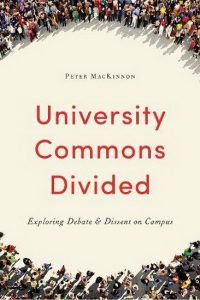
Book Review: Li’l Men On Campus
They say the carpet in the House of Commons is green to symbolize the meeting grounds of Old England where farmers and townspeople gathered to solve numerous and vexing problems. The Commons today is populated by professional politicians skilled in contrariness, accomodation and dissent. It works.
Author Peter MacKinnon writes of the other commons found at university campuses, populated by political amateurs skilled in histrionics and entitlement. It is not a flattering exposé. MacKinnon is provocative: “Members of the general public who hear of these controversies might well ask, ‘What on earth is going on in our universities?’”
University Commons Divided pulls no punches. It is frank and unapologetic. MacKinnon, president emeritus of the University of Saskatchewan, depicts a post-secondary culture that is shrill, disapproving and overly bureaucratic. Canada Post has 6 board members; General Motors has 11. The University of British Columbia has 19. The effect is stupefying.
“These are stories of division, not differences, and they undermine university values: a commons in which freedom of expression is the paramount value; a commons that privileges conclusions founded on evidence and reason; a commons that is well governed and one free from discrimination; a commons in which civility is valued and practiced; and one that discharges its social responsibility without presuming to pursue social justice,” writes MacKinnon. “If we have strayed from these values, we have not yet strayed so far that we cannot recover them. We may need some help along the way, but it is a goal worthy of pursuit by all of us.”
University Commons Divided is rich in anecdotes. MacKinnon recalls the Carleton biology professor whose service on the University board consisted of publishing blog entries describing his fellow directors as idiots. An attempt at censure drew protest from the Canadian Association of University Teachers as an assault on academic freedoms. “Troubling,” writes MacKinnon.
Then there was the director of Ryerson University’s School of Social Work who resigned after students accused him of an “act of anti-Blackness”: The man left an anti-racism meeting while speeches were ongoing. The Black Liberation Collective concluded he was cruelly indifferent to “anti-Black racism scholarship, Black women, Black educators or education, Black experiences, Black life and ultimately Black students.” Or maybe he left to take a phone call, writes MacKinnon.
Conclusion: “Freedom of expression is under attack in our universities – not a deliberate, organized attack, but an accumulation of episodes that diminish its significance in comparison to other considerations,” writes MacKinnon. “Second, the concept of universities as intellectual spaces is also under attack as a result of intellectual laziness accompanied by ideology and anger. The result, too often, is not a contest of ideas; it is a struggle for power.”
University Commons Divided recounts similar noise over Halloween costumes at Queen’s, pro-life protests at Calgary, profanity at Laurentian and an unhappy episode at the University of Ottawa, where a yoga class led by a Caucasian instructor was shut down as cultural misappropriation that smacked of “colonialism and western supremacy”.
The rule in the Big Commons is never make enemies needlessly, and try not to appear ridiculous. The Little Commons could use MacKinnon’s primer.
By Holly Doan
University Commons Divided: Exploring Debate & Dissent on Campus, by Peter MacKinnon; University of Toronto Press; 144 pages; ISBN 9781-48752-2827; $24.95

Fuel Tax Could Hit 69 Cents
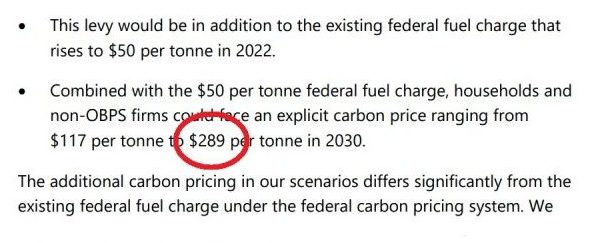
The federal carbon tax must increase fivefold, up to $289 per tonne or 69¢ per litre of gasoline, if cabinet is to meet emissions targets, the Parliamentary Budget Office said yesterday. The report confirmed a secret 2015 memo the Department of Environment earlier dismissed as hypothetical: “So, the question is — ?”
Fear Release Of Trudeau Fees
Liberal MPs yesterday expressed alarm that talent fees privately paid to Prime Minister Justin Trudeau and his family will become public. The Commons ethics committee has sought records from the Trudeaus’ talent agent since July 22: “Once it is out electronically, it’s out.”

‘Page After Page Of Black Ink’
Cabinet faces a Commons vote that would force disclosure of uncensored records on its dealings with the now-disbanded We Charity. Staff blacked out whole pages of emails and memos in breach of a finance committee order, according to the Commons Law Clerk: “We have the right to see those documents.”
Demands A Surtax On Profits
Parliament must impose a surtax on excess corporate profits, New Democrat leader Jagmeet Singh yesterday told reporters. Singh stopped short of threatening to withhold twenty-four NDP votes from any minority Liberal budget bill: “This is fundamental.”
MPs Eye Electric Car Law
The Bloc Québécois yesterday proposed the Commons environment committee consider the feasibility of a federal Zero-Emission Vehicles Act mandating electric cars. A similar British Columbia law would abolish the private sale of gas and diesel-powered vehicles by 2040: “Could we provide further incentives?”
Tax Ombudsman Has Friends
A newly-appointed federal Taxpayers’ Ombudsman has friends in cabinet, according to filings with the Ethics Commissioner. François Boileau of Toronto was named to the $153,700-a year post though he had no expertise in tax matters: “They have to be more serious than that.”
CBC Lists “Trusted” Media
The CBC yesterday listed Canadian news publishers it deemed trustworthy and deserving of public support. The list was borrowed from a lobby group that successfully sought a $595 million newspaper bailout: “We provided them with our members.”
Court’s No Talk Show: Judge
Activist judges should mind their own business, says the Federal Court of Appeal. “They should stay in their proper place,” wrote Justice David Stratas. “Their place is not in the public square amongst the partisans and the politicians.”
Feds To Ban Six Plastic Items
Cabinet yesterday said it will ban six everyday plastic products as environmentally toxic with scores of other items under review. “These are things that are harmful,” Environment Minister Jonathan Wilkinson told reporters: “Action is needed.”
Need Gender “Culture Shift”
More than a third of British Columbians fear family life suffers when women get a full-time job. And most Atlantic Canadians say women aren’t interested in math. The findings are among data in federal research by the Office of Women and Gender Equality: “It is a woman’s job to be responsible for birth control since they are the ones who get pregnant.”
MP Warns Party On Spending
One of the longest-serving MPs in the Liberal caucus yesterday warned cabinet cannot “simply pile up debt”. Eight-term MP John McKay, chair of the Commons public safety committee, said constituents have asked: “How are we going to pay for this?”
Pay $186M In Electric Rebates
Parliament has paid more than $186 million in rebates to electric car buyers without any public estimate of the climate change impact. The Department of Transport yesterday did not comment: “The objective is to reduce greenhouse gas emissions, right?”