
A Nunavut commissioner is urging an immediate ban on government use of Gmail accounts. It follows the accidental disclosure the head of a territorial board used Gmail instead of a government email server to conduct public business: ‘There are legal obligations with respect to records.’
Paid Leave Twice As Nice
Federal employees who mistakenly get double their paid vacation days cannot bank the benefit, says a labour board. The ruling came in an appeal by a Coast Guard employee twice credited for the equivalent of three weeks’ holiday: “There was a significant error.”
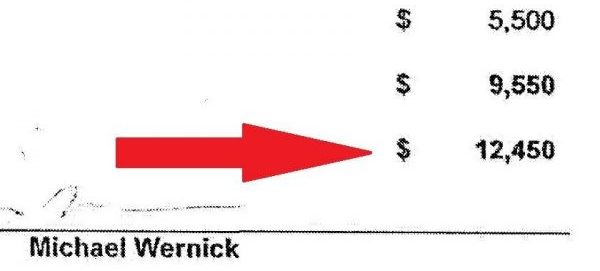
Red Carpet Night Cost $12K
The Privy Council Office billed taxpayers $12,450 for a Hollywood-style cocktail party honouring “excellence” by communications staff, according to Access To Information records. Plans for the three-hour event included red carpeting, velvet ropes and a master of ceremonies in a tuxedo. The Privy Council yesterday did not comment: “We would love to have a purple carpet, if possible, and balloons.”
Gov’t Vetoed Catholic Plaque
Cabinet rejected a historic plaque for a 19th century Newfoundland bishop after a federal panel concluded his objective was to “grow the Catholic Church”, according to Access To Information records. The veto followed the Church’s rejection of a request by Prime Minister Justin Trudeau that it apologize for Indian Residential Schools: “Nothing can be immune from review.”
400B Gallons Of Raw Sewage
Municipalities are annually dumping nearly 400 billion gallons of raw sewage, says the Department of the Environment. Québec led all other provinces in discharging sewage that failed to meet federal regulations for water safety: “Why do we have them if they are not regulated?”
Family’s Grief Ends In Court
The Federal Court of Appeal has brought a quiet close to fourteen years of litigation by a grief-stricken family in an immigration case. Judges dismissed a claim for $300 million in damages by Chinese parents who lost their only son to suicide hours after he was ordered deported from Canada: “Schizophrenia is one of the most widely misunderstood and feared illnesses in society.”
Many Meetings, Few Results
Cabinet’s signature ecological program is so haphazard federal agencies did not spend millions budgeted to enforce it, says a Department of Transport audit. The $1.5 billion Oceans Protection Plan was launched in 2016; auditors counted numerous staff meetings but few results: “We could not verify who attended meetings.”
Spent $4.3M On Private I’s
Federal departments and agencies last year spent more than $4 million hiring private investigators to probe in-house harassment complaints. The spending followed Parliament’s passage of an anti-harassment bill: ‘Harassment can be bullying or yelling at employees repeatedly.’
Cites Labour “Mafia” Jibe
A St. John’s company manager who said joining a union was “like being in bed with the mafia” has been cited for unfair labour practices. Union organizers are entitled to work without “negative and disparaging statements”, ruled the Newfoundland & Labrador Labour Relations Board: “Misunderstandings and neglect cause more mischief in the world than malice and wickedness.”
Gov’t Cites Common Barriers
More than a third of Canadians with disabilities, 38 percent, say they routinely endure barriers ranging from wheelchair-inaccessible elevators to difficulty at airports. The Department of Social Development conducted the national survey after Parliament passed a bill mandating accessibility: “There is a huge group of Canadians who have been held back.”
Feds Hide Emission Figures
Environment Canada will not confirm the impact of its national carbon tax on greenhouse gas emissions. Limited data briefly disclosed by the department suggest emissions increased by millions of tonnes in 2018 even as Parliament imposed the tax: “What is the number?”
Gov’t Bankrolled Pot Store
A federal agency approved a $100,000 subsidy to open a private marijuana store two hundred metres from an elementary school, records show. Bankrolling of a cannabis outlet in the remote village of Carmacks, Yukon was to “benefit Aboriginal people” on a promise one job would be created: “It helps.”
SNC-Lavalin Is Good To Go
The Department of Public Works confirms it will not prohibit SNC-Lavalin Group from bidding on federal projects, marking the end of a Government-Wide Integrity Regime blacklist intended to punish contractors found guilty of wrongdoing. Blacklisting was launched five years ago on a promise that contractors would be “accountable for their misconduct”.
Media Leak Breached Privacy
Media leaks may breach privacy laws, says a commissioner. The warning came in the case of a municipal librarian in Regina who gave a local reporter the names of visitors banned for drunkenness: “Individuals may feel hurt or humiliated.”
Sunday Poem: “Imperial”
It is decision time
for the future of Ottawa’s
Lansdowne Park.
Again.
The Mayor says,
those who oppose privatization
probably oppose
the metric system too.
I wonder how the Mayor
orders a foot-long at Subway
where they never heard
of a 30.48 centimetres long sandwich
and how he handles topics
one should not touch with a ten foot
– oops, 3.048 metres pole.
(Editor’s note: poet Shai Ben-Shalom, an Israeli-born biologist, examines current events in the Blacklock’s tradition each and every Sunday)