
Parliament should avoid regulation of amateur athletics, witnesses yesterday told a Commons subcommittee on sports-related brain injuries. Rugby Canada said the national association has already changed rules to prevent concussions: “Zero tolerance means zero tolerance.”
Wary Of Meddling In Media
The Department of Industry in a secret Access To Information memo cautions against federal meddling in media under the guise of combating fake news. The 2018 memo predates a plan to have subsidized media monitors “expose” election-year coverage deemed unreliable.
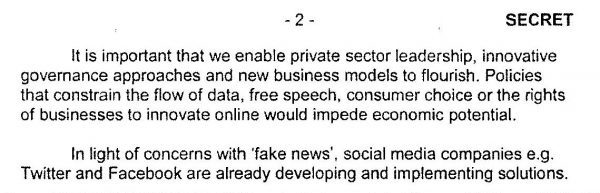
“Reasons for government intervention, as well as whether there are appropriate tools to target issues, must be clear before actions are considered,” said the briefing note Advice To The Associate Deputy Minister. The censored three-page memo said Canadians should “continue to access the legal content of their choice with confidence”: “This is critical,” it said.
The memo said any federal action against fake news could have consequences for free speech, and that remedies were already found in the private sector. “It is important that we enable private sector leadership, innovation governance approaches and new business models to flourish,” wrote staff.
“Policies that constrain the flow of data, free speech, consumer choice or the rights of businesses to innovate online would impede economic potential,” said Advice. “In light of concerns with ‘fake news’, social media companies e.g. Twitter and Facebook are already developing and implementing solutions”; “It will be important to ensure there will be an appropriate consideration given to the private sector and economic impacts before determining a way forward,” the memo said.
The note is dated February 5, 2018. Six months later, the Department of Canadian Heritage began negotiations with an Ottawa-based group called Public Policy Forum to “monitor digital and social media in real time” for “disinformation in the lead-up to the October 2019 federal election.”
The Policy Forum in a statement last November 28 defended the monitoring scheme. “The country lacks adequate understanding of what’s being put through our media ecosystem,” wrote CEO Edward Greenspon, a former Toronto Star executive: “This project is designed to expose these attempts and determine how best to counter them.”
Neither the Forum nor the department would discuss the cost or rationale for the project. Elections Canada already monitors campaign disinformation under a provision of the Canada Elections Act that outlaws “false statements of fact” about any candidate or political party.
“Cynical”
Surveillance of digital media would coincide with cabinet’s promised $595 million bail-out fund for newspapers. Cabinet in its November 21 Fall Economic Statement proposed to award subsidies to publishers deemed reliable. No criteria have been disclosed to date.
Conservative MP Peter Kent (Thornhill, Ont.), a Canadian Broadcast Hall of Famer, yesterday in Commons debate described the bailout fund as “a cynical, election-year attempt to co-opt, to buy off, media owners and publishers.”
Kent called the offer of subsidies “an unacceptable intervention that will compromise independence” by having a government panel decide “which newsrooms are credible and worthy, and which newsrooms are not”. Kent is a former NBC foreign correspondent and chief anchor for CBC-TV’s flagship National newscast.
“News organization CEOs and publishers who draw multi-million dollar salaries and equally outsized bonuses as their newsrooms are depleted are delighted,” said Kent. “Then-Postmedia CEO Paul Godfrey enthusiastically welcomed the finance minister’s Fall Economic Statement announcement. Mr. Godfrey recommended everyone in journalism should be ‘doing a victory lap’ around their building.”
Postmedia last year paid CEO Godfrey $5.04 million in salary and bonuses, according to a Management Circular obtained November 28 by the Halifax Examiner. Other executive pay included $2.2 million to Postmedia’s chief operation officer, and $1.2 million to its chief financial officer.
By Staff 
Blame StatsCan For Mistrust
Financial data scoops by Statistics Canada have eroded public trust in the federal government, a former Ontario privacy commissioner yesterday told the Commons ethics committee. StatsCan suspended collection of records on more than a million people following protests: “Are you kidding me?”

Offensive Lake Name Erased
Ontario has quietly erased the offensive name of a remote lake from the provincial map. Authorities said they had no information on who named Jigaboo Lake, or why: “It is a derogatory term.”
Slowdown On Holiday Bill
A New Democrat bill to proclaim an Indigenous statutory holiday is stalled in the Commons. MPs on the heritage committee have summoned witness after witness amid disagreement over which date to select for one holiday, or two: “We’ve been talking about this for a long time.”
Says China Buyers No Threat
Statistics Canada yesterday confirmed Chinese investors typically buy expensive real estate in Vancouver, but found no evidence foreigners drive up prices overall. Analysts said more data are needed to determine the impact, if any, of foreign ownership on Canada’s housing market: “You would need several years’ worth of data.”
Warn Carbon Tax Must Rise
The 12¢ a litre federal carbon tax on gasoline must rise if cabinet is to meet its emissions target, economists yesterday told the Commons environment committee. The Department of the Environment has acknowledged it is 36 percent short of target: “Higher carbon prices or more stringent policies will be required.”
Factories Are “Under Attack”
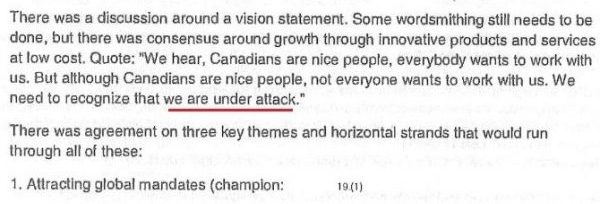
A federal panel in Access To Information records says Canadian manufacturing is “under attack”. The warning follows the loss of nearly a half-million factory jobs nationwide: “It was noted that Canada does not have a manufacturing strategy.”
Tax Agency Ran Pizza Sting
Tax auditors have monitored small businesses’ HST collections by ordering take-out pizza, according to Québec Provincial Court records. A Québec Revenue Agency inspector ordered a small cheese pizza for $12.99 to ensure compliance with the Sales Tax Act: “The transaction was not registered without delay.”
Upholds Prison Pension Ban
The Federal Court of Appeal has upheld a ban on Old Age Pension payments to convicts. Parliament passed the law following a public outcry over benefits paid to a serial killer: “This is offensive and outrageous.”
Now Recycle 255 Kgs A Year
Canadians now recycle about 255 kilograms of garbage per capita each year, says a Department of Environment report. Yet only about a quarter of solid waste, 27 percent, is diverted from landfills: “The cost of disposal is so cheap.”
Honour Lost Sailors, Airmen
The Commons this week will pass into law a bill to safeguard sunken WWII warships and military aircraft from memorabilia hunters. The Senate earlier attached the ocean war graves amendment to a marine liability bill at the request of a 91-year old veteran: “For our sailors there are no pristine, manicured cemeteries.”
Gov’t CEO Claims “Error”
The CEO of a Crown agency says he made a simple mistake in failing to disclose for months his cannabis investments held in breach of the Conflict Of Interest Act. Ian McKay, $231,000-a year chief executive of Invest in Canada Hub, would not speak to reporters despite multiple requests: “He realized his error.”
Sue To Save Iconic Animals
Environment Canada faces a federal lawsuit, the second in eight years, over its repeated failure to protect habitat of woodland caribou. The population of the iconic species once hailed as Canada’s monarch of the wild numbers fewer than 35,000: ‘All Canadians share an interest in the survival and recovery of boreal caribou.’
$12K For Prison Racial Slur
A Black federal prison guard has been awarded $12,500 in damages after being ridiculed at work. Penalties levied by human rights panels for offensive language have varied widely: “I was in emotional shock and completely downcast.”