Poem: “Canadian Flagship”


We don’t subsidize

our aerospace industry.


We just hand them a

15-year interest-free, 372 million dollar

loan

so those at the helm

can turn the ship as they please

– shares, bonuses, and salary hikes, to senior executives –

leaving 14,500 laid-off employees to

fend for themselves.


The sign may say Bombardier;

the course, Costa Concordia.


(Editor’s note: poet Shai Ben-Shalom, an Israeli-born biologist, examines current events in the Blacklock’s tradition each and every Sunday)

Book Review: The Agony Of Defeat

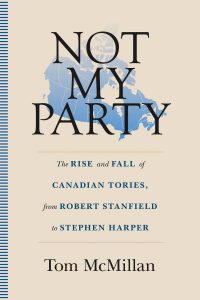
Politics are rough and failure is never celebrated. Conservatives choose a new leader May 27. The party lost 235,000 votes in the last election. New leadership may bring great change, or none at all. George Drew, John Bracken, “Fighting Bob” Manion – all were intriguing characters with rich biographies whose federal party leadership ended in failure, and today are forgotten even by Conservatives.

“I am not the only Conservative (or former Conservative) who believes that our party (or former party) has betrayed both its own best traditions and the Canadian people by practicing a quality of politics unworthy of the country,” writes former MP Tom McMillan. “Interviews and correspondence I conducted with a large number of my former cabinet colleagues and ministerial and political staff for this book revealed to me, in private, a shocking level of discontent with the party.”

McMillan’s memoirs are agonizing and intriguing at the same time. This is how teammates talk in the locker room after a championship loss. “I myself believe a once-great national institution is in ruins, or will be if the Conservative Party membership at large does not soon come to its senses,” writes McMillan.

“A broad swath of the party is progressive but went underground during the Stephen Harper leadership years,” he says. “They were intimidated to the point of paralysis by the power that the prime minister and his tight inner circle ruthlessly wielded over both the party and the government and, ultimately, the country. Many Tories just gave up.”

Not My Party: The Rise and Fall of Canadian Tories is part memoir, part score-settling. It reveals the emotional investment politicians make in their party and its methods. It details the glory of victory and despair of defeat. It is personal.

McMillan describes John Diefenbaker as mentally unhinged and Reformers as bigots. McMillan met Stephen Harper once, but says the ex-Calgary MP “corrupted what it means to be a Conservative”. McMillan is angry, not least of all with media. “The internet – such a force for good in many other ways – has rendered politics a murderous killing field for people’s reputations,” he writes.

“A lot of the scrutiny is unfair and unbalanced or just plain wrong,” says McMillan. “By the time offenders are exposed and taken to task – if that happens at all – the public, with the attention span of a hummingbird, has already flitted to the next hyped ‘BREAKING NEWS’ story, the next faux exposé, the next manufactured scandal, or whatever else is in line to feed the rapacious ratings beast. And the ‘news’ cycle continues. Perpetually.”

Politics are stressful and hard-bitten and sometimes venomous, and Not My Party bares it all. Very successful politicians typically keep these team secrets to themselves. Voters have their own troubles.

Perhaps what Conservatives need is not a snarling, slashing score-settler but a character like Leslie Frost. As Ontario premier in the 1950s, Frost was so tyrannical he once went six months without calling a caucus meeting, and could cuss cabinet members like a WWI infantryman. Frost was a combat veteran. He knew how to bark orders.

Yet in public, Frost projected the warm image of a small-town Rotarian who served homemade sandwiches to reporters and campaign staff. “The Great Tranquilizer”, one opponent called him.

“I come to you as Leslie Frost the man, with no trappings of office – just a servant of the people,” Frost said in his last campaign. He went out a winner.

By Holly Doan

Not My Party: The Rise and Fall of Canadian Tories, from Robert Stanfield to Stephen Harper, by Tom McMillan; Nimbus Publishing; 624 pages; ISBN 9781-7710-84239; $34.95


Senate OKs Contractors’ Bill

Senators last evening passed a bill mandating prompt payment to trades and subcontractors on federal public works. A Senate committee heard testimony that large general contractors typically pocket government payments to finance operations, then defer settlement of bills with small suppliers: “We want something done. Figure it out. Find a way.”

This content is for Blacklock’s Reporter members only. Please login to view this content. (Register here.)

Vows To Hire More Veterans

The new president of the Public Service Commission promises to do more to hire medically-released veterans. A 2015 law promising preferential government hiring of ex-military has largely failed, authorities say: “No veteran deserves to be left behind like this.”

This content is for Blacklock’s Reporter members only. Please login to view this content. (Register here.)

Says Captive Whales Happy

Captive whales are content and don’t miss ocean life any more than household dogs miss running in packs, says the chief veterinarian of the Vancouver Aquarium. The comments came during Senate fisheries committee review of a bill to ban the purchase and transfer of whales in captivity: “They have happy lives with happy people.”

This content is for Blacklock’s Reporter members only. Please login to view this content. (Register here.)

Fear Long Fight On Softwood

Parliament should anticipate long, difficult negotiations with the U.S. over a 19.9 percent tariff on Canadian softwood lumber, witnesses yesterday told the Commons trade committee. Exports were worth $7.62 billion last year, by U.S. estimate: “Canadians are nervous.”

This content is for Blacklock’s Reporter members only. Please login to view this content. (Register here.)

Cabinet Prodded On Tax Data

The Canada Revenue Agency says it will complete a long-promised report on uncollected personal income tax by year’s end, past a deadline fixed by cabinet. Authorities yesterday told the Commons finance committee the calculation was difficult: “There have been lots of jurisdictions that do this.”

This content is for Blacklock’s Reporter members only. Please login to view this content. (Register here.)

Pot Regs Rated Vague, Costly

Enforcement of Canada’s proposed regulations on cannabis-impaired drivers will be complex and costly, warns a U.S. state agency. Cabinet will copy a 2014 Colorado law forbidding drivers from consuming more than 5 billionths of a gram of the psychoactive ingredient in marijuana: “I’d tell law enforcement to start looking at your budgets.”

This content is for Blacklock’s Reporter members only. Please login to view this content. (Register here.)

Senator Seeks Charity Review

The Senate will consider a motion for a comprehensive review of charitable tax credits and the “impact of the voluntary sector” nationwide. Fewer than 1 in 4 taxpayers give to charities, by official estimate: “We want to make this a significant study.”

This content is for Blacklock’s Reporter members only. Please login to view this content. (Register here.)

Cabinet Vetoes Science Panel

Cabinet has rejected a scientific panel recommendation that it protect iconic Atlantic Bluefin tuna as an endangered species. Canada has supported increased commercial fishing of tuna in the past two years despite a historic decline in population: “The social value of a species is never really considered.”

This content is for Blacklock’s Reporter members only. Please login to view this content. (Register here.)

Military Jobs A Tough Sell

Military recruitment remains short more than 4,000 members despite multi-million dollar advertising campaigns, says a senior officer. Commanders yesterday told the Commons public accounts committee that targets are not being met.

“Our number right now is 56,232 who can go on a mission today at a moment’s notice,” said Lieutenant-General Charles Lamarre, commander of the Military Personnel Command. “So, being 4,000 short – that’s a big target for us to make up.”

Of 44,000 people who applied to join the military last year, a total 4,542 were signed up. Actual recruitment levels must average between 5,000 and 6,000 a year, by official estimate.

The Auditor General in a 2016 analysis concluded the military will not meet its target for a standing force of 68,000 soldiers, sailors and air crew by 2019. Lt.-Gen. Lamarre blamed shortfalls in part on closure of recruiting centres due to budget cuts.

“That resulted in a loss of 180 positions, many of which involved in processing files,” said Lamarre; “By the middle of June we’ll have 20 new file managers and will be receiving another 20 by the end of the fiscal year.”

John Forster, Deputy Defence Minister, said the military faced the same labour shortages as other employers. “In some occupations where we are struggling to recruit, it’s the same all over Canada,” said Forster; “We’re competing with the private sector for pilots and doctors. We’re facing the same challenges as the private sector.”

Forster said women now comprise 15 percent of the Canadian Armed Forces. The military three years ago set a 25 percent target for women recruits. Women were not accepted in all branches of the military until 2000, when female submariners were first recruited.

Research commissioned by the Department of National Defence has concluded the military is unattractive to women and minorities despite a yearly advertising budget of more than $1.7 million. Most women surveyed, 77 percent, said they had have never thought of joining the military and considered the work unappealing and dangerous, according to 2016 polling data by Earnscliffe Strategy Group.

The military in earlier 2014 research found minority groups also considered enlistment a “last resort”; “Most did mention the obligation and a sense of being ‘trapped’ in the military with a lack of personal freedom to leave when they desired,” said a study Visible Minorities Recruitment & The Canadian Armed Forces by Ipsos Reid.

By Jason Unrau

Drug-Impaired Fine At $1,000

Federal cannabis regulations would see Canadians face a minimum $1,000 fine for driving after smoking a single joint. The proposal echoes a Colorado law that advises motorists no cannabis consumption is safe: “Technicians would be able to take blood samples from a driver without a doctor’s oversight.”

This content is for Blacklock’s Reporter members only. Please login to view this content. (Register here.)

4th Province Fights DNA Bill

A fourth province, Saskatchewan, is protesting Parliament’s passage of an anti-genetic discrimination bill, the first legislation of its kind. Cabinet will refer the bill to the Supreme Court for an opinion on whether it is constitutional: “We continue to have concerns.”

This content is for Blacklock’s Reporter members only. Please login to view this content. (Register here.)