Cabinet’s billion-dollar carbon tax cut on home heating oil followed months of warnings from in-house pollsters, records show. Homeowners opposed the tax as costly and divisive in Atlantic Canada where 24 Liberal MPs are up for re-election: “Almost all believed the carbon pricing system was too complicated and did not expect this initiative would be effective in reducing emissions.”
Public Cynicism Alarms Feds
Cabinet should discipline federal managers for incompetence or corruption, says a Privy Council report. The document by deputy ministers expressed alarm over “decreasing confidence in Canada’s democracy” since the pandemic: “We know the playbook.”
Promise No “Nefarious” Aid
No taxpayer funds have gone to “nefarious actors” in Gaza, says the Department of Foreign Affairs. The department said it took precautions against misappropriation of millions by terrorist groups but did not explain: “Protocols guard against the diversion of Canadian funds to nefarious actors.”
Feds Look At Booze Warning
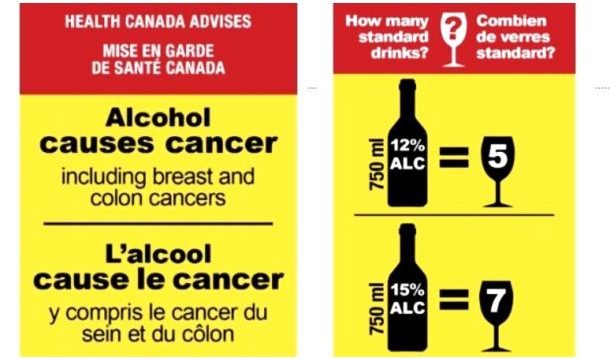
The Department of Health has confidentially polled Canadians on whether to post warning labels on beer, wine and liquor, records show. A narrow majority supported the initiative though 28 percent said it would have no effect on their drinking habits: “Many Canadians associate drinking with pleasurable social events,”
Pawnbrokers’ Christmas OK
Finance Minister Chrystia Freeland in a legal notice Christmas Eve proposed to allow pawnbrokers to charge 60 percent interest on loans. Freeland had promised reforms to 1980 usury laws to protect “the most vulnerable people in our communities.”
Many Happy Returns In 2024
We wish you a happy New Year. Blacklock’s pauses this week for our annual holiday break and will return January 2 — The Editor
Could Not Do It Without You
Warmest regards to friends and subscribers for a safe and happy holiday. Blacklock’s wishes you the best of Christmas — The Editor
Book Review: No Place For Heroes
If focus groups were infallible every candidate would be a winner, every movie would be a blockbuster, every toothpaste would be recommended by 9 out of 10 dentists. Dilbert creator Scott Adams described focus groupers as people thrilled that somebody asked their opinion and gave them a free lunch at the same time. “There are actually some people who admitted in focus groups that they would sometimes taste soap,” he wrote.
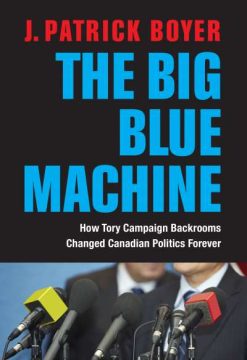
Yet the mythology of focus group infallibility persists due in no small part to the claims of pollsters paid to conduct them, which brings us to The Big Blue Machine, J. Patrick Boyer’s account of “how Tory campaign backrooms changed Canadian politics forever.” Boyer is a former two-term Progressive Conservative MP for Etobicoke-Lakeshore. He is also an honest correspondent and skillful writer. The subtext to Big Blue Machine is failure. Boyer admits as much.
“Renown was larger than the reality,” he writes. Political fixers, ad men, pollsters and marketers “understood how it advanced their purposes to be seen, not as fallible human beings, but as men operating a superhuman ‘machine.’” Big Blue Machine documents the rise and fall of Dalton Camp, the ultimate Tory fixer who aspired to become prime minister or at least control one, and instead spent his twilight years cranking out columns for the Toronto Star. “He had not become the hero he’d envisaged himself to be,” Boyer notes.
Folk tales of fixers’ infallibility persist. Practitioners delight in he-man vernacular, describing themselves as “war-roomers” and “ass-kickers.” The effect is occasionally pathetic. Boyer recounts that Camp became an avid reader of “ground-breaking books from the United States on psychology, advertising, mass communication and techniques for altering patterns of human behaviour.” Presumably none of Camp’s rivals owned a library card.
The result: When Toronto lawyer Allan Lawrence ran for the leadership of the Ontario Tory party in 1971 “the Camp agency designed a visually bold logo for the Lawrence campaign consisting of three basic forms (a circle, a square and a triangle) in three solid basic colours (red, yellow, blue) that was unmistakable, bold and simple.” Lawrence lost.
In Bob Stanfield’s 1972 national campaign, managers hired a six-piece band called Jalopy with a lead accordion player. “Integrating Jalopy into the PC campaigns changed the way entertainment fused with politics, enlivened crowds, made everyone more receptive, and created a better environment for the leader,” Boyer enthuses. In fact campaigners had used warm-up bands since the era of torchlight parades. Stanfield lost.
Ultimately Boyer strikes a haunting chord. Profiling Dalton Camp in his final years, he writes: “Camp came of age in an era where boys modelled themselves on heroes found in books and on movie screens, characters who, through creative editing, were more luminous than anyone could ever be in real life. Forced by his father’s death to return from the United States, one of the teen’s disappointments was to find Canada a land without heroes. ‘In the United States,’ he recalled with longing, ‘we had new ones all the time, men like Charles Lindbergh.’”
“Winston Churchill became a lifelong hero to Dalton, but in Canada nobody came close to his exceptional attributes,” Boyer notes. “Over time, disappointment blunted Camp’s impulse to look for greatness in others.”
By Tom Korski
The Big Blue Machine: How Tory Campaign Backrooms Changed Canadian Politics Forever, by J. Patrick Boyer; Dundurn Press; 416 pages; ISBN 9781-4597-24495; $35

Debt Recovery Costing $538M
The Canada Revenue Agency will spend more than a half billion chasing ineligible claimants for repayment of pandemic relief cheques, records show. Cabinet was warned in 2020 the Canada Emergency Response Benefit program was open to abuse: ‘There were only the flimsiest prepayment controls.’
Feds Study Climate Refugees
The Department of Immigration says it is researching whether climate refugees will attempt to enter Canada. Current law does not recognize “climate considerations” as grounds to claim refugee status: “Canada is investing in projects that aim to strengthen data and evidence related to climate mobility.”
Cannot Sell Without Rebates
Two provinces with the richest rebates for electric vehicles accounted for 74 percent of national sales last year, Department of Transport figures show. The department acknowledged it relied on rebates for “increasing the number of zero emission vehicles on the road.”
More Asians In Realty: Report
Chinese Canadians and Filipinos are more likely to be homeowners than Arab Canadians or Black people, Statistics Canada said yesterday. No reason was given: “Chinese, Southeast Asian and South Asian populations had the highest home ownership rates.”
OK Gaza Visas With Limits
Cabinet yesterday said it will waive immigration rules to permit a limited number of Gazans, fewer than 1,000 with family here, to enter Canada. Security checks will be strict and applicants will be vetted by Israel, said Immigration Minister Marc Miller: “The Israelis have their say. They will screen people.”
PM Names Donor As Senator
Toronto developer Toni Varone, a longtime Liberal donor and organizer with Prime Minister Justin Trudeau’s 2013 leadership campaign, yesterday was named a senator. The appointment follows Trudeau’s pledge to abolish “patronage in the Senate.”
Guilbeault Claims Were False
Environment Minister Steven Guilbeault used misleading data and inaccurate generalizations in defending cabinet’s electric car mandate, records show. Guilbeault’s own department acknowledged banning the sale of inexpensive gas vehicles will result in net costs of billions for drivers and “disproportionately impact” the working poor: “Amendments are estimated to have incremental zero emission vehicle and home charger costs of $54.1 billion.”