Environment Minister Steven Guilbeault claims he protested human rights atrocities while attending a climate conference in Beijing. His department issued no such statement at the time. Guilbeault’s office would not release a text or recording in which Guilbeault mentioned “human rights” or China’s use of slave labour in manufacturing green energy products: “I have spoken with human rights issues when I was in China just last week; I have.”
Says Media Got Story Wrong
Governor General Mary Simon blames unnamed media for what she called Residential School “denialism.” Unidentified media are trying to “control the story of Indigenous peoples,” she said.
Sensitivity At $1,000 An Hour
A Prince Edward Island senator billed taxpayers $3,500 for an Indigenous sensitivity training course that typically takes about three hours, according to facilitators. Senator Brian Francis’ office would not detail the expense: “Blankets arranged on the floor represent land.”
LGBTQ ‘God’s Children’: PM
Many Canadians considered homosexuality morally repugnant even if gay people were “God’s children,” then-Prime Minister Brian Mulroney told his 1986 cabinet. Newly declassified records show Mulroney was personally sympathetic to a gay rights bill but considered it divisive: “Look at the long sweep of history and at the changes in what had become socially acceptable.”
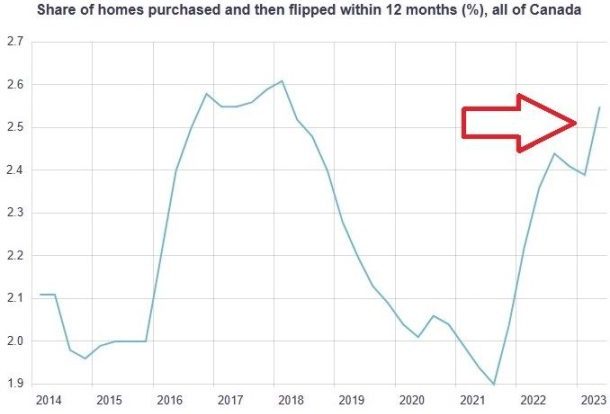
House Flipping Is Back: Feds
House flipping is back despite a new federal tax targeting speculators, data show. Bank of Canada figures indicated nationwide the incidence of flipping had reached pre-pandemic levels: “You shouldn’t lose a bidding war on your home to speculators.”
“Faceless” — A Sunday Poem
Newspaper articles
dealing with Canada’s prostitution laws
come with pictures.
Some show the face of the Justice Minister –
serous-looking, with
a white collar,
a suit,
a tie.
Others show the legs of a prostitute –
a mini skirt,
leather boots,
waiting on an unidentified
street corner.
Editors may not see
why the legs of the Justice Minister
would be relevant to the debate,
and the same goes
for the face of the prostitute.
By Shai Ben-Shalom

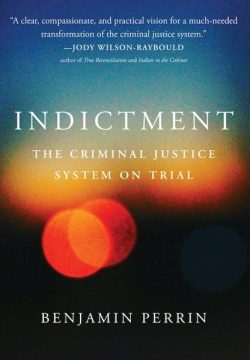
Review: Lawyers
Benjamin Perrin, former counsel in Stephen Harper’s office, writes a provocative book, almost calculatingly so. “I’m a white male law professor and a settler,” writes Perrin. At one point he appears to liken the jailing of Indigenous prisoners to the crucifixion of Jesus. “I see Jesus as someone who was wrongfully convicted and executed by an occupying power,” he says.
“I unreservedly apologize for my role in perpetuating the criminal justice system and supporting ‘tough on crime’ laws and policies earlier in my career, especially in 2012-2013 when I was on leave from my job as a law professor to advise Conservative Prime Minister Stephen Harper,” writes Perrin. “He is responsible for his decisions. But I am responsible for the advice that I gave and didn’t give.”
Perrin’s Indictment: The Criminal Justice System On Trial advocates “transformative justice.” The remedies he proposes have been articulated by Olivia Chow and the John Howard Society.
Indictment skewers Perrin’s former Reform and Conservative Party friends. “Conservative politicians in Canada and Republican politicians in the United States have made ‘stupid on crime’ policies their stock in trade for decades,” he writes. “In political lingo it is ‘red meat’ for voters, a sure bet to rile people up to vote, sign up for a membership, donate and volunteer. This crass, cynical game is destroying lives and it has to stop.”
At first glance Perrin’s book has the look of a spicy, 408-page mea culpa of the I Was A Teenage Communist school of non-fiction, a full-throated takedown of Party insiders by a former insider. Then it gets better.
Perrin correctly notes Canadian courts are “an adversarial system run amok.” Everyone knows the figures. Penitentiaries are filled with poor, jobless, fentanyl-addicted criminals. Few wealthy, connected, cocktail-drinking criminals ever see a cellblock.
The author even quotes a criminal defence lawyer who explains a defendant charged with drug possession has a good chance at acquittal for, say, $25,000. “For a day-long trial there would have to be Charter issues to exclude the evidence,” the barrister is quoted. “Without that you will be found guilty. I would charge something to someone who can pay. I’d charge $20,000 to $25,000.”
But it’s not the Reform Party or Stephen Harper or carnivore constituents who run the system. It’s Perrin’s own profession: lawyer prosecutors, lawyer judges, lawyer Correctional Service managers and Parole Board appointees. “Unlike physicians, criminal justice professionals have no equivalent to the Hippocratic Oath that binds them to ‘do no harm or injustice,’” he writes.
Yet the “system,” meaning lawyers, “intentionally or knowingly caused harm,” “recklessly caused harm” and “negligently caused harm.” This takes character on Perrin’s part, as a practitioner “educated and indoctrinated into the Canadian legal system at some of the country’s top law schools.” He is today a professor of law at the University of British Columbia.
Perrin interviews convicted murders, rapists, drug traffickers and robbers. “I learned vastly more from them than all the cocktail receptions, fireside talks and conference panels combined,” he writes.
He also interviews crime victims. “Hearing their stories brought me to tears more than once, affected my sleep, made me feel a sense of hopelessness and caused me to doubt things could ever change,” he writes.
Indictment is articulate and passionate and lays out what Perrin believes is a path to reform. But that’s up to the lawyers. They got us in this. They can get us out.
By Holly Doan
Indictment: The Criminal Justice System On Trial, by Benjamin Perrin; University of Toronto Press; 408 pages; ISBN 9781-4875-33731; $32.95
Vow To Follow The Evidence
A judicial inquiry into alleged Chinese election fraud is expected to “follow the evidence” in probing party nomination meetings, cabinet said yesterday. Documents to date have cited irregularities at a 2019 Liberal Party nomination won by MP Han Dong (Don Valley North, Ont.): “Follow the evidence.”
No Recession Here: Macklem
There will be no recession, Bank of Canada Governor Tiff Macklem yesterday assured reporters. Macklem quickly modified his remarks to caution there could be a “technical recession” but not what most Canadians “think of when they think of a recession.”
40% Use Replacement Labour
Replacement workers are used in 40 percent of strikes and lockouts in the federally regulated private sector, according to labour department figures. Cabinet has promised by year’s end it will introduce a bill to ban the practice: “You are looking at passing the bill next year?”
25,698 Pay New Wealth Tax
A tax hike on the wealthiest tax filers will affect fewer than 26,000 people and raise less money that cabinet expected, the Budget Office said yesterday. The tax increase followed a Commons finance committee recommendation to “close the growing income gap.”
Feared Unity Crisis Over Oil
Newly-declassified cabinet records disclose then-Energy Minister Pat Carney feared a national unity crisis over the 1986 collapse in oil prices. “We should do something about it!!” Carney wrote in a memo to cabinet: “The benefit of lower oil prices accrue almost exclusively to central Canada.”
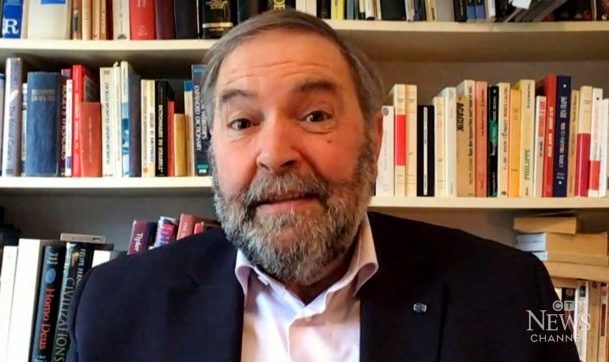
Mulcair Breaches Truth Code
Former New Democrat leader Thomas Mulcair yesterday was cited by a national broadcast ombudsman for spreading misinformation in a radio show. The station was ordered to read a correction on the air: “The public is entitled to expect that hosts and commentators will convey accurate information.”
No Comment From Freeland
Finance Minister Chrystia Freeland yesterday would not say if she will use statutory powers to direct the Financial Consumer Agency to investigate public complaints. Access To Information records show the federal Agency did not contact any of 27,323 bank customers who wrote to complain of breaches of the Bank Act: “It is window dressing.”
Pondered 9,000 Postal Layoffs
A confidential 1986 cabinet memo proposed massive job and service cuts at the post office as the only way to eliminate recurring deficits, Access To Information records show. Then-Prime Minister Brian Mulroney dropped the plan as “too Draconian,” he said: “Measures would be unpopular with the public and the probability of labour unrest could not be discounted.”