Opposition Leader Pierre Poilievre yesterday contradicted garbled claims by the Canadian Press news agency that he falsely incited terrorism fears. It followed an earlier CP story on Poilievre that editors corrected three times: ‘I am checking with the Guinness Book of World Records to see if there has ever been a news agency that had to issue three corrections for patent falsehoods in one single article.’
NDPer To Prosecute Trudeau
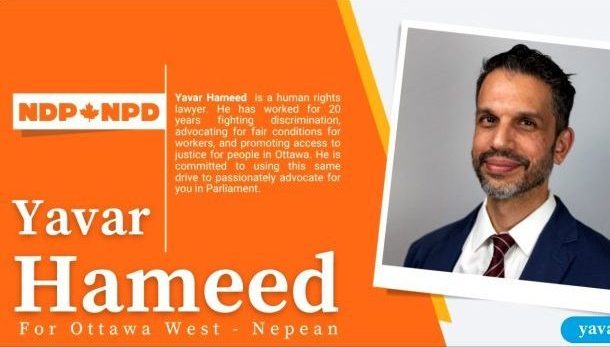
The New Democratic Party yesterday declined comment on a former candidate who threatened to privately prosecute Prime Minister Justin Trudeau as a friend of Israel. Yavar Hameed of Ottawa accused Israel of “war crimes.”
$1.6M Fine For $100 Violation
Federal regulators yesterday fined an Ontario trust company $1.6 million for failing to plainly disclose a $100 statement fee it charged mortgage customers. The penalty was five times the amount collected in fees: “Accurate disclosure of fees and costs is fundamental to fairness, honest business practices and the integrity of the financial system.”
Feds Review All Foreign TV
The CRTC will hold a special hearing on licensing of all foreign cable and satellite television services available in Canada, an executive said yesterday. It follows separate petitions to ban China Central Television and the Fox News Channel after Russia Today was blacklisted by Parliament: “We are going to hold a broader hearing – that is forthcoming – on how we treat foreign services.”
Nazi ‘Hero’ Investigation OK
The House affairs committee behind closed doors has agreed to public hearings into how a Waffen SS member was given a hero’s welcome in Parliament. Liberal MPs had objected to open discussion of the incident: “Deal with this matter openly and transparently to get to the bottom of one of the greatest international embarrassments.”
No Whistleblower Testimony
The Commons ethics committee yesterday voted against hearing whistleblowers’ testimony on insider dealing at a tax-funded foundation, Sustainable Development Technology Canada. “The committee voted to silence a whistleblower,” said Conservative MP Michael Barrett (Leeds-Grenville, Ont.). “I can’t abide that.”
Feels Like The ’70s: Macklem
Public anger over economic failures is reminiscent of the 1970s, Bank of Canada Governor Tiff Macklem said yesterday. However Macklem ruled out any interest rate relief in 2024 as “a huge mistake.”
Country Doc’s Bonus Up 50%
Cabinet yesterday introduced a promised 50 percent bonus on loan forgiveness for medical students who agree to work in rural Canada. The measure will cost millions but attract more than 5,000 new doctors and nurses, said the Department of Employment: “Canada’s health system is experiencing an unprecedented health workforce crisis.”
Car Wreck Rattles Parliament
A security scare that prompted closure of four cross-border bridges yesterday put Parliament on edge over terrorism fears. The fiery crash of a speeding car at Niagara Falls, N.Y. had the Prime Minister cut short his attendance in Question Period: “When an incident like this happens and it’s shown in media and it’s shown worldwide it does have an impact.”
Press Gets More Pre-Vote Aid
Finance Minister Chrystia Freeland is doubling pre-election federal aid for publishers approved by the Liberal cabinet. Freeland in a Fall Economic Statement yesterday said payroll rebates originally promised to expire in 2024 are now extended past the next election at almost $30,000 a year per newsroom employee: ‘This is to ensure a strong and independent press can continue to thrive.’
MPs Investigate Korean Hires
The Commons industry committee last night voted to investigate the hiring of South Koreans at a subsidized battery factory. MPs demanded to know how many foreigners will work at taxpayers’ expense: “The motivation is simple: transparency.”
Never Made Batteries Before
Canada needs South Korean labour at a subsidized electric car battery plant because “we’ve never done batteries,” Industry Minister François-Philippe Champagne said yesterday. Cabinet would not disclose how many foreign workers it agreed to subsidize at a Stellantis factory in Windsor, Ont.: “No one has done batteries in North America before.”
Feds Defend $8M Warehouse
An $8 million solar-powered warehouse at Rideau Hall came in under budget, says the federal agency that managed the project. Members of the Commons public accounts committee yesterday expressed disbelief over the cost: “From photos we’ve seen it looks more like a detached garage with four doors.”
$4.6B Builders’ GST Holiday
Cabinet yesterday confirmed a tax holiday for apartment builders will cost nearly $5 billion. New terms are to include co-operative housing: “Our country needs more homes and we need more of them fast.”
Cannot Find Bob’s Thank You
Environment Minister Steven Guilbeault’s office in an Access To Information letter says it cannot find thank you notes from carbon tax supporters named Bob and Jill. Guilbeault in Question Period cited correspondence from the couple as evidence of the popularity of the tax: “After a thorough search no records were found.”