
Parliament must closely watch federal departments profiting from fees, the Commons industry committee was told. Cabinet five years ago passed a little-noticed law allowing departments to perpetually increase fees to inflation, currently 6.7 percent: “They are making a profit and not disclosing it to Parliament.”
Tenth Of Staff Contract Covid
A tenth of federal employees contracted Covid despite the highest vaccination rate of any comparable workforce, data show. The Public Health Agency confirmed vaccines offered “imperfect protection” after a few months: “Two doses have a very limited ability to reduce infection and therefore transmission.”
Fail Despite $390M Subsidies
The number of periodicals in Canada fell nine percent in five years despite almost a third of a billion in federal subsidies, says a Department of Canadian Heritage audit. The disclosure follows confirmation a separate $595 million newspaper bailout did not create jobs as promised: “The industry is facing major challenges.”
Alberta Joins Legal Challenge
Alberta is the first province to intervene in a Federal Court challenge of cabinet’s use of the Emergencies Act. Only three provinces supported cabinet’s declaration of a national emergency against the Freedom Convoy: “No government should have the power to seize a person’s property or withhold access to their assets without due process of the law.”
$54M Student Loans Forgiven
More than $50 million in unpaid student loans will be forgiven at taxpayers’ expense this year, says the Department of Employment that manages the program. Cabinet had suspended debt collections as a temporary Covid relief measure in 2020: “The value of unpaid student loans will continue to grow.”
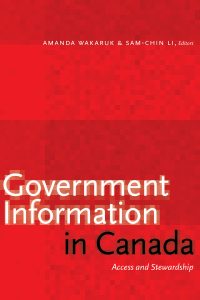
Book Review: The Big Gov’t Eraser
Librarians, like hoarders, save everything because you never know what is needed in the future, and governments like to change the record as they go along. As Government Information In Canada puts it, “the goals and interests of future researchers can never be fully anticipated.” Though record-keeping has never been cheaper and easier, it has also never been more haphazard.
Government Information makes this point beautifully.
“Consider this: one has an easier time finding and reading a surveyor’s report of Aboriginal lands that was submitted to and published by the Government of Canada in 1897 than finding and reading an academic research paper submitted to the Royal Commission on Aboriginal Peoples and published for the Government of Canada by a private company in 1997,” write librarians Amanda Wakaruk of the University of Alberta and Steve Marks of the University of Toronto.
Records matter. Library and Archives Canada since 1953 has had a mandate to preserve every single federal document. Some jurisdictions like Prince Edward Island, Yukon and Nunavut have no preservation mandate whatsoever. Others are poorly funded.
The result: electronic data vanishes in an instant. In 2016 a newly-appointed Liberal cabinet asked Google to delete previous entries by Prime Minister Stephen Harper on the pm.gc.ca website. This included daily posts and a video diary. “The Privy Council Office who made the request explained that removal of former government content was common,” authors note.
Would researchers, historians, taxpayers, legislators or litigants find it useful in a hundred years to know Stephen Harper’s video diary? That’s not for today’s clerks to say. This is the point of Government Information In Canada.
“It took libraries centuries to develop standardized practices for preserving print works,” write contributors. “Sustainable solutions evolved from best practices following decades of trial and error, and the slow creation of symbiotic relationships between publishers, libraries, archives and readers. Today, working with digital media, we do not have the luxury of centuries to develop best practices for the preservation of works dependent on computer code and technological compatibility.”
Digital records are more problematic in the ways they are “understood (or not), shared (or not), and stored (or not),” says Government Information. “It was not bit rot or technological obsolescence but rather a lack of infrastructure development, the dismissal of professional judgment and highly partisan policy decisions that brought us to a government information ‘crisis’ situation in Canada.”
“Crisis” is not too strong a word. Vanishing records are only noticed once they’re gone. As authors put it, “The half-life of government web content is notoriously short.”
By Holly Doan
Government Information in Canada: Access and Stewardship; edited by Amanda Wakaruk and Sam-chin Li; University of Alberta Press; 376 pages; ISBN 9781-77212-4064; $80.00

MPs Seek Tax Whistleblowers
Revenue Minister Diane Lebouthillier yesterday said she is a “good watchdog” and sees no wrongdoing at the Canada Revenue Agency. Her remarks came as Conservative MPs served notice of hearings into alleged corruption including confidential testimony from whistleblowers: “Everything is in order.”
44th Election “Disheartening”
Chief Electoral Officer Stéphane Perrault yesterday told MPs he was disheartened by police scuffles at polling stations in the September 20 election. Perrault had no explanation for what he called a rising trend in disputes targeting poll workers: “That is quite unfortunate.”
Bill Criminalizes Wage Fixing
Cabinet’s omnibus budget bill will criminalize wage fixing following an outcry over conduct of leading grocers. The ban would apply to every employer nationwide, a Department of Industry manager said yesterday: “The law applies broadly across the entire economy.”
Agents Seized 1,113 Firearms
Border guards seized 1,113 firearms last year, the most up to date figure on the scope of known gun smuggling in Canada. The Canada Border Services Agency said a majority of seized firearms, a total 1107, were owned by Americans: “The total number of firearms successfully smuggled into Canada is unknown.”
Dismiss 72% Of Vax Waivers
Federal managers dismissed an average 72 percent of employee requests for medical and religious exemptions from mandatory vaccination, figures show. No reason was given for the high rates of rejection: “Managers are not making these decisions on their own.”
PM Seeking Abortion Debate
Cabinet is prepared to introduce an abortion bill for the first time in 31 years “if we need to,” Prime Minister Justin Trudeau said yesterday. Canada has no abortion law. Cabinet will “move forward as necessary on ensuring that not just under this government but under any future government the rights of women are properly protected,” Trudeau told reporters. Other cabinet members expressed wariness.
Hint Of Stamp Rate Increases
The post office yesterday hinted it will seek cabinet approval for a stamp rate hike for the first time in two years. Inflation was a risk, managers wrote in an Annual Report: ‘Canada Post has an obligation to charge rates that are fair and sufficient to cover the costs.’
Overheard House Vulgarity
Prime Minister Justin Trudeau yesterday declined comment after MPs accused him of shouting a vulgarity at a female MP. “What is the nature of your thoughts, gentlemen, when you say you move your lips in a particular way?” Trudeau told reporters.
See First Nations Crime Wave
Rates of violent crime in First Nations communities are up to 16 times higher than other towns and hamlets, says the Department of Public Safety. Staff did not detail any reason for the crime wave: “Indigenous women had an overall rate of violent victimization that was double that of Indigenous men and close to triple that of non-Indigenous women.”