
Cabinet will rewrite the Canada Post Corporation Act to allow speedier stamp rate hikes. The law currently requires cabinet approval for any increase, typically delaying higher revenues by three to four months: “The stamp rate in Canada has not kept pace.”
$60M Giveaway Questioned
It is “difficult” to determine what good came from a multi-million dollar subsidy program launched to promote United Nations policies, say federal auditors. Then-International Development Minister Karina Gould launched the program in 2021 on the promise of a “brighter future for everyone.”
LGBTQ Activists v. Bill C-9
Subsidized LGBTQ activists are protesting a federal bill to ban disruptive rallies outside synagogues. New measures to outlaw intimidation at places of worship were “concerning given the rise in LGBTQ activism,” the group Egale Canada wrote the Commons justice committee: “LGBTQ protestors will be forced to question whether they could be seen as provoking a state of fear.”
Pause For Remembrance Day
Blacklock’s Reporter today pauses for Remembrance Day observances with gratitude to all who honoured our country. Thank you for your service — The Editor.
Just Don’t Call Medicare Free
The Department of Immigration in internal staff emails cautioned against promoting “free” health care for foreigners, Access To Information records show. Managers did approve an October 13 tweet celebrating “public” health insurance: ‘Remove that word.’
$197M Lost On Student Loans
Student loan write-offs will cost taxpayers $197.3 million this year despite interest waivers and generous repayment terms, budget documents show. An earlier internal report at the Department of Social Development blamed hard times: “The value of unpaid student loans will continue to grow.”
Test Biggest Fed Database Yet
The Department of Employment will test a project to compile real-time payroll data on some 21 million workers nationwide. No parliamentary committee to date has scrutinized the scope or cost of the ePayroll program: “The sheer volume of data would be enormous.”
Feds Detail Job Site Blacklist
Federal managers are blocked from watching Netflix or pornography at work, according to Treasury Board orders tabled in the Commons. One agency cautioned any material featuring swimsuits or “intimate apparel” was also forbidden during business hours: “What directives have been issued?”
$520M Telecom Case In Court
An 11-year class action lawsuit targeting up-to-the-minute telecom billing practices will proceed to a hearing in Ontario Superior Court, a judge has ruled. Lawyers seek millions in damages on behalf of Bell and Telus customers they allege were cheated in pre-paid plans one minute at a time: “When Bell and Telus agreed to provide a certain number of ‘minutes’ of cellphone time, what did that mean?”
A Poem: “The Conclusion”
Six killed
in Ottawa’s bus-train collision.
Dozens injured.
Transportation Safety Board
releases its report,
recommending a grade separation for that
crossing.
Meaning the bus should go on one level,
the train on another.
Two years to figure out
that if the bus and the train hadn’t
met,
the accident wouldn’t have
happened.
By Shai Ben-Shalom

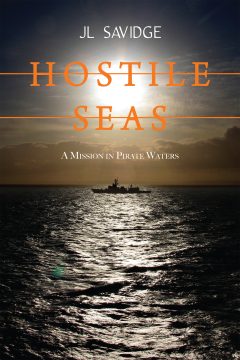
Review: Diary Of A Quiet Cruise
In 2008 the navy deployed HMCS Ville de Québec to patrol for pirates off the Somalian coast. They didn’t find any. “Back on Ville de Québec I’m bored, too,” writes Jennifer Savidge, an intelligence officer aboard the frigate.
Savidge spins the tale into 272 pages titled Hostile Seas: A Mission In Pirate Waters. The cover image is a stock photo of a ship in a moonlit bay. There is water everywhere. Pirates, not so much.
“Unlike pirate lore…there is nothing fun or romantic about this enterprise,” writes Savidge, a naval reservist. Hostile Seas reads like the diary of a ten-week cruise.
There is fresh linen every week, and an adequate supply of Kit Kat bars. Saturday night is pizza night. Officers have a cappuccino machine. There’s a great dessert buffet: “On the wardroom bar after meals lay a mind-blowing array of treats: freshly-baked cookies and cakes, pies and puddings, sometimes even ice cream and ingredients to make our own sundaes, surprisingly effective morale-boosters for sailors on long deployments.”
Ville de Québec was assigned to escort cargo ships to Mogadishu. Not a shot was fired in anger. The assignment itself was mandated under NATO, though the link to national security seemed tenuous even at the time.
“These waters are now considered the most dangerous in the world,” explains Savidge: “The alternative is routing their vessels all the way around South Africa, adding an average of twelve days to a typical voyage from Europe to the Gulf, which could potentially increase freight rates by at least 25 percent, time being money in this industry. Through higher prices in goods, the increase in shipping costs is ultimately passed on to the consumer.”
Is it the job of the Canadian navy to keep down prices for German consumers? The question is unasked and unanswered.
No matter. Aboard Ville de Québec there is not a pirate in sight. “On my way to fitful sleep I think of the pirates,” writes Savidge. The author even invents a character, Abdi the pirate, to fill out the narrative. “The story line of the Abdi character is pure fiction,” she explains.
Also, “dialogues and interactions within the book are recreated from memory,” “Many of the names have been changed,” “Others who shared in these events will no doubt have experienced them differently.”
Hostile Seas is an odd account of an unexciting mission, though it was undoubtedly meaningful to Savidge. In 2009 she received a commendation for her service about Ville de Québec. “I feel lucky,” she said.
By Holly Doan
Hostile Seas: A Mission In Pirate Waters, by J.L. Savidge; Dundurn Press; 272 pages; ISBN 9781-4597-19378; $22.99
Refugee Backlog Is 44 Months
Illegal immigrants who file a refugee claim in Canada today can expect a ruling by the Immigration and Refugee Board in July 2029, chair Manon Brassard yesterday told the Commons immigration committee. One MP blamed a Trudeau tweet for the unprecedented backlog: “Such large numbers were not expected.”
No Sign Of Foreign Registry
Cabinet will not fix a deadline to enact a public registry of foreign agents though Parliament passed the measure into law 17 months ago, the Commons public safety committee learned yesterday. Public Safety Minister Gary Anandasangaree said he was “going through a process.”
Spent $1.6M Hiding Records
Federal lawyers have run up more than $1.6 million worth of billable hours in Federal Court fighting disclosure of Access To Information records, figures show. Prime Minister Mark Carney had called disclosure “quite important.”
Second Conservative MP Out
Another MP last night quit the Conservative caucus out of ‘desperate’ disappointment at Liberals’ re-election, he said. Matt Jeneroux resigned as MP for Edmonton Riverbend to spend more time at home, he wrote voters: “It is not an easy decision.”