The Freedom Convoy truck drivers’ protest rally today prompted Transport Minister Omar Alghabra to abruptly cancel a scheduled personal appearance on Parliament Hill. It followed attendance at the rally of one speaker who’d called Alghabra a terrorist: “The hysteria gripping our society is reaching new heights.”
Harassed, Mocked, Ridiculed
Federal employees who declined vaccination say they have been ridiculed, harassed and threatened. Workers in a lawyers’ letter to the Treasury Board said suspending unimmunized staff without pay amounted to wrongful dismissal: “There are many reasonable and practical alternatives.”
Feds Pledge Animal Test Ban
Cabinet will enact an animal cruelty prevention bill to abolish cosmetic testing on live mammals like albino rabbits, says the Department of Health. A Senate bill to ban the practice lapsed in 2019: “In this day and age we have to find alternatives.”
I’m In Convoy Too: Minister
Truckers and cabinet members alike are “all in the same convoy,” says Health Minister Jean-Yves Duclos. The Minister declined to speak with protesters demonstrating on Parliament Hill against his vaccine orders, but told reporters: “We’re all tired.”
MPs Complain EI Still A Mess
Federal call centres still cannot keep up with Employment Insurance claims despite spending more than $620 million on a promise of better service, say MPs. Members of the Commons human resources committee said they would investigate complaints of lengthy wait times: “There is nothing that can explain why.”
A Sunday Poem: “Check”
Applicants for Summer Jobs program
must check a box on the form.
Agree with women’s right to abortion.
I read the job description
of a military chaplain.
Advise on ethical dilemmas,
spiritual and moral issues.
Provide care after major life incidents.
Not a word on reproductive freedom.
No box to check.
How would Liberals assure
the Chaplain agrees with the Charter?
(Editor’s note: poet Shai Ben-Shalom, an Israeli-born biologist, examines current events in the Blacklock’s tradition each and every Sunday)

Review — It’s All About The Money
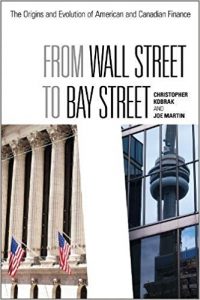
If you accept money is the great divider in life – not race, gender or religion – any history of money should expose the core of the Canadian story. It is, and this does. Financial historians Christopher Kobrak and Joe Martin of the Rotman School of Management chronicle 300 years of money in Canada with an account rich in anecdotes and telling in its findings.
Canada today is one of the few English-speaking countries with a central bank that is taxpayer-owned. It was money that smashed the two-party system in Parliament a century ago, and regulation that saved Canadians from a sub-Arctic version of the 2008 panic.
“Canadians have more faith in their political and financial elites’ ability to find socially useful compromises between the rights of creditors and debtors,” authors note in From Wall Street To Bay Street. “Perhaps most importantly, Canadians from their earliest history seemed quite willing to learn from the vigour and foibles of their southern neighbour.” When Canada federalized banking in the Confederation era, legislators were “well aware of the strife and troubles south of the border.” In 1860 the United States had 1,562 banks. Canada had sixteen.
From Wall Street To Bay Street moves at a smart clip with quirky research. Who knew colonial Québec used playing cards as currency, or that the Spanish silver dollar was the most commonly circulated coin in Nova Scotia in 1790?
From 1869 the first Bank Act was introduced, ghostwritten by the general manager of the Bank of Montreal. Banks then and now were powerful in Canada, but not all-powerful. Canada in its first 50 years saw numerous bank failures – seven alone in 1907 – and a rise of political parties devoted to controlling banks including Progressives, Social Creditors and CCFers.
Illustrative of the Canadian story is one of the great High Noon moments in banking on December 14, 1998, when then-Finance Minister Paul Martin vetoed proposed mergers of four big banks – the Royal and Montreal, and CIBC and Scotiabank – into two super-banks with billions in assets. It was “because of a concern about creating banks ‘too big to fail’,” authors note. The decision proved prescient when U.S. bank bailouts occurred a decade later.
The history of money is a history of people. The 1920s did not roar in Canada, authors explain. The collapse of the wheat boom saw the economy shrink by 13 percent in a single year, 1921. And the savagery of the Depression produced statistics that still horrify.
In Saskatchewan in the 1930s, average incomes fell 72 percent. Unemployment in Windsor, Ont. peaked at 50 percent. In Manitoba, then one of the world’s largest wheat exporters to Europe, prices fell to 33 cents a bushel, a valuation not seen since the Middle Ages.
Through the sweat and tears, authors document a uniquely Canadian story footnoted by a singular fact: Canada remains a nation where bankers do not enjoy celebrity status. Very few could name the governor of the Bank of Canada. Many more could name the minister of finance.
By Holly Doan
From Wall Street to Bay Street, by Christopher Kobrak and Joe Martin; University of Toronto Press; 370 pages; ISBN 9781-4426-16257; $34.95
Say Media Vilified Protesters
MPs yesterday accused media of vilifying protesters attending a Freedom Convoy truckers’ rally on Parliament Hill. Reporters at a press briefing described various demonstrators as bigots: “Establishment media have been looking for controversies with some of these truckers.”
Hundreds Of Plaques Purged
About a tenth of federal historical designations approved since 1919 will be purged or rewritten including numerous tributes to John A. Macdonald, records show. Revisionism follows a cabinet order to delete history deemed to celebrate colonialism: “Nothing can be immune from review.”
Subsidy Definitions Not Final
Environment Minister Steven Guilbeault’s department said it has not yet finalized definitions to fulfill a promised ban on “inefficient” oil and gas subsidies. The work has been ongoing for seven years: “There is no simple set of words.”
Suicide Was Workplace Death
A Workers’ Compensation Board has been ordered to reconsider suicide as a workplace fatality. The ruling came in the case of a Saskatchewan policeman distraught after attending so many grisly crimes and accident scenes colleagues nicknamed him “Captain Death.”
Pocahontas Out Of The Park
Historic references to Pocahontas will be removed from signage at an Alberta forest, managers at Parks Canada said yesterday. Removing other names considered dated or awkward will take time, said the agency: ‘We encourage Canadians to educate themselves on Canada’s brutal history.’
Memo Says Media Didn’t Tell The Whole Story In Cop Raid
The Department of Public Safety is contradicting dramatic media accounts of reporters’ arrests at a British Columbia First Nations protest. Staff to Minister Marco Mendicino said media omitted contradictory facts in accusing RCMP of misconduct: “The video does not show what occurred.”
Calls PM Remarks Saddening
Protesters in a cross-country Freedom Convoy to Ottawa are a “small fringe minority” with opinions most Canadians oppose, Prime Minister Justin Trudeau said yesterday. Organizers of the truckers’ rally called the remarks sad: “It’s the political class that has abandoned us all.”
Feds Blow 5% Inflation Target
The cost of living will run higher than the Bank of Canada predicted just weeks ago, Governor Tiff Macklem said yesterday. Inflation rates already “uncomfortably high” will top five percent, according to the latest rewritten forecast: “What is it that has made inflation so difficult to predict?”