
A new federal law threatening ten years’ imprisonment for vaccine protestors is undemocratic, says a British Columbia senator. “Protest is one of the hallmarks of our democracy for unions and for different groups that want to put forward their views,” said Senator Larry Campbell: “Any time we limit this, we lessen our freedoms.”
Tax Foreigners More: Survey
Canadians want a tax on foreign offshore real estate speculators to be expanded, says in-house research by the Privy Council Office. The current tax, first of its kind, takes effect January 1: “Both foreign-owned summer homes and properties purchased primarily for use in Airbnb should be subject to the foreign buyers’ tax.”
Senators Just Rubber Stamps
Cabinet on Friday pushed final passage of a paid sick days’ bill through the Senate amid complaints of arm-twisting. Senators grumbled the Upper Chamber had become a rubber stamp. The Senate has passed every cabinet bill for 25 years: “I won’t say there was intimidation but there was pressure, and a lot of it.”
Most Appointees Are Insiders
Most government jobs earmarked for public posting are never posted, according to the Public Service Commission. The agency has complained of cronyism by federal managers: “That is certainly something we are on the lookout for at the Commission.”
Feds Censure Another Bank
Federal regulators have censured another bank for negative option billing. Scotiabank breached regulations by opening thousands of accounts for customers who never asked for them, according to the Financial Consumer Agency of Canada: “Scotiabank was negligent.”
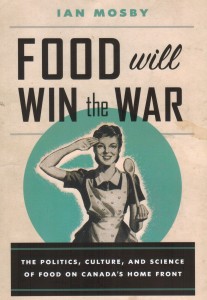
Book Review: A Taste Of The War
To read this delightful account of wartime eating is to comprehend for the first time our mothers’ odd fascination with liver.
Livestock organs have today vanished from most supermarkets including items that butchers once creatively marketed as “variety meats”: calves’ brains, tongue, tripe and kidneys. None blighted so many childhoods as liver: liver loaf, minced liver, liver sauté, and most appalling, fried liver and onions, a dense, grey, mealy dish that could only be choked down with ketchup.
“Eat liver frequently” was the decree of the 1944 Official Food Rules. An entire generation of homemakers took the admonishment to heart long after victory was ours.
Food Will Win The War is a fresh and lively account of the Canadian dinner plate. It peers into the corners of the historical cupboard to uncover the most intriguing details of the home front experience. Researchers rarely delve into diet in documenting the past, though the results are always revealing. Who is not wiser on learning Lester Pearson’s favourite lunch was a poached egg? Or that Britain’s Ministry of Food decreed rice soup with haddock as Christmas Day supper in 1917?
Historian Ian Mosby tells us what the war tasted like. It was plain but filling. “In part this was achieved through unprecedented state intervention in Canadian food production,” Mosby writes. “The federal government had taken direct control over the bulk purchase, sale and distribution of a range of basic commodities – including sugar, tea, coffee, wheat and rice.”
The food czar who led the Wartime Prices and Trade Board was Donald Gordon, a no-nonsense executive who later ran Canadian National Railways. Gordon was a plain eater himself. His favourite dessert was a toothpaste-like gelatin called Mint Bavarian. He was just the man for the hour.
Canada was never short of food. The average family ate better during the war than they had in the Depression. But the nation had to literally feed an army and Allies, too.
The country supplied 77 percent of Britain’s wheat and flour by 1941. Gordon’s board printed Food Guide posters telling Canadians what they should eat to help the troops. The Guide depicted “anthropomorphic foodstuffs marching with rifles,” Mosby notes. “Feeding one’s family according to the newly created Canada’s Official Food Rules emerged as a mother’s wartime duty, while reporting the baker to the authorities for selling a loaf of Canada’s Approved Vitamin B Bread above its ceiling price became an important patriotic act.”
This is what the country ate in 1944: two cups of milk daily, one tomato, one apple, one serving of potatoes, two servings of green vegetables preferably raw, one serving of whole grain cereal, four slices of bread with butter, one serving of meat, fish or eggs, one serving of cheese or nuts, “liver frequently”. Note the omissions: no soda; no pizza; no frozen dinners that marked the dawn of postwar cookery in the 1950s.
Food was rationed from 1942 but the guidelines were generous: half a pound of butter per person per week, half a pound of sugar, half a pound of coffee, 2 and a half pounds of meat. By comparison the meat ration in Nazi-occupied France was one-seventh the Canadian ration, Mosby writes. The country ate so well that meat production reached an all-time high in 1943.
Including liver, with onions.
By Holly Doan
Food Will Win The War: The Politics, Culture and Science of Food on Canada’s Home Front, by Ian Mosby; University of British Columbia Press; 288 pages; ISBN 9780-7748-27614

Vote First, Disclose Cost Later
The latest pandemic relief bill will cost billions more than originally estimated, Finance Minister Chrystia Freeland disclosed last night. The revelation came minutes after the Commons passed the bill and adjourned for Christmas: “We’re tired of this.”
MPs Wary Of China Boycotts
Liberal MPs yesterday said any federal boycott of China-made pandemic masks might breach trade treaties. Opposition members on the Commons government operations committee tried and failed to pass a motion recommending federal agencies use only Canadian-made products: “Get rid of the Chinese masks, okay?”
Oppose 1880 Sweetheart Deal
An 1880 railway agreement yesterday dubbed a “sweetheart deal” will be reconsidered by Parliament. Prairie legislators appealed for help in countering a Canadian Pacific Railway claim for a perpetual tax holiday: “The railway did pretty well at the time.”
Feds Seek More Gun Controls
Cabinet must introduce new gun controls, Public Safety Minister Marco Mendicino said yesterday. Guns were “causing the loss of too many innocent lives,” he said: “We believe we have more steps to take around gun controls.”
Complain Data’s Confidential
Individual Canadians and private companies “need to do their part” in surrendering confidential information to Statistics Canada, a federal advisory panel said yesterday. StatsCan said it would respect privacy rights: ‘There is a lack of willingness by public, private and other sectors to work with Statistics Canada.’
MPs Probe Climate Promises
MPs last night ordered hearings into the Prime Minister’s promises to a United Nations Climate Change Conference in Glasgow six weeks ago. “Is there a plan?” asked a member of the Commons natural resources committee: “The Prime Minister is making promises.”
CBC-TV Ad Sales Down 10%
CBC television advertising revenues fell another ten percent last year even as the network claimed housebound Canadians watched more TV than ever. Management had no explanation in an Annual Report tabled in Parliament: “You have to buy this dog over here that nobody wants.”
“We Are Afraid,” Says Duclos
Cabinet yesterday ruled out any assistance for Canadians who leave the country in breach of a pandemic travel advisory. “Like it or not, we must therefore adjust to this new reality,” Health Minister Jean-Yves Duclos told reporters: “We are afraid for what could happen.”
Thousands Of Migrants Hired
Tens of thousands of migrant labourers were granted work permits to enter Canada at the height of the pandemic even as unemployment hit a postwar high, records show. The Department of Employment also reimbursed employers’ fees for workers unable to enter the country due to the Quarantine Act: ‘We are requiring employers to provide credible evidence they tried to hire Canadians.’