
Parents of four-fifths of elementary school age children newly eligible for Covid shots have declined vaccination to date. The Public Health Agency said the coronavirus posed little serious risk to young children, adding school outbreaks were not significant: “If your objective is to reduce serious outcomes, the key focus remains the old age groups.”
Do Not Need Anti-Protest Bill
No change in the Criminal Code is necessary to deal with Covid protesters, a Senate committee was told Friday. Cabinet proposes maximum ten year prison sentences for some demonstrators: “I’m not sure the police will actually do anything differently.”
A Sunday Poem: “Up There”
Canadian astronauts
point to mental health
as the most important aspect
of maintaining humans in space.
Everything is the same every day, they say.
You are stuck with the same people
in tight quarters. Nowhere to go
for months on end.
And these conditions can lead to depression.
The Canadian Space Agency
spares no resources, eager
to enhance the well-being of crew members
who face stress and isolation
on board the International Space Station.
Up there,
in a remote Inuit community,
winter is long and cold.
Houses overcrowded. People stuck
in tight quarters. Nowhere to go
for months on end.
(Editor’s note: poet Shai Ben-Shalom, an Israeli-born biologist, writes for Blacklock’s each and every Sunday)

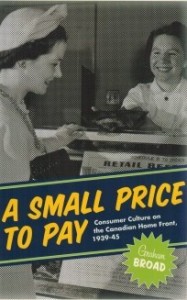
Review: War Years
It’s the fact that never fails to provoke nostalgia, anger or simple disbelief. For one magic generation from about 1952 to 1972, Canadians lived in a workers’ paradise. A single wage earner made enough to support a whole family. Most everyone could buy a home even if it was only 1100 square feet, and a typical Canadian had steady work with one, maybe two employers on the promise of a gold watch and pension.
Historian Graham Broad of Western University argues we have this all wrong: the golden years actually started a decade earlier. If the 1940s are cast as a gaunt era of wartime sacrifice, Broad notes that for the 99 percent of Canadians who were not in combat those years were frankly wonderful. “It’s a terrible thing to say, but I hope the war goes on for a long time,” as one Depression survivor told a newspaperman.
If the government rationed coffee in 1942, the quota was a none-too-dire 12 cups a week, and even that was lifted by 1944. If cabinet slapped a 25 percent luxury tax on jewelry, retailers reported it had no apparent impact on sales. Butter was rationed but only to stop hoarding. Wartime farm production actually doubled nationwide. If 1944 was the year Canadians fought their way up the boot of Italy, it was the same year Maclean’s reported that “night life in Montréal is booming like Big Ben on Armistice Day.”
Broad writes, “Canada’s declaration of war in September 1939 touched off the biggest proportional consumer spending boom in the country’s history.” In two years unemployment fell by three-quarters and per capita retail sales jumped 20 percent.
A Small Price To Pay is wry, ironic and wonderfully researched. It is also a dramatic resetting of the record. Far from the media depiction of 1940s Canada as a bleak and downcast place, Broad makes a persuasive case that most people never had it so good.
As France fell and Britain was blitzed, Canadians could still buy automobiles, lipstick and ice skates. Broad recalls when the Pacific war ended rubber imports, “Housewives complained to the Women’s Regional Advisory Committees about children’s skirts and pants that fell down, drawstrings being no substitute for the elastic waistbands!”
Where austerity was undeniable, the impact was not too devastating. Production of fridges and electric toasters was virtually eliminated by 1942, but only 20 percent of farmers had electricity anyhow. Gasoline was rationed in 1942 but drivers were still entitled to 5,000 miles worth of fuel a year, and one immediate impact was a 26 percent reduction in traffic deaths as highway speed limits were lowered to 40 mph.
“The Second World War was, in many respects, a period of progress in the development of the modern consumer economy, rather than the time of consumer deprivation that it is usually made out to be,” Broad explains. “Most histories of the home front, when they have addressed consumption at all, have placed an inordinate emphasis on rationing, shortages and propaganda urging consumer restraint. Although these were undeniably important aspects of home front life, there were few shortages until late 1941, rationing did not begin until 1942…and in the first two years, calls for increased consumer spending were far more common than calls for restraint.”
For young Canadians and even for those who lived it, the war years are immortalized as a black-and-white period of communal misery and sacrifice. A Small Price To Pay reruns the memory reel in brilliant colour punctuated with an astonishing fact. In no year of the war did Canada spend more on the military than it did on shopping.
By Holly Doan
A Small Price To Pay: Consumer Culture on the Canadian Home Front 1939-1945, by Graham Broad; UBC Press; 288 pages; ISBN 9780-7748-23647; $32.95
$81.9M To Test 5,000 Workers
Cabinet budgeted more than $81 million to enforce Covid rules for employees though fewer than 5,000 are unvaccinated. Treasury Board President Mona Fortier under Commons questioning could not explain over-budgeting for test kits: “How does the government justify this?”
Inflation Driving Food Thefts
More Canadians are stealing food to beat rising prices, a report by agricultural economists and researchers said yesterday. Shoplifting averages as much as $200,000 a year or more at some supermarkets, said Canada’s Food Price Report 2022: “A growing phenomenon related to increasing food insecurity caused by high inflation is theft from grocery stores which is anticipated to intensify in 2022.”
Quarantine A Costly Failure
The Public Health Agency spent more than $600 million enforcing a hodgepodge of quarantine rules that still left the border unsecure against Covid, a federal audit said yesterday. “This is not a success story,” said Auditor General Karen Hogan: “The Public Health Agency is unable to show us whether or not these border measures are effective.”
Vax Order Legality ‘Unclear’
It is unclear whether governments have a legal right to compel Canadians to disclose their vaccination status to access public services, Privacy Commissioner Daniel Therrien said yesterday. Therrien is investigating numerous complaints under the Privacy Act: “Requiring individuals to provide health information such as vaccination status is certainly a reduction of privacy.”
Confirm March Madness Blitz
Federal managers have no incentive to save money, Parliamentary Budget Officer Yves Giroux yesterday told the Senate national finance committee. Giroux confirmed the annual “March Madness” spending blitz that sees managers burn through unused budgets before the expiry of the fiscal year: “It is what we observe fairly frequently.”
Spotted Fraud In Mere Weeks
Federal regulators knew of suspected CERB fraud within weeks of the program’s launch, the Commons finance committee was told yesterday. Auditors have yet to detail the scope of theft under the $82 billion program that offered $2,000 cheques to jobless taxpayers facing eviction or foreclosure: “They would see clients receiving benefits under different names.”
Gov’t Fears Warehouse Heists
Fears of Covid mask robberies have prompted the Public Health Agency of Canada to tighten security at Winnipeg warehouses stocked with federal pandemic supplies. The hiring of private security guards follows a multi-million dollar mask heist in Hamilton in 2020: “The products were not recovered.”

Pundit Breached CBC’s Code
A CBC Alberta pundit who critiqued a news story he never read breached the network’s own code of conduct, an ombudsman said yesterday. Max Fawcett had libeled Blacklock’s as “shamelessly dishonest” in publishing a carbon tax story he did not read: “Yes, there was a violation.”
MPs To Probe Kabul Collapse
The Commons yesterday by a 179-156 vote ordered special hearings into the collapse of Afghanistan, including disclosure of confidential documents detailing Canadian diplomats’ unpreparedness. Cabinet opposed the Conservative motion: “Were there mistakes made? Could we do better?”
A Symbolic Olympic Boycott
Cabinet yesterday joined a “diplomatic boycott” of the Beijing Winter Olympics. One Liberal MP and former Olympian described the protest as meaningless to athletes: “I don’t think the athletes are concerned with which diplomats are there.”
Billions In Costs Unexplained
The actual cost of cabinet’s latest pandemic relief bill may be billions higher than estimated, the Commons finance committee was told yesterday. The Department of Finance was in a “continued race to push money out the door,” said one MP: “Things have been lax during Covid.”



