
The reporter whose coverage drove a Liberal MP from office yesterday testified legislators should create a federal anti-corruption agency. Sam Cooper of The Bureau News made the recommendation after noting connections between the Chinese Communist Party and Brookfield Asset Management formerly chaired by Prime Minister Mark Carney: “An independent anti-corruption agency is needed.”

‘I Do Not Want Picnic Tables’
The National Research Council tried to conceal the six-figure cost of Brazilian walnut lounge furniture in its financial accounts after an executive complained she did not like picnic tables, records show. Access To Information documents disclose managers spent more than a year selecting lounge chairs for a rooftop party patio: “The only thing I have asked for was no picnic style tables.”
Don’t Have Votes To Pass Bill
Liberal MPs today will attempt to clear their first post-election budget bill through the Commons finance committee after four months’ delay and stiff opposition. MP Ryan Turnbull (Whitby, Ont.), parliamentary secretary for finance, complained of Conservative proposals for tax cuts: “It’s important to realize who is actually in the driver’s seat.”
Failed App Was OT Bonanza
Federal managers billed more than $7 million in pay with overtime to develop a pandemic app few Canadians ever used, Access To Information records show. Then-Prime Minister Justin Trudeau had urged Canadians to download the app as a civic duty: “The application was developed by the government in 45 days.”
Third Carry Credit Card Debt
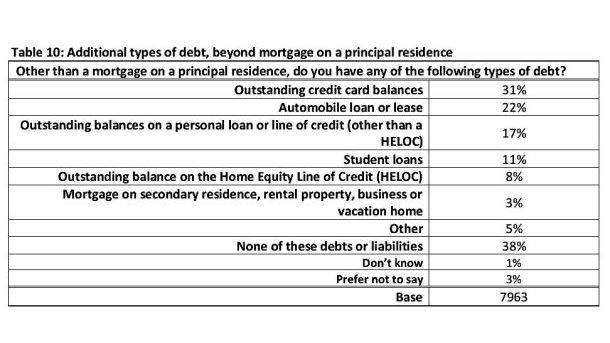
Almost a third of Canadians, 31 percent, are carrying credit card balances typically charged at 19 percent or more, federal data show. The findings of a Financial Consumer Agency survey were disclosed ahead of Wednesday’s Bank of Canada Monetary Policy Report update: “About half, 49 percent, have had to use credit cards, overdraft or borrow from savings for daily expenses.”
Telework Curbs Are Uncaring
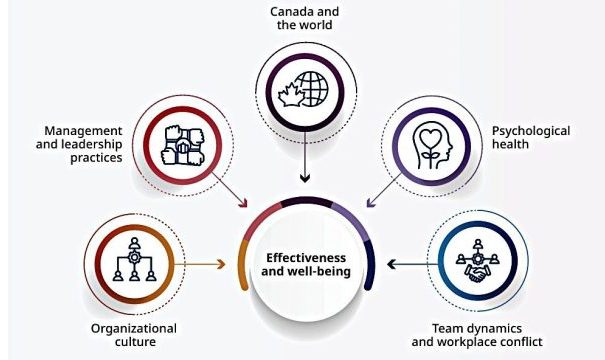
An order limiting federal employees’ work from home feels uncaring, says a Department of Foreign Affairs report. “You need more than just words,” the department’s Well-Being Ombudsman wrote staff. “You need real and accessible support that helps you feel safe, understand and cared for.”
Poem: Degrees Of Separation
Audre Lorde wants us
to celebrate our differences.
An American.
Woman.
Lesbian.
Black.
Plenty to celebrate.
But
would an Aboriginal celebrate
with a colonialist?
A Jew
with an SS officer?
A child
with a schoolyard bully?
By Ben-Shalom

Review: Chekhov In Sudbury, Ont.
Every town has its own strain of a Chekhov short story. In northern Ontario, historian Stacey Zembrzycki revisits her hometown to interview oldtimers on the Ukrainian-Canadian experience. One elderly man in a wheelchair recounts his father’s death in 1932.
“‘What happened?’ I asked. ‘It was an accident,’ Paul began. ‘At the mine?’ I wondered. ‘No…He went with his friends to drink, and drinking some moonshine from Montreal, he caught on fire.’ ‘Oh God,’ Baba whispered. Paul fell silent. ‘Nobody found out who because they put him out on the sidewalk…They hushed it up,’ Paul muttered.”
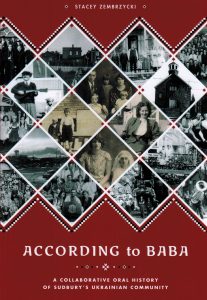
A long-ago homicide in a small city still burns. It’s an arresting moment in According To Baba, a compelling oral history of working people in Sudbury before the war. Zembrzycki and her grandmother Olga journey from home to home, interviewing witnesses to an era now vanished.
Oral histories chronicle extraordinary events in ordinary lives. These are stories erased from government accounts and most scholarly records. The tradition in the English language dates from Henry Mayhew’s London Labour And The London Poor in 1851. Mayhew, a co-founder of Punch magazine, interviewed match sellers and chimney sweeps to chronicle Victorian life as it was never depicted in official histories.
According To Baba is a celebration of this tradition. Zembrzycki, like Mayhew, seeks out everyday people for memories of everyday life. The result is a compelling human story of pride and petty grievance, survival and sorrow, and local dramas never forgotten.
Elena recalls being beaten by a teacher for speaking Ukrainian in class: “I just didn’t know any better.” Peter remembers his mother bootlegging liquor out of their boarding house: “She signed her name with an X but you couldn’t fool her when it came to numbers.”
One oldtimer recounts to the penny the family mortgage payment, $42.25 a month: “I’ll never forget that as long as I live.” Another tells of her mother’s visits to Anglican Church teas to see how Anglo-Protestants served guests: “She bought a tea set to ‘practice’ pouring tea properly.”
Writes Zembrzycki: “Interviewees often spoke about their mothers. Having come of age during the Depression, most of them stressed that it was like any other time in their childhoods – difficult – and that their mothers developed and heavily relied upon various coping strategies to get them through each day. As recent immigrants of humble and poor rural backgrounds, they were accustomed to subsistence living and penny capitalism.”
And, when you least expect it, another Chekhov story lurks around the corner.
Anne recalls attending Mass with her family one Sunday when a woman ran into church with a baby, screaming: “It’s his! It’s his!”: “She placed the baby on the altar and ran out again, shouting, ‘Don’t listen to him, he’s a liar!’”
The priest later quietly left the parish, and became a lawyer.
By Holly Doan
According To Baba: A Collaborative Oral History Of Sudbury’s Ukrainian Community, by Stacey Zembrzycki; University of British Columbia Press; 252 pages; ISBN 9780-7748-26969; $32.95
We Do Pretty Good Job: CRA
It is “not an easy job” taking calls from taxpayers, Canada Revenue Agency Commissioner Bob Hamilton yesterday told the Commons public accounts committee. Hamilton praised the Agency despite two audits in eight years that concluded 1-800 call centres were costly, slow and incompetent: “We think we’re doing a pretty good job.”
Lost 32,000 Foreign Fugitives
A federal wanted list of foreign fugitives numbers 32,000 people, the Canada Border Services Agency disclosed yesterday at the Commons public safety committee. Conservative MP Frank Caputo (Kamloops-Thompson, B.C.), a former Crown prosecutor, expressed astonishment at the figure: “I beg your pardon? There are 32,000 warrants?”
Predict Billions In Flood Aid
Taxpayers face more than a billion a year in compensation for uninsured property losses due to flooding, the Budget Office said yesterday. Cabinet since 2018 has considered a national program to transfer costs to owners of property at risk: “Floods are projected to be the costliest type of disaster.”
Calling Mail Cuts Courageous
Cabinet is showing political courage by abolishing doorstep mail delivery, Public Works Minister Joel Lightbound said yesterday. Cuts to Canada Post services “probably should have gone forward” when first proposed by management in 2013, he said: “That is not too much to ask, to go and get your mail.”
Claims Millions Oppose Israel
A cabinet bill to restrict disruptive street protests outside synagogues will “curb the civil liberties of millions,” the legal director for the National Council of Canadian Muslims said yesterday. MPs on the Commons justice committee questioned counsel Nusaiba Al Azem on criminal limits to anti-Semitism: “Do you think it should be legal to fly a Hamas flag on a Canadian street?”

New Minister Left Speechless
The Opposition is questioning Veterans Affairs Minister Jill McKnight’s fitness after she sat blankly under routine questioning at a committee hearing. Asked for details of a signature program in her own department, McKnight sat speechless until she was pointed to scripted remarks in a briefing binder: “Do you know?”
Feds To “Reform” Post Office
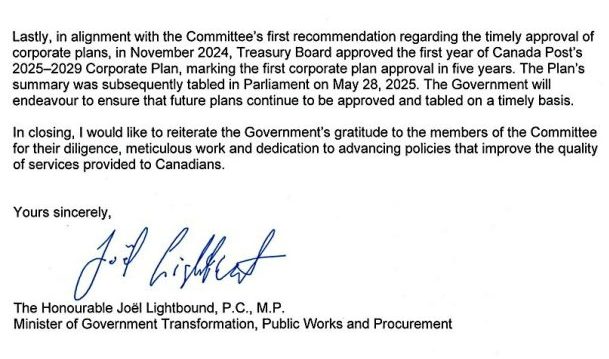
Cabinet is considering “structural reforms” at the post office in addition to sweeping service cuts announced September 25, says Public Works Minister Joel Lightbound. The Minister in a letter to MPs said a Charter that includes minimum service guarantees is under review: “We cannot go on, you know.”



