
The Federal Court is repealing “Christmas.” Amendments to 1998 Federal Court Rules propose to delete references to the Christmas recess as non-inclusive for lawyers, plaintiffs and defendants who practice other religions or none at all: “Not all litigants before the Courts celebrate Christmas.”
Can’t Explain Rejection Rates
Newly-released figures show suspiciously high rejection rates of Disability Tax Credit claims by the Canada Revenue Agency. Paperwork should be “a lot more user-friendly,” said the vice-chair of a federal advisory panel: “There are definitely more questions to be answered by looking through the data.”
Feds Strip Ex-Chief Of Medal
Rideau Hall has stripped a former police chief of his federal Order of Merit of the Police Forces. Officials did not explain if they’ll attempt to retrieve the 2011 medal from Frank Elsner, ex-chief of police in Victoria: “He stood in a position of power and responsibility.”
Must Pay Tax, Court Rules
A First Nation tobacco wholesaler that ships millions of cigars a year must pay tax, Ontario Divisional Court has ruled. The judgment came in the case of a tobacconist who claimed tax exemption under the Indian Act: ‘The purpose is not to give First Nation persons a general economic advantage.’
“Work Force Adjustment”
In the lobby of a federal building
three faces were smiling from the wall:
Her Majesty the Queen,
The Right Honourable Prime Minister,
and The Honourable Minister.
On the way to the parking lot
I saw a few
who did not smile that day;
however,
they were further down the hierarchy.
(Editor’s note: poet Shai Ben-Shalom, an Israeli-born biologist, writes for Blacklock’s each and every Sunday)

Will Censor Political Taunts
Federal internet censors should target hurtful words against politicians, says Heritage Minister Steven Guilbeault. The Minister added pending regulations may include an internet kill switch to block websites deemed hurtful, but called it a “nuclear” option: “News regulations for online platforms are needed.”
Few Rate Climate A Priority
Few Canadians, 24 percent, rate climate change targets a very high national priority. The findings are detailed in research by the Department of National Defence: “Thinking about the issues presently facing Canada, which one do you feel should receive the greatest attention from the government?”
China Envoy: Pay Us A Visit
China’s ambassador in Ottawa says more Canadians should visit the People’s Republic, promising the “vast majority” shouldn’t worry about being kidnapped by police. “China is not a police state,” said Ambassador Cong Peiwu: “It’s nothing like that. If you walk on the Chinese streets, it’s quite safe.”
No Business With Boyfriend
Economic Development Minister Mélanie Joly has signed a pledge she will avoid all discussion of future federal contracts with her boyfriend’s company. The undertaking to the Ethics Commissioner follows Blacklock’s disclosure the boyfriend received more than $42,000 in federal funds: “She has never played any role in the awarding of government funds to this company.”
Songbird Versus Developer
A federal judge has dismissed an immediate injunction to block construction of an Alberta resort in the habitat of a threatened songbird, the Bank Swallow. The challenge to the Department of Environment to save the birds goes to a full hearing April 26: “The nesting sites do not face a risk of destruction from any activity that is likely to occur over the short term.”
No Disclosure, Fed Press Says
The Canadian Parliamentary Press Gallery yesterday rejected mandatory disclosure of all federal grants and subsidies sought by member organizations. Media instead adopted an ethics code requiring only new applicants for membership to reveal financial conflicts of interest.
“That’s cleared up,” said Catherine Levesque of The Canadian Press, the Gallery president. Levesque told a meeting of members in Ottawa that a motion mandating disclosure of subsidies was out of order. The Canadian Press in 2020 petitioned the Commons finance committee for millions in federal grants.
Blacklock’s sponsored the motion stating “that all Gallery members disclose all applications for grants, rebates or subsidies to any branch of the Government of Canada,” and that disclosures be published on a Press Gallery website. The Gallery dismissed the motion without explanation.
“This is a debate for another day,” said Elizabeth Thompson, a CBC producer. “Out of order,” said Philippe-Vincent Foisy, a CBC reporter. “Can we have a vote please?” said Chris Rands, a CBC producer.
The Gallery instead voted for an ethics code solely for new members. The Journalistic Principles And Practices White Paper forbids membership to any new media that fail to disclose “any form of sponsorship” to readers, or any “conflict of interest” including “diverse contracts.”
Staff journalists who voted for the code, including employees of subsidized media, were Rachel Aiello (CTV), Amanda Connolly (Global TV), Bill Curry (Globe & Mail), Lina Dib (Canadian Press), Janice Dickson (Globe & Mail), Philippe-Vincent Foisy (CBC), Murad Hemmadi (The Logic), Melanie Marquis (La Presse), Christopher Nardi (National Post), Shannon Proudfoot (Maclean’s), Boris Proulx (Le Devoir), Greg Quinn (Market News International), Chris Rands (CBC), Guillaume St-Pierre (Le Journal de Québec), Elizabeth Thompson (CBC), Ryan Tumilty (National Post), Marie Vastel (Le Devoir) and Marieke Walsh (Globe & Mail).
Of 45 news organizations accredited in the Press Gallery a majority, all but nineteen, take direct federal subsidies. The Canadian Press news agency, self-described “trusted news leader,” last June 6 petitioned the Commons finance committee for grants equivalent to $500,000 a week to offset revenue losses.
CP President Malcolm Kirk wrote MPs that Parliament should “direct revenue to The Canadian Press to fully offset subscription fees paid by CP’s media clients”. Costs were estimated at $2 million a month.
“It assures that independent, trusted and timely news continues to move nationally to publishers and broadcasters to keep Canadians informed,” wrote Kirk. The Canadian Press never reported on its appeal for subsidies.
Other publishers applied for lucrative 25 percent payroll rebates under a $595 million media bailout approved by Parliament two years ago. “We see the need to adjudicate the organizations that would be eligible for these tax advantages carefully,” then-Finance Minister Bill Morneau testified at 2019 hearings of the Senate national finance committee.
“I’m concerned about freedom of press reporting,” replied then-Senator Raynell Andreychuk (Sask.). “You need to ‘adjudicate’ where the money is going to go. That gives me concern.”
By Staff
Flood Of Telecom Petitions
The federal Competition Bureau yesterday said it’s receiving more than 300 public submissions daily over Rogers Communications’ proposed $26 billion buyout of an Alberta rival, Shaw Communications of Calgary. The agreement must be approved under the Competition Act: “Are prices too high?”
Audits Find Oddities Abroad
Auditors have cited two Canadian embassies in Africa for improper contracting at taxpayers’ expense. The Department of Foreign Affairs has conducted ongoing audits of missions overseas following the 2017 discovery of a $1.7 million fraud ring at the Canadian Embassy in Haiti that saw thirteen employees fired: “Strong management practices are critical.”
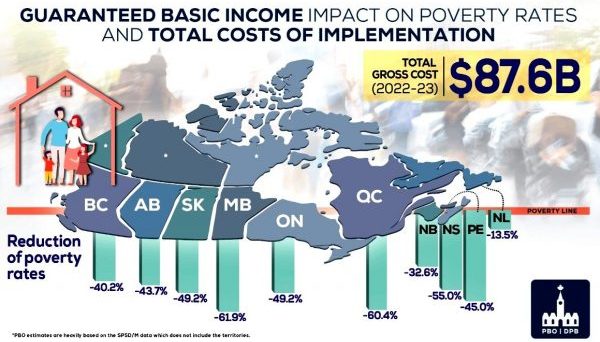
Income Guarantee Cost $88B
A federal guaranteed basic income program would cost billions but lower poverty rates, the Parliamentary Budget Office said yesterday. Analysts said a guaranteed income would be a disincentive to work: “The overall cost of a guaranteed basic income would rise from $85 billion in 2021 to $93 billion in 2025.”
Travel Agents Seek $200M
Travel agents have petitioned the Commons finance committee for a $200 million bailout. Agents blamed federal travel restrictions for a shutdown of their entire industry amid “recalled commissions” for flights they booked: “It’s because the government is imposing travel restrictions that we are being hindered from operating our business.”