
The Federal Court of Appeal has dismissed a consumer group’s demand for cash refunds on pre-paid flights. The Canadian Transportation Agency in 2019 said that “compensation must first be offered in cash or equivalent”, but waived the rule as a pandemic measure: ‘The airline industry has been seriously affected by Covid-19.’
Avoid ‘Aboriginal’, MPs Told
Canadians should avoid using the word “aboriginal”, says a federal language guide. The term may give offence and has no legal meaning, wrote researchers: “Using appropriate language is fundamental.”
Mull Paid Sick Leave For All
Cabinet yesterday said it will discuss with provinces a New Democrat proposal to mandate ten days’ paid sick leave for all workers nationwide. No cost or deadline was discussed: “It is just beyond imagination.”
“Wasn’t A Lot” In Stockpile
The Public Health Agency for the first time acknowledges it ignored its own advice and stockpiled only a “small amount” of pandemic supplies before the Covid-19 outbreak. Managers would not say if they ever warned cabinet: “If you could give a yes or no answer…”
Dep’t Faked Historical “Fact”
The Department of Canadian Heritage admits it garbled a historical “fact” in a report to Parliament. Minister Steven Guilbeault tabled the claim Black people had a presence in Nunavut dating back 400 years. They didn’t: “You can’t pick and choose facts.”
Wants Crackdown On Claims
Parliament should pass a law denying $2,000 Canada Emergency Response Benefit relief cheques to anyone who won’t take a job, the Commons human resources committee was told. The Department of Employment said it is curbing clear abuses of the program such as payments to dead people: “The priority was to provide the benefit.”
Feds Can Delay Tax Refunds
The Canada Revenue Agency may withhold tax refunds for a year or more, a federal judge has ruled. The decision came in the case of a business denied a GST refund after auditors decided to review the company’s books: “This is for the Minister to decide.”
Post Office Rated Covid-Free
Not a single postal worker has contracted Covid-19 on the job, says the Canadian Union of Postal Workers. Public health officers say there is no evidence the coronavirus is transmitted by mail: ‘It’s remarkable; 60,000 employees and not a single Covid-19 case traced back to Canada Post.”
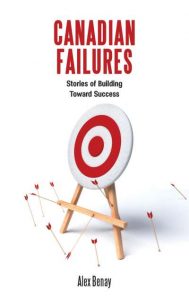
Review: Neither Fatal Nor Final
Canadians have a complex relationship with success and failure. That’s strange in a capitalist society where city life is a weekly succession of petty contests. Success is caricatured as a triumph of positive thinking that culminates in a prize, like winning on Dragon’s Den. Failure is a vaguely shameful exhibition of personal weakness: “The Morgans lost their house!”
Neither is accurate. Winners and losers strive, and even successful people fail all the time. Billy Durant, the Michigan wagon maker who created General Motors, went bankrupt in 1936 and ended his career as manager of a bowling alley. It must have been a well-run bowling alley. Successful people like to run things.
Canadian Failures is a quirky, likeable analysis of why we so often get success and failure wrong. “Speaking only of accomplishments is taking the easy road,” writes author Alex Benay, former Chief Information Officer for the Government of Canada; “Failures define us as much as successes; they shape our national DNA, our culture and our creative spirit.”
Canadians celebrate insulin, Bell Telephone, snowmobiles, the paint roller and Robertson screw, but this misses the whole point, writes Benay: “We latch onto success and fail our nation by not engaging in a dialogue on failure.” Canadian Failures is neither a self-help book nor a celebration of plucky upstarts. It challenges our concept of failure as “a formless grey sky”, and candidly notes: “Not all failures have a silver lining.”
Contributor Dr. Frank Plummer, senior advisor to the Public Health Agency of Canada, recounts the disastrous blood scandal of the 1980s that saw more than 20,000 people contract HIV and hepatitis C from tainted transfusions improperly screened by the Red Cross. It was a “monumental Canadian failure”, writes Plummer, “one of the greatest preventable tragedies in the history of Canadian public health.”
“When the stakes are high, short cuts are risky and can result in harm to patients, to reputations and to trust in the health system at large,” writes Plummer. “Stab-in-the-dark processes drain resources away from other options, and rarely succeed.”
Canadian Failures compiles varied personal stories that underscore compelling themes. Winners are competitors who often lose. Winners share an appetite for hard work, immunity to public ridicule, and knack for self-correction. These are not extraordinary qualities. You’ll find them on any successful minor hockey team.
Unsurprisingly, the most profound contribution to Canadian Failures comes from Erica Wiebe, Olympic gold medal-winning wrestler. “In sport, failure is all but guaranteed,” writes Wiebe; “I made mistakes, failed often, and accepted that failure was never fatal or final.”
Wiebe was cut from Cadet National Team camp, went a year without scoring a point in practice, overslept for a Senior Canadian National qualifying match, and failed to qualify for the 2015 Pan American Games. A week before flying to Rio for the 2016 Summer Olympics, Wiebe suffered a panic attack that left her sobbing on a bathroom floor. Wiebe describes this beautifully:
“Throughout my life, visualizing failure has been part of me. As a kid, I could imagine my house catching fire, and I would go through the various ways I could save myself and my dog and cat. (I guess my family members were going to be left to fend for themselves!) But, through those very early visualizations, I began working through possible outcomes. Later on, as an athlete, it was my ability to address failure and risk, and to persevere, that gave me strength to understand that failure is never final.”
By Holly Doan
Canadian Failures: Stories of Building Toward Success, by Alex Benay; Dundurn Press; 232 pages; ISBN 9781-45974-0433; $20

Feds Promise No New Taxes
Finance Minister Bill Morneau yesterday vowed he will not increase taxes to pay for the largest deficit in Canadian history. Morneau set no new date for a financial report to Parliament after cancelling a planned March 30 budget due to the pandemic: “We have no plan to raise taxes.”
Globe Appeals For More Aid
The Globe & Mail yesterday appealed for more direct federal aid to compensate for sharp revenue losses. Publisher Phillip Crawley provided rare details of finances at the daily, a privately held company owned by the billionaire Thomson family of Toronto: “The long-term outlook for the Globe and many others has darkened because of the pandemic.”
Say It’s Hard To Pick Winners
The Department of Industry yesterday said “picking winners” through federal subsidies is difficult. An analysis of thousands of high growth Canadian companies found most were small and already profitable: “They are rare.”
Rely On Gov’t, Says Google
Google Canada yesterday advised users to rely on advice from the Public Health Agency despite contradictions. Disregarded recommendations from the Agency did not count as misinformation, a Google executive told the Commons industry committee: “What about in a situation where the ‘informed source’ is wrong?”
Reject Race-Based Complaint
The Federal Court yesterday dismissed a complaint against a Thunder Bay, Ont. judge criticized for accepting a volunteer post at Lakehead University though he wasn’t Indigenous. A judicial investigation prompted by a single CBC News story was “unfair” and “an abuse of process”, wrote the Court.
Cite Gov’t For Score-Settling
Members of the Commons health committee yesterday expressed outrage after a Canadian scientist claimed reprisal for publicly criticizing the Public Health Agency and Prime Minister Justin Trudeau. The expert witness said he was blacklisted from a grant application by the Agency: “We’re talking about science.”



