
Heritage Minister Mélanie Joly says she is studying the impact of a regulatory decision that media creators say will cost millions. The ruling by the CRTC can be legally overturned by cabinet: “There is a disaster looming in media.”
Press Gov’t On Auto Safety
The Commons public accounts committee yesterday urged Transport Canada to commit in writing to improve oversight of auto safety. The report follows a critical audit that found regulators were too close to industry lobbyists: “We seem to be a laggard when it comes to the consumer.”
Memo Cautious On Tax Effect
A national carbon tax will result in “controversial” impacts on different industries, says a federal memo released through Access To Information. Staff at the Department of Natural Resources cautioned, “Industry impacts are likely manageable, but need to be carefully considered.”
Committee Amends Budget
The Commons finance committee last night voted to amend cabinet’s budget bill. MPs expanded the rights of legislators to scrutinize federal spending through the Parliamentary Budget Office: “This is hasty backtracking by the government.”
Feds Rate Media Slow, Weak
The Department of Foreign Affairs is hiring consultants to monitor millions of Twitter messages after lamenting traditional media are slow and unreliable in reporting news. The department spends more than a quarter-million dollars a year on regular media monitoring: ‘Traditional media may not cover an event at all.’
Farm Debt Approaches $100B
National farm debt has grown 75 percent in the past decade but remains manageable, says the chair of the Commons agriculture committee. Total farm debt is nearly $100 billion: “Right now there is no panic.”
Marine Mishap Ends In Court
A Crown corporation is suing for damages from a rare maritime collision on St. Lawrence Seaway canals. Less than a tenth of one percent of ship crossings result in accidents, by official estimate: ‘It cannot be foreseen by Seaway inspectors.’
Liberals Rewriting Budget Bill
Liberal MPs are rewriting cabinet’s own budget bill to expand independent reviews of federal spending. The friendly amendments by members of the Commons finance committee follow criticism the original bill curbed scrutiny of departments and agencies: “The role of the Parliamentary Budget Office needed greater independence.”
Agreed To Fund $576K Quiz
The Department of Canadian Heritage recommended a $576,500 sole-sourced contract to developers of what was claimed to be the biggest quiz in the nation’s history, say Access To Information records. The venture was billed as a “potential legacy project” for the 150th anniversary of Confederation: “Just stop, already.”
Millions Left Out Of Economy
Many Canadian workers face “growing dislocation” with part-time jobs and factory closures, says the president of the Canadian Labour Congress. Hassan Yussuff, speaking at a Canada 150 Symposium in the Senate, warned of rising inequality in the workforce: “That is not a place you want to be.”
Scientists Hired To ID Dead
The military is hiring forensic archaeologists in anticipation of recovering more remains of Canadians killed in action overseas. The Department of National Defence said urban sprawl and new farming techniques are uncovering more skeletal remains of soldiers and air crew: “We will never forget.”
“Demography Of A Voter”
A song by Nina Simone
envisioned a world awaiting the
young, gifted and black.
Some 50 years later and
America is on a different course.
Its dominant voices
are far from young,
far from black,
and far from gifted.
(Editor’s note: poet Shai Ben-Shalom, an Israeli-born biologist, examines current events in the Blacklock’s tradition each and every Sunday)

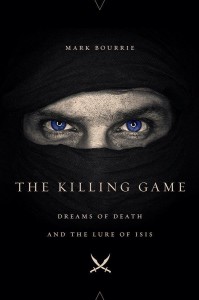
Review: Not What They Had In Mind
Industry Canada in 1995 published a landmark report on the internet. It envisioned a road of pencil-thin cable – they actually called it an “information superhighway” – with traffic cops and off-ramps, and even a toll plaza. One cabinet minister proposed a tax on all internet transactions.
Wrong again. No one anticipated an unregulated global web so extensive a faraway terrorist group named ISIS would use electronic propaganda to enlist Canadian mercenaries.
“The pleasure centre of the brain that’s stimulated by the internet is the same as the one stimulated by drugs,” writes Mark Bourrie in The Killing Game; “We have developed the greatest communication systems the world has ever seen and hooked almost everyone in the world to them.”
Bourrie is an accomplished author. The Killing Game explores the mentality of ISIS volunteers, and the seductiveness and intimacy of the internet that connects conspiracy theorists. “People of all ages now live in a media matrix that engulfs and entraps them,” Bourrie writes.
“For many of us, backing away from computer-transmitted messaging is simply too difficult. New media provides an addictive level of brain stimulus. It kills time for the bored. It makes the unimportant seem important and connects individuals into communities that are very real.”
Bourrie correctly notes the internet does not make terrorists any more than The Daily Worker made a murderer of Lee Harvey Oswald; nor can the medium be regulated; nor is it so hypnotic it transforms well-adjusted teenagers into a social menace. Bourrie counts 150 Canadian ISIS volunteers, tops. By comparison 13,000 people signed an electronic Commons petition to ban the sale of cat fur.
And yet –
“This is the first generation of young people to be raised with computers and smart phones integrated into their lives and minds,” says The Killing Game. “They have been given control over devices that can instantaneously bring them information, pornography, companionship, laughter and fantasy.”
“So much of ISIS’s war-porn propaganda is directed at the same people targeted by the Canadian army: bored young people who aren’t engaged by the consumer ethos of their own society and who feel that adventure is passing them by,” Bourrie writes. “They want to step into the video games that have become so important to them and be the heroes that they play on the small screen. As Abu Sumayyah al-Britany, a British fighter with ISIS, posted on Twitter, war is the ultimate in virtual reality.”
Bourrie profiles perhaps the best-known Canadian mercenary, John Maguire of Kemptville, Ont., an unhappy son of divorced parents. A “startling number” of ISIS volunteers suffered family break-up, he writes.
Maguire quit the University of Ottawa to become a terrorist. “Evil is very prominent in Canadian culture,” Maguire wrote on his Facebook page. “Homosexuality, fornication and adultery are generally accepted; drugs and alcohol are easily accessible and widely accepted as being ‘normal’; women and men are often not properly covered; music is widespread in public places.”
Maguire was reportedly killed in a gunfight in 2015. “One of the striking similarities between Westerners who have gone to fight for ISIS is the shortness of their lifespan in combat,” Bourrie observes.
The Killing Game is a captivating examination not merely of the weak-minded among us who are drawn to violence, but the electronic tools that get them there. After decades with the internet, Canada still struggles with its potential “to upgrade the education system,” as playwright John Gray wrote in 1994; “to streamline medical services; overcome geographic isolation; rejuvenate the electoral system; eliminate bureaucratic duplication and waste.”
“Imagine the world’s first electronic country – an innovative middle power where education spans a lifetime, where it is possible to develop and to communicate an original thought, any time, at the speed of light,” wrote Gray, an original member of the Information Superhighway Advisory Council. “Sounds tantalizing, implausible. Utopian. So did the railroad.”
By Holly Doan
The Killing Game: Martyrdom, Murder and the Lure of ISIS, by Mark Bourrie; Harper Collins Canada; 288 pages; ISBN 9781-4434-47010; $32.99
Gov’t To Block Payment Bill
Cabinet will oppose passage of a Senate bill mandating prompt payment to trades and subcontractors on public works, says a parliamentary secretary. The government’s record on payments is near perfect, said MP Steven MacKinnon: “We’re very sensitive.”
Charter Never ‘Led To Chaos’
Supreme Court Chief Justice Beverley McLachlin says the 1982 Charter of Rights expresses the nation’s identity despite any controversy or disappointments. McLachlin spoke yesterday at a Canada 150 symposium in the Senate: “It has neither led to chaos, nor can we claim it has produced a rights utopia.”