A Poem — “First Thing First”


Homicides in Ottawa

hit a record high.


24 bodies in 2016; more than Montreal.


At police headquarters,

plans are drawn

to raid pot dispensaries.

Officers know it’s a race against time;

legislation is coming.


(Editor’s note: poet Shai Ben-Shalom, an Israeli-born biologist, examines current events in the Blacklock’s tradition each and every Sunday)

Book Review — Hijabs With Style

Headlines perpetuate the one familiar story from the Arab world: “Canadian-Funded Clinic Destroyed” (Globe & Mail); “No Peace When War Never Ends” (Toronto Star); “Obama Outlines Military Plan” (Vancouver Sun); “Where ISIL Came From” (Montreal Gazette).

“In the West the Arab region of the Middle East and North Africa is all too often associated with terrorism, religious fanaticism, intolerance, sexism, racism, and a myriad of other social and political ills,” writes Prof. Bessma Momani of the University of Waterloo. Momani suggests there are two sides to every story – and in this case 350 million sides, representing the population of the Arab world.

They are typically young, media savvy, entrepreneurial and educated. The number of universities in the Arab region has more than doubled in fifteen years. In the United Arab Emirates 70 percent of post-secondary students are women. Momani quotes a Moroccan teen who laments the country’s education minister “doesn’t even have a bachelor’s degree”.

If newsgathering is an exercise in the depiction of fact, Arab Dawn is first-rate reportage. Drawn from first-hand travels and interviews with Arab students in Canada, Momani draws a three-dimensional picture much more satisfying than scanning the headlines. As the author quotes an old family proverb, “Add a hair to another hair and eventually you get a beard.”

A hit TV show in Qatar is Stars Of Science where young contestants build prototypes of patent-worthy inventions and viewers cast ballots for their favourite creation. The show is in its eighth season. “Winners are awarded hundreds of thousands of dollars in prizes,” Momani writes.

In Saudi Arabia teenagers play Unearthed, the first Arabic-language video game for Sony PlayStation 3 featuring a character named Faris and his sister Dania, an archaeologist in a hijab. Together they “embark on an exotic adventure throughout the Middle East on the trail of the famous Muslim explorer Ibn Battuta”, outwitting arms dealers and smugglers.

At the mall in Dubai is retailer DKNY’s “Ramadan Collection” featuring “colourful trench coats paired with trousers, khakis and stylish hijabs,” Arab Dawn reports. Mall cops keep an eye out for teenagers looking for dates.

“Arab society is changing from within – thanks to its youth, who are pushing it to become more competitive, accountable and cosmopolitan,” Momani writes. Eighty-seven percent own a mobile phone; 70 percent spend more than three hours a day online.

Arab Dawn is not an apologia, nor does it patronize readers with bland assurances that, really, Arab youth want to be just like their Canadian counterparts. “Many young Arabs find it perfectly compatible to identify as a person of faith who holds modern and progressive values such as wanting democracy, has a cosmopolitan identity, and respects individual liberties,” the author explains. “Similarly, Arab youth are capable of synthesizing a deep commitment to their families and communities and the pursuit of individual freedoms. They see no contradiction in the mixing of identities such as modern, Western, family-oriented, religious and Arab.”

Interviewing foreign students, Momani notes with interest those Canadian experiences that make the greatest impression: public transit, environmentalism, and law and order imposed without threat or favouritism. One Saudi scholar named Omar recounted with fascination his first brush with bylaw enforcement: “I got a parking ticket and I thought how amazing this was,” Omar said; “I felt this is what we need most in Saudi, law enforcement…I won’t park in an illegal spot again.”

Arab Dawn is an honest and persuasive profile of a newfangled society, the one they never show in the headlines.

By Holly Doan

Arab Dawn: Arab Youth & The Demographic Dividend They Will Bring, by Bessma Momani; University of Toronto Press; 176 pages; ISBN 9781-4426-28564; $14.27

Feds Put Mint On Short Leash

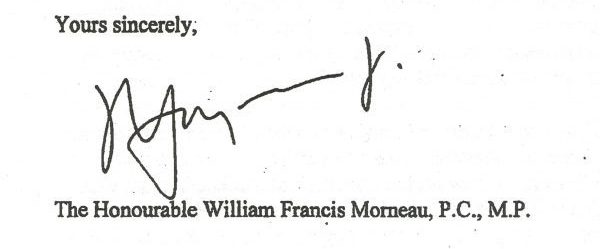
Finance Minister Bill Morneau has stripped the Royal Canadian Mint of authority to launch new business ventures without his approval. The order followed millions in losses on a digital currency program. Morneau also ordered the Mint to report all Access To Information releases to his office, and all correspondence with MPs and senators: “It’s not something I would have done.”

This content is for Blacklock’s Reporter members only. Please login to view this content. (Register here.)

Carbon Tax Impact Unknown

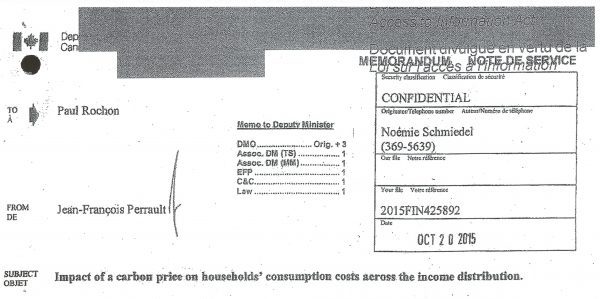
The environmental impact of a national carbon tax is uncertain, say Access To Information memos from the finance department. Staff also warned all consumers will pay more under the tax to take effect in 2018: “Carbon taxes have disadvantages.”

This content is for Blacklock’s Reporter members only. Please login to view this content. (Register here.)

Govt Warned On Rail Safety

Rail safety reforms enacted after the Lac-Mégantic disaster failed to avert the fiery derailment of tank cars in a 2015 wreck, warns the Transportation Safety Board. Investigators yesterday cautioned regulations appeared inadequate: “They did not perform any better.”

This content is for Blacklock’s Reporter members only. Please login to view this content. (Register here.)

VIA Cited On Disabled Rights

VIA Rail has again been cited by regulators for failing to accommodate disabled passengers. The ruling by the Canadian Transportation Agency followed a successful 2007 Supreme Court lawsuit against VIA by the Council of Canadians with Disabilities: “They still got it wrong.”

This content is for Blacklock’s Reporter members only. Please login to view this content. (Register here.)

RCMP Spied On Union Chief

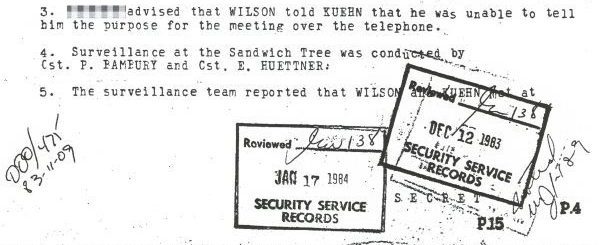
RCMP in 1983 secretly assigned undercover officers to shadow a teachers’ union president, newly-released records show. Access To Information files detail elaborate surveillance in British Columbia in 1983 and ’84 over fears of a general strike.

“It is absurd and totally inappropriate,” said Larry Kuehn, former president of the B.C. Teachers’ Federation who was monitored by plainclothes Mounties. “It is not subversive to disagree with a government.”

Confidential files of the RCMP Security Service were released by Library & Archives Canada. Records indicate police believed the Communist Party had infiltrated union groups protesting 1983 budget cuts.

“I wasn’t aware of this surveillance,” said Kuehn, 72, now research director for the Teachers’ Federation. “Ten years ago I asked for documents the Archives had from the RCMP Security Service, and the records they sent me were mainly from the 1950s and 1960s,” said Kuehn.

Police eavesdropped on Kuehn’s conversations with protest organizers, and on November 2, 1983 assigned two police to follow Kuehn as he met at a Vancouver diner with a local Communist Party member. The two spoke for 20 minutes, according to a surveillance report. “The individuals were too far away for any of their conversation to be overheard,” said the memo.

Kuehn met with Fred Wilson, provincial Party labour secretary. “I knew Fred and saw him at meetings,” Kuehn said yesterday in an interview. “We did not have a close relationship.”

Union protests followed a 1983 austerity budget that saw the province fire some 1,600 public employees and introduce legislation impacting labour contracts. A resulting strike shut down schools, courts, liquor stores and provincial government offices.

“It was a period with very deep anger and a sense of betrayal,” said Kuehn. “What the government did was attempt to bring about an end to a social safety net and labour rights. They wanted to sanction firing without cause.”

Feared A General Strike

Police feared a general strike in British Columbia, the first in Canada since the 1919 Winnipeg strike. “The possibility of a general strike is considered high,” said a November 2, 1983 RCMP memo Subversive Involvement In The Current B.C. Labour Dispute.

The B.C. Federation of Labour at the time formed Operation Solidarity, a coalition of union organizers and community groups opposed to cutbacks. Police at first saw little evidence of Communist involvement, but grew increasingly alarmed over alleged subversion.

A November 1983 memo concluded, “None of the information currently available indicates anything other than a peripheral role for any of our target groups. They have in essence jumped on the bandwagon and have played no significant role.”

By January 1984, RCMP feared Communists had gained influence. “The subversive movement was developing a significant voice,” said one confidential memo. “There is no intent on our part to imply in this submission that the entire Solidarity Coalition is subversive, nor that the Communist Party of Canada has been the sole instigator of the recent labour unrest in British Columbia. We do however believe that the Communist Party of Canada and other target groups are actively trying to exacerbate unrest that exists, and use their current efforts to build political momentum for future advantage.”

A follow-up memo dated June 1984 claimed Communist infiltration had grown. “The depth of subversive involvement in the Solidarity Coalition is extensive with Party people holding major positions within the group,” police reported. “It is not expected to be violent, but feelings are running high amongst the labour people in the province.”

Documents disclosed RCMP investigators tracked license plates of vehicles driven by union executives, and checked protestors’ names against a database of Communist sympathizers dating from 1959. Several memos indicated tips on subversion were provided by sources within Operation Solidarity. The names were redacted.

By Tom Korski

First Tax Impact Study Due

The first parliamentary report on the impact of a national carbon tax is due in three weeks. The Senate energy committee yesterday served notice it will report by March 9 on the effect of cabinet’s greenhouse gas emission targets: “When will the government face the music?”

This content is for Blacklock’s Reporter members only. Please login to view this content. (Register here.)

Pot Grower Got $50K Grant

A medical marijuana grower received a $50,000 grant in the name of industrial research, say Access To Information records. An MP who co-authored a 2014 Commons health committee report on cannabis described the subsidy as inappropriate: “I wouldn’t invest any government money in the production of marijuana.”

This content is for Blacklock’s Reporter members only. Please login to view this content. (Register here.)

$5B Damage From Digging

Accidental damage to buried utility lines costs up to $5 billion a year, the Senate energy committee has been told. Senators expressed support for a bill to create a national call-before-you-dig system: “There is really nothing but upside.”

This content is for Blacklock’s Reporter members only. Please login to view this content. (Register here.)

Cabinet To Amend DNA Act

MPs last night protested an 11th hour bid by cabinet to amend a DNA privacy bill already endorsed by the Commons justice committee. Members of all leading parties accused cabinet of gutting the legislation: “This action makes me more than a little bit angry.”

This content is for Blacklock’s Reporter members only. Please login to view this content. (Register here.)