
The heritage department should recast plans for Canada’s 150th anniversary after marking French colonial conquest of First Nations as a milestone in Indigenous history, says a Liberal MP. A department guide rated Samuel de Champlain’s travels among the Huron as an Aboriginal achievement: “Indigenous history started when Champlain showed up”.
Appeal White Refugee Claim
The Department of Citizenship has successfully challenged an immigration board ruling that white South Africans be granted refugee status in Canada. The board concluded a Caucasian family that fled to Alberta deserved sanctuary under the Immigration & Refugee Protection Act: ‘They were targeted by criminals for being white’.
Senate Promotes Seal Hunt
The Senate has given approval in principle to a bill honouring the annual seal hunt, set to get underway next month. Senators said the observance will counter “hurtful” boycotts of Canadian seal products: “It’s part of my daily diet”.
No Gov’t Blacklist For Bribery
Cabinet will not explain why it granted a waiver to the country’s largest engineering firm from being blacklisted over a 2014 bribery scandal. The public works department had vowed to suspend any contractor implicated in fraud or corruption: “The department is unable to discuss specifics”.
Retailers Protest Hidden Tax
Retailers are appealing to MPs to reverse tariff hikes that will see Canadians pay $1.1 billion more for imported goods by 2018. Hidden duties on products like footwear are now worth twice or three times the GST, says the Retail Council of Canada: “They’re now seriously out of alignment”.
Rail Report May Take Months
A long-awaited federal review of the Canada Transportation Act may not be revealed for months, says Transport Minister Marc Garneau. The statutory review was delivered to cabinet before Christmas: “It will be pretty important”.
Gov’t Is Warned On Housing
Shortages of affordable urban homes have put thousands of Canadians on lengthy waiting lists for social housing, MPs have been told. Advocates asked for continued subsidies even as mortgage aid for co-op housing boards expires: “The needs are great”.
Urge Scrutiny Of Auto Toxins
Regulators should standardize guidelines for recycling tons of dead car batteries, says an international panel. Canadian imports of dead batteries doubled in eight years: “Canada and Mexico treat this as hazardous waste”.
Air Inspectors Fail Safety Test
Transport Canada failed to enforce its own safety regulations at Sunwing Airlines Inc., says a federal judge. The Court ruled inspectors may have jeopardized safety with a 2013 order on emergency procedures at the airline: “You hold people back!”
Lobby Balks On Pharmacare
MPs should beware of any universal pharmacare program, says the Canadian Pharmacists Association. The group’s lobbyist disputed drug cost warnings by a federal agency, the Patented Medicine Prices Review Board, and said universal coverage would cost billions: “We’re talking about pharmacare, not pharma cost”.
Billions In Fed Cuts Disclosed
Cabinet confidentially cut funding for meat inspections, ice patrols and federal research on prescription drug prices, say newly-released accounts. It took four years and a federal court ruling for the Treasury Board to detail billions in program cuts enacted in 2012.
“Our work was hampered,” said Parliamentary Budget Officer Jean-Denis Fréchette. “We operate with data and information. If you don’t have it, we don’t go anywhere. The bottom line is, we need data and information.”
The Treasury Board released details of cuts to 485 federal programs – some known, others concealed – that were enacted in 2012. The Budget Office went to Federal Court in 2013 after departments failed to disclose all financial records.
The cuts totaled $4.4 billion in the period from 2012 to 2014. “I hope now that if this government is open and transparent, this will not happen again,” said Fréchette. “I always told requesters I would never abandon the work.” Cuts detailed for the first time included:
- • $13.7 million from the budget of spy agency Communications Security Establishment Canada;
- • $5.6 million with the closure of diplomatic missions overseas;
- • $3.9 million from slaughterhouse inspections by the Canadian Food Inspection Agency;
- • $2.8 million in tourism advertising in the U.S.;
- • $1.2 million from Health Canada’s drug analysis service;
- • $1 million from annual ice reconnaissance patrols by the Department of Fisheries.
Other cuts included $819,000 at the Hazardous Materials Information Commission; elimination of a $950,000 Parks Canada teacher curricula program; $428,000 in cuts to anti-spam enforcement by the Canadian Radio Television & Telecommunications Commission; a reduction of $374,000 from a national price check program by the Patented Medicine Prices Review Board; and a cut of $200,000 a year at the Canadian Police College.
“The previous government cut by stealth,” said Treasury Board President Scott Brison. “They refused to provide to Parliament, to the Parliamentary Budget Officer, to Canadians very important information about their fiscal plans.”
A federal judge in 2013 dismissed the Budget Officer’s lawsuit on a technicality, “non-justiciability”, but noted under the Parliament of Canada Act the officer is owed “free and timely access to any financial or economic data in the possession of the department”. Parliament’s library committee that oversees the Budget Office subsequently passed a 2015 resolution noting, “The House has never set a limit on its power to order the production of papers and records.”
“These were decisions by the previous government,” Brison told reporters. “The first step we’ve taken is to actually make them public”; “The fact it’s been four years demonstrates how wrongheaded the previous government was to try to keep this information.”
Accounts confirmed several federal programs were eliminated altogether, including a First Nations Statistical Institute; the Katimavik youth exchange program; and an Emergency Management College.
Also cancelled was a Fire Protection Program at the Department of Human Resources; the Canadian Tourism Commission’s membership in the United Nations World Tourism Organization; a Canada-Australia Exchange Program; a $305,000-a year Public Service Innovative Management Research Fund; and operations of two National Film Board theatres in Toronto and Montréal.
By Staff 
Senator Questions Damning Audit: ‘I Am A Little Baffled’
The chair of the Senate energy committee is scrutinizing a critical audit of federal regulators. Senator Richard Neufeld, former British Columbia energy minister, demanded “further explanation” of an audit that cited the National Energy Board as inefficient and inadequate: “This is paperwork”.
5-Year Defamation Saga Ends
The Supreme Court has put an end to a five-year defamation case involving two University of Ottawa professors. Justices declined to hear further appeals over a malicious blog that slurred a faculty member: “This was one of those long and tortured litigation files”.
A Poem – “The Prescription”
If you suffer from moderate to severe boredom
when watching Canadian politics,
try 10 minutes a day of Palin-Trump on
CNN.
This medication is not suitable for everyone.
Do not take it if you experience
high blood pressure,
irregular heart beat,
asthma.
Common side effects may include
jaw dropping,
uncontrollable laughter,
nightmares,
hopelessness.
Ask your doctor if Palin-Trump is right for you.
(Editor’s note: poet Shai Ben-Shalom, an Israeli-born biologist, examines current events in the Blacklock’s tradition each and every Sunday)
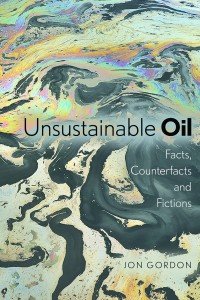
Review: Alberta Bitumen And BS
In 1959 Alberta approved a berserk scheme to set off an atomic blast at Fort McMurray, liquefying the oil sands and freeing a trillion barrels of riches. Engineers with U.S.-based Richfield Oil Corp. rated it a 50-50 chance of economic success. Then-Prime Minister John Diefenbaker killed the idea. “Certainly not,” he said.
Alberta remains unhinged on the subject of oil sands and their elusive promise of fabulous hidden wealth that would turn the province into a Saudi fiefdom. Thwarted plans for A-blasts and pipelines have fueled conspiracy theories: Edmonton would be a Big Oil mecca if not for the intrigues of Dief or Ottawa bureaucrats or National Geographic magazine or environmentalists – especially environmentalists. “Foreign socialist comrades,” former Natural Resources Minister Joe Oliver used to call them.
Unsustainable Oil documents the psychosis. “Bullshit predominates,” writes Dr. Jon Gordon of the University of Alberta; “The industrialization of the bituminous region of Northern Alberta is a manifestation of a cultural belief in limitless progress and endless expansion.” Gordon recalls taking a 2008 Suncor tour of Fort McMurray’s open pit mine when a company guide spotted a deer near the road: “Deer and other wildlife like the extraction plant and mining site because there is no hunting allowed,” the guide insisted.
Gordon is a talented writer. Unsustainable Oil profiles the Alberta sands as a phenomenon both cursed and celebrated in art and commerce and media, and nitpicking of selective facts. “The public debate about bitumen occurs within a highly polarized context in which it often seems there is no common ground,” Gordon notes.
An example: Canadians are told by opposing commentators that “the tar sands are the largest contributor to the growth of greenhouse gas emissions in Canada”; or that “oil sands emit just 5 percent of Canada’s total greenhouse gases – less than, for example, the emissions from all of Canada’s cattle and pigs.” We are assured that development will “industrialize a forest the size of Florida”, and that conversely “the oil sands do cover an area the size of Florida, but only 2 percent of that area will ever be mined.”
“As far as I can tell all of these claims are true,” Gordon writes; “Mustn’t we, then, consider every claim made about the development to be more or less bullshit”; “Suncor gives visitors to its website the chance to ‘Join the Conversation’ – on a page titled ‘Talking About Yes’ – where individuals can comment on threads like, ‘An Ipsos Reid survey shows that 80% of us believe that conversations about the oil sands should be based in science. What information do you want to hear about?’ Interestingly, that thread had zero comments when I visited.”
Undisputed by all is Alberta’s emotional investment in the oil sands, in the manner of sharp-edged discourse that dominates conversation in one-industry towns. If the mill literally stinks, it’s the smell of jobs. “Taxes and royalties paid by bitumen companies pay for health care, so if you like health care you can’t be against bitumen extraction,” as Gordon puts it. “The decision to develop bitumen is a trade-off, and the global considerations trump the local; the urban trumps the rural; the many trump the few.”
Alberta has tried to drag the whole country into this dark conversation. “Engine of the economy,” they claim – though this too is demonstrably bs. The provincial Department of Energy counted 136,200 oil sands jobs at the peak of production, in a two-trillion dollar national economy with a workforce of 18 million.
Unsustainable Oil is pungent and funny and eloquent. It profiles oil sands as a cultural happening that’s driven Canadians to polar opposites. It works.
By Holly Doan
Unsustainable Oil: Facts, Counterfacts and Fictions, by Jon Gordon; University of Alberta Press; 288 pages; ISBN 9781-7721-20363; $45



