Statistics Canada should undertake a first-ever national survey on piracy and counterfeiting, says a Department of Public Safety report. “There are few actual estimates of the size of these markets in Canada,” the department noted in research released through Access To Information.
A $222,000 Drug Price Probe
A federal board that’s warned of spiralling drug prices is commissioning a survey of consumer costs in 21 countries worldwide. The Patented Medicine Prices Review Board has cautioned Canadians will soon pay the second-highest drug prices outside the U.S.: “We have been creeping up”.
Endangered Species In Court
Environmentalists are celebrating what they consider a landmark court application to force regulators to abide by laws to protect species at risk. Advocates argued the Government of Ontario failed to follow its own regulations: “This is the first time a court has said the questions we are raising are important”.
Hill Nixed ‘Free Speech’ Rally
Confidential memos show the RCMP urged cancellation of a small “free speech” protest on Parliament Hill though it had no evidence of any security threat. The event was cancelled by the Department of Canadian Heritage on police advice: “Is this really the society we want?”
Fail On Food Guide: Research
Few Canadians can list the Canada Food Guide despite decades of promotion by the federal health department, says a new study. University of Waterloo research found fewer than 1 in 100 respondents, only 0.8 percent, correctly identified the recommended food group servings: “Is that surprising?”
$100K For Park Brand Survey
Parks Canada hired pollsters to contact 274,000 Canadians to ask if they’d ever heard of – Parks Canada. The $99,100 survey followed cuts to program and maintenance budgets: “They are so far behind the 8-ball”.
Labour Code Lawsuit In 2016
Unions anticipate a court hearing within nine months on challenges to Canada Labour Code amendments on health and safety. The changes were inserted in the 176th page of a 309-page omnibus budget bill passed in 2013: “It seems like a sneaky and subversive way to gut the Code”.
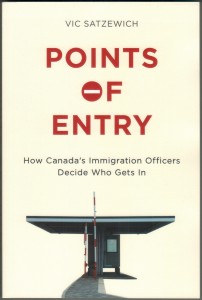
Review: “It Is Hard Not To Be Cynical”
There is no cruelty like bureaucracy. Sociologist Dr. Victor Satzewich explains why Syrian boys don’t get into Canada without ever mentioning “Syrian boys” by name. Satzewich’s first-hand account of the inner workings at the Department of Immigration is not merely timely, it is excellent.
Satzewich visited 11 Canadian visa offices abroad, interviewed 128 staff and witnessed 42 interviews with immigrants. It was unprecedented access. Points Of Entry neither condemns nor patronizes the department; it is what it is. As one officer puts it, “You could train a monkey to do it.”
Canada prides itself as generous and welcoming, to the point of misstating facts. No, we do not let in record numbers of immigrants. No, we do not accept more refugees per capita than any other country. If most refugee applicants are accepted, it’s also true 99.9 percent of the world refugees never get a chance to fill out Form 17-b. Citizenship Canada “could have written the manual on how to design a truly nameless and faceless bureaucracy,” Satzewich writes.
Big, rich Canada still has lower population density than Bolivia, and today admits 35% fewer immigrants than we did in 1913. “Doing the right thing is not always easy or even always obvious,” Prime Minister Stephen Harper said in 2008 on accepting a B’nai Brith International Gold Medallion for human rights; “Canada’s history is not without its scars,” Harper added. “For example, the decision to turn away hundreds of German Jewish refugees aboard the SS St. Louis was both tragic and indefensible.”
Moral certitude is expedient in hindsight. In 1939 cabinet dismissed a petition to admit 937 German refugees aboard the St. Louis. “It is much less our problem than that of the U.S.,” wrote Prime Minister Mackenzie King; “It appears there were some fraudulent transactions which account, in part, for the situation.” Jews, like Syrian boys, had failed to fill out the correct paperwork.
Immigration officers process more than a million applications a year, meaning the department works like a factory where quotas or “issuance targets” must be met. “A last-minute request to increase a target because another office has not met its own quota means that something has gone awry,” writes Prof. Satzewich of McMaster University.
One visa officer processes forms at the rate of 1 every 3 minutes without ever meeting applicants: “It’s always about the numbers.” Then there are interviews, typically granted in suspicious cases. “It isn’t rocket science,” says a program manager.
Interview rooms have bulletproof glass to separate officers from applicants; many do not even have chairs, so that prospective immigrants must stand. “The micro-level ritual that unfolds in the interview booth also tends to reinforce the unequal status of applicants,” Points Of Entry notes.
Officers try to determine if an applicant is lying. They act on hunches or a “gut feeling” or pour through documents looking to find fault. Some officers are bored and polite, others are “bullying” and clearly enjoy themselves. “It is very hard not to become cynical,” says one.
Points Of Entry depicts an immigration department overworked and buried in paper, reduced to cheese-paring over regulations in the manner of a Motor Vehicle Branch. Satzewich recalls, “A program assistant explained how a track record once played a starring role in determining the fate of an application. When a woman dropped off her paperwork at the embassy, the receptionist noticed that she was pregnant and recorded it on the cover of the file. A subsequent check of the departmental database disclosed that the woman had previously applied for a visitor visa, which had been granted. During her trip to Canada, she gave birth to a child. Sensing that history was in danger of repeating itself, the officer refused the application.”
Readers are left to ask, so what? What national purpose was achieved in denying a poor woman the privilege of making her baby a citizen of the best country on earth?
Points Of Entry is crisp and compelling, written with objectivity and an extraordinary eye for detail. To read it is to understand why Syrian boys died on a beach, and why politicians lament that “doing the right thing is not always easy” — and then feel slightly ashamed.
By Holly Doan
Points Of Entry: How Canada’s Immigration Officers Decide Who Gets In by Vic Satzewich; University of British Columbia Press; 306 pages; ISBN 9780-7748-30256; $32.95

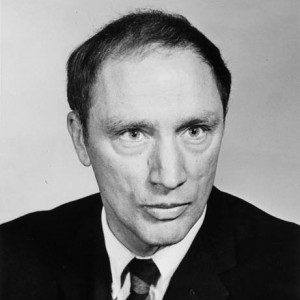
RCMP Spied On Gay Groups, Warned Of PM “Allegations”
The RCMP spied on 1970s-era gay activists amid fears of allegations over then-Prime Minister Pierre Trudeau’s “homosexual proclivities”, say newly-obtained files. The secret police memos were released under Access To Information.
Mounties kept close surveillance on gay rights advocates described as “hippies” and “revolutionary groups”. Senior government officials planning a May 1, 1971 visit to Vancouver by Trudeau sought confidential files on activists, according to memos.
“We are aware that a total of approximately 39 groups are planning to demonstrate,” the RCMP Security Service wrote in an April 13, 1971 memo: “The more prominent revolutionary youth group involved in the planning of a demonstration at this time is the Gay Liberation Front, a militant ‘hippy’ organization oriented towards homosexuals.”
Trudeau was in Vancouver to greet the Queen and visit his in-laws. Mounties citing confidential sources claimed gay activists would attempt an embarrassing protest.
“The Gay Liberation Front appears to have accurate information concerning the Prime Minister’s itinerary during his planned visit to Vancouver on May 1st,” warned a March 23, 1971 RCMP Telex. “Among other things they are familiar with the location of the microphone which would be used in some meeting place where the Prime Minister is scheduled to speak.”
“The Gay Liberation Front has two plans. They intend to mount a demonstration outside the building where the Prime Minister will speak using placards which will make a number of allegations about the Prime Minister’s homosexual proclivities,” the Telex said. “The second part of the plan contemplates a forced entry to the building where he will speak with the intention of commandeering a microphone or microphones over which they would broadcast a statement of a Marxist nature.”
The report continued, “Source also went on to say that the Gay Liberation Front has a plan to steal buttons from the Hertz Rent-A-Car organization in Vancouver and to change the slogan of the company in such a manner that would be insulting to the Prime Minister.”
Watched Activists’ Homes
The 1971 Gay Liberation Front had only “six hard core members”, according to the RCMP, including students from Simon Fraser University and a weekly columnist for the Georgia Straight. Yet police claimed the group had apparent ties to Marxists, Maoists and the Youth International Party, “a militant structured hippy-type organization which sympathizes with the New Left ideology.”
Trudeau’s visit unfolded without incident. The surveillance memos were requested by the Privy Council Office and deputy solicitor general.
Thousands of pages of files released by Library & Archives Canada detail police monitoring of gay activists through the 1970s including names, addresses, employment histories, financial information and travel plans. Surveillance included the posting of undercover agents outside activists’ homes: “None of our principal Gay Liberation Front members have been observed at various demonstrations although they still reside in the Vancouver area,” the RCMP noted in a November 10, 1971 memo. “Periodic surveillance is maintained on their homes and will be maintained in the future.”
Prime Minister Trudeau decriminalized homosexuality with 1969 amendments to the Criminal Code. The RCMP Security Service was formally disbanded in 1984 following disclosure of illegal activities. John Starnes, director general of the service that maintained the gay files, died last December 23 at age 96.
By Tom Korski
Cost-Savings Plan Goes Awry
A federal plan to abolish Social Insurance Number cards has prompted fears of identity fraud, according to a cabinet memo. The government in 2014 stopped issuing the plastic cards as a cost-savings measure: “It is frustrating”.
30 Percent Of Canadians Rent
The number of renters in Canada is on the rise, and so are prices. Half of households are renting in select cities, according to new national research: “Incomes are not keeping pace”.
Pipeline Legal Challenge Fails
Environmental groups challenging a federal gag law limiting public hearings on energy projects have lost a Supreme Court bid. Justices declined to hear the appeal over 2012 amendments to the National Energy Board Act: “I’m disappointed but not surprised”.
Military Feared Arctic Unrest: Warning In Secret 1989 Memo
The military expected to quell political unrest in Canada’s North as territories rebelled against their treatment as “colonies”, according to a confidential 1989 report by the Department of National Defence. The 27-page document marked SECRET was released by the federal archives under the Access To Information Act: “Unrest may be expected to develop in more militant forms in the future”.
No Proof $1B Credit Worked
Cabinet has no evidence a tax scheme intended to promote children’s enrollment in sports has worked, despite costing nearly a billion dollars. The finance department in a secret memo said it failed to find any research on the impact of the Children’s Fitness Tax Credit, and noted most parents surveyed said they’d enroll kids in sports without the credit: “It’s difficult”.
Debt Collectors Sue Regulator
A band of debt collectors is launching a Federal Court challenge against telecom regulations on unsolicited phone calls. Companies filed court papers asking that a judge strike down robo-call rules enforced by the CRTC: ‘It is freedom of expression’.