
A news photographer twice stung by the CBC has lost a bid to take her case to the Supreme Court. Justices declined to hear an appeal from the journalist who sued over the network’s improper use of her copyright images, only to end out-of-pocket over an obscure Federal Court rule: “We have these rules for a reason”.
Gloom Index Hits 6-Yr High
A gloom index has Canadian executives more pessimistic about the economy than at any time since the end of the financial panic. The survey by the Canadian Professional Accountants of Canada found nearly a third of managers see dark days ahead: “We are in the middle of a period of uncertainty”.
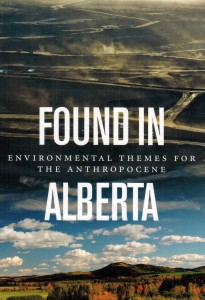
Book Review — Hidden Alberta
Each time there is an E.coli outbreak – it is now a triannual event – the beef industry and its apologists explain food poisoning wouldn’t be a problem if only consumers knew how to cook tainted hamburger. It’s the same logic Big Auto used once against mandatory seatbelt laws.
“We are all part of the problem,” Laura Rance, editor of the farm periodical Manitoba Co-operator, wrote in a snide 2012 commentary; “How is it that in Canada, one of the world’s wealthiest and most well-educated countries, we have a population so functionally illiterate when it comes to safe food preparation? Even meat carrying E.coli is edible when properly cooked.”
So it was that General Motors’ director of styling, William Mitchell, told a reporter in 1956: “The seat belt craze isn’t doing anything for the brains of the guy driving the car. Sure, we need thinner pillars and better vision, but this just encourages the nuts. Put belts and shoulder harnesses on them and they think they can do anything.”
So, Big Auto sold inherently unsafe cars that killed and maimed through normal operation. And Big Beef sells meat that can kill or maim through normal consumption. Robert Boschman, co-editor of Found In Alberta, challenges the logic.
Found In Alberta is an eloquent series of essays on environmental themes in the province that celebrates natural wonders in tourism advertising, then licenses oilsands development and the biggest concentration of feedlots in the country. Boschman, a professor of English at Calgary’s Mount Royal University, notes Alberta cattlemen like to show photos of the Rockies in their marketing: it evokes “a relationship between natural landscape and the domesticated cattle,” he writes.
In 1999, Boschman’s three-year old daughter was poisoned after eating E.-coli-tainted sausage. The bacteria infected an older sibling, age 5, when the two sisters shared a bath. “At first, and for a long time afterward, I was devastated that my own complicity in beef consumption and my unthinking act of bathing the girls together when one of them suffered food poisoning should have such grievous consequences.”
Both girls were hospitalized. The five-year old emptied her bowels 54 times, “her body’s attempt to rid itself of a pathogen so toxic the intestinal wall was being rejected,” Boschman writes: “Until that moment, the reality of urban humans living in a single, interconnected biosphere had not entered my personal experience and consciousness with such force.”
E.coli is spread by filth. Cattle trucks force livestock to stand in their own excrement that coats their hides. Once delivered to the slaughterhouse, they are processed at a rate of up to 500 cattle per hour. The system has had spectacular failures.
In the XL Foods Inc. scandal, a case of mass food poisoning that prompted the diatribe from the Manitoba Co-operator, E.coli spread from cattle dirt to mechanical blades to raw meat later shipped and sold to consumers. The bacteria were first detected on August 29, 2012. Federal inspectors allowed the plant to keep shipping tainted meat for another thirty-one days. Incredibly, no one was fired – least of all Agriculture Minister Gerry Ritz, then responsible for meat inspection. Instead cabinet quietly assigned inspection duties to the Minister of Health, and the Co-operator concluded food poisoning wouldn’t be an issue if only consumers weren’t so stupid.
Found In Alberta questions these practices with a poignant observation: stewardship of the land and profit-taking from the land are not the same thing: “Where better to examine apparent contradiction between the deeply-held love and pride of wilderness, and the relentless pursuit of the riches it yields?”
By Holly Doan
Found in Alberta: Environmental Themes for the Anthropocene, edited by Robert Boschman and Mario Trono; by Wilfrid Laurier University Press; 398 pages; ISBN 9781-5545-89593; $32.24

Court Takes Fracking Appeal
The Supreme Court will hear a key challenge on oil and gas fracking. Justices agreed to weigh the case of an Alberta landowner who claimed EnCana Corp. poisoned her well by pumping toxic chemicals into groundwater: “This is a critical issue”.
Gov’t Studies Train Cameras
A bid for mandatory audio and video recorders in all rail locomotive cabs will be formally studied by Transport Canada and federal crash investigators. The Teamsters union representing crews has cautioned recorders may be misused to spy on employees: “That is not an argument I find persuasive”.
Credit Fee Cap Dies In House
A motion to regulate billions in credit card fees charged to merchants and restaurateurs has lapsed in the Commons. Conservative MPs said they would not support fee caps, though one caucus member accused credit card issuers of near-extortion: ‘This is plain wrong’.
Be A Leader, Auditor Testifies
Auditor General Michael Ferguson is imploring MPs to heed his recommendation that regulators curb non-medical use of antibiotics. The Public Health Agency must provide leadership, the auditor told MPs: “There is currently no national strategy in place”.
Pesticide Review Called Thin
Federal regulators are doing “solid” work on pesticides despite complaints chemicals have been licensed for years without risk assessments. The praise from the Commons health committee followed the first statutory review of regulators in seven years: “Is this the way to run a railroad?”
Bill Would Cut Cabinet 33%
The government is dismissing a Commons bill that would cut the size of cabinet by one-third as an austerity measure. Canada has one of the largest federal cabinets in the democratic world at 39 members, including two ministers responsible for finance and two more for multiculturalism: “More focus, less process”.
RCMP Slow On Union Ruling
RCMP management is attempting to stonewall a historic union drive despite a Supreme Court ruling, says a group attempting to organize the Mounties. Public Safety Minister Steven Blaney declined to comment: “They should be fair”.
MPs Endorse Bootleg Fish Bill
A Commons committee has passed a bill proposing new enforcement on illegal fishing amid complaints that regulators have no estimate of the size of the black market. MPs on the fisheries committee endorsed the bill that sets $500,000 fines for importing or processing unlicensed fish: ‘We can’t know what we don’t observe’.
Schools Protest Holiday Bill
One of the country’s largest Catholic school boards is opposing a bill to designate November 11 a legal holiday. The Commons veterans affairs committee was told schoolchildren belong in class on Remembrance Day: “I don’t know what we’re trying to achieve here”.
Cannot Bigfoot North: Report
Arctic development can’t be mandated around “conference tables in Ottawa”, says an analysis by the Conference Board of Canada. The report follows a ruling by the Northwest Territories Supreme Court that Parliament may have breached constitutional rights with a 2014 bill on development permits: “Think twice”.
Awful Workplace Claim Wins In Court: “Shock And Tears”
A federal labour board has been ordered by the courts to reconsider a claim of mental distress by a public employee driven to tears by her dysfunctional workplace. Court heard conditions were so bad the woman barricaded herself in the office: ‘There was stress beyond all thought’.
Stats Chief Okays Jail Repeal
Canada’s chief statistician is endorsing a Conservative bill repealing the threat of jail for people who submit false information in government surveys. Wayne Smith said the sanction was rarely sought, and only in “very unusual” circumstances: ‘It’s unreasonably harsh’.