“Portrait Of A Leader”


George W. Bush

presents a collection of portraits:

heads of state

met in person.


The sharp eye

of the former president

captures revealing views

of these individuals:

Two dimensional,

no deeper than oil on canvas.


Remind them of the latest scandal,

or throw the truth in their face,

and they look through you –

unmoving,

unblinking.


Oh, there’s a self-portrait too.


(Editor’s note: poet Shai Ben-Shalom, an Israeli-born biologist, examines current events in the Blacklock’s tradition each and every Sunday)

Review: Scandal, Ridicule, But No Poisonings So Far

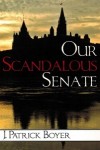
“We can learn a lot about a place from the kind of scandal it generates,” writes J. Patrick Boyer. On that count the Senate fares not too badly. Its disgraced members are cited for cheating on expenses and lying to their colleagues. There have been no kickback schemes; no influence-peddling; no secret contracts, poisonings or manslaughter. The Senate merely embarrassed itself in the comic manner of a self-satisfied and slightly pompous aristocrat made to look ridiculous.

Our Scandalous Senate is a lively recounting of the famous troubles by a former two-term MP. Boyer is a delightful writer who dissects the problem plainly: the Senate suffers from a near-absence of leadership. Speaker Noël Kinsella warrants only cursory mention in Boyer’s account, and only then to be mocked for his ineffectual news conferences.

“The absence of administration was camouflaged by hallowed pretense of the Senate’s ‘honour system’”, Boyer writes. “The mythical ‘system’ – it was actually an absence of a system – continued to be the Senate’s operating cultural norm, even after the 1960s when the rules were changed so that senators could no longer hang around past age seventy-five, simply because it was embedded in the very fabric of the place”.

To win appointment to the Senate, he writes, is to join a kind of priesthood and face “the intimidating power and dumb inertia that had lumbered along for centuries.”

Our Scandalous Senate correctly notes the misconduct of senators has moved talk of abolition from the lunatic fringe to mainstream discourse of Canadian politics. Boyer also neatly dispenses with the mythology of Senate reform – the long, tiresome campaign by reformers who convinced themselves the Upper House was somehow malformed by patronage, and that highly technical changes in the rules would return the Senate to its pure Confederation roots.

In truth the Senate is exactly what it was supposed to be: the invention of political fixers who were trying to build a country. “By creating two houses for Parliament, it was possible to persuade Quebecers to agree to ‘representation by population’ in the Commons, where they knew they would be outnumbered, since they would be guaranteed the condition of equality in the Senate. Quebec and Ontario got twenty-four senators each,” Boyer notes. “‘On no other condition,’ said George Brown, one of the Fathers of Confederation, ‘could we have advanced a step.’”

These are the worst days for the Senate: Three members are suspended; one resigned under investigation; five others quit in apparent dismay.

These are also the best days for the Senate. Members killed a union-busting Bill C-377 that was almost certainly unconstitutional. They exposed a mean-spirited clause in an omnibus budget bill to give police warrant-free access to tax returns. Senators have convened landmark hearings on bitcoin; public broadcasting; credit fees; cross-border pricing; Official Languages communities; aquaculture and the collapse of the Atlantic lobster fishery.

“Senators are good people,” Boyer notes; “Many have rich contributions to make to public affairs, and try gamely through the muted channels of the Senate to do so.”

The contributors will be the salvation of the Senate in the end.

By Holly Doan

Our Scandalous Senate by J. Patrick Boyer; Dundurn Press; 392 pages; ISBN 9781-4597-23665; $24.99

‘No Comment’ On Whether Farm Bill’s Made In Brussels

Changes to patent rules for plant breeders came amid pressure from Europe, suggests a confidential memo. Agriculture officials refused comment on the document released through Access to Information. The memo indicates Canada was pressed to tighten patent rules while negotiating free trade with the E.U.: “Who’s making policy?”

This content is for Blacklock’s Reporter members only. Please login to view this content. (Register here.)

Audits Cut By $10 Million

MPs are expressing concern over budget cuts for federal auditors, describing their work as “indispensable”. Funding for the Office of the Auditor General is to be cut by more than $10 million this year compared to 2012: “It’s not a good thing”.

This content is for Blacklock’s Reporter members only. Please login to view this content. (Register here.)

Privacy Bill Flayed As Weak

A federal privacy bill has so many loopholes it will “diminish privacy rights”, says an industry group. The latest warnings came at Senate hearings as legislators expressed growing unease with the bill: “I didn’t think it was a big deal but now that I’m found out — “

This content is for Blacklock’s Reporter members only. Please login to view this content. (Register here.)

Feds Conceal More Records

More federal agencies are improperly withholding documents in breach of federal law, says the Information Commissioner. Culprits include VIA Rail, for concealing data it used to publish on its website, and the Privy Council Office for trying to bill one applicant $4,000 in employee benefits to retrieve files: “Fewer and fewer people trust”.

This content is for Blacklock’s Reporter members only. Please login to view this content. (Register here.)

‘No Trust’: Canadians Resist Handing Bank Data To Feds

Canada Revenue Agency faces resistance from tax-filers who refuse to enroll in automatic bank deposit and withdrawal programs. Agency research confirmed a significant number of Canadians will not give the government access to their bank account. Ottawa proposes to phase out paper cheques in 2016: “I’m surprised by the intensity of the sentiment”.

This content is for Blacklock’s Reporter members only. Please login to view this content. (Register here.)

A Second Opinion On Care

A new private bill proposes to appoint a federal health commissioner empowered to examine complaints of federal programs managed by Health Canada. A similar ombudsman operates in the U.K. public health system: “Much work remains”.

This content is for Blacklock’s Reporter members only. Please login to view this content. (Register here.)

2nd Mine Ethics Bill Introduced

MPs are reviewing another private bill, the second in a month, to supervise the conduct of Canadian mining companies abroad. The legislation would appoint an ombudsman to probe mining, oil and gas companies: “Even the government recognizes this is a problem”.

This content is for Blacklock’s Reporter members only. Please login to view this content. (Register here.)

Great Lakes “Challenged”

The Great Lakes after decades of improvement face new concerns, concludes the Commons environment committee. MPs warned of chemical runoff and dumping of sewage into lakes where 11 million Canadians draw their drinking water: “It’s more than mildly disturbing”.

This content is for Blacklock’s Reporter members only. Please login to view this content. (Register here.)

‘Privacy’ Bill Rated No Help

A federal bill intended to protect Canadians’ electronic privacy instead weakens it, cautions a consumers’ group. The Public Interest Advocacy Centre said the bill strips any incentive to divulge privacy breaches: “There is no reporting to anyone”.

This content is for Blacklock’s Reporter members only. Please login to view this content. (Register here.)

Feds Wary Of Housing Aid

Cabinet is fending off calls for direct renewed commitments on housing subsidies amid warnings that tenants face unaffordable rents. The Co-Operative Housing Federation yesterday rallied at Parliament Hill for long-term funding: “This is simply not acceptable in a country such as ours”.

This content is for Blacklock’s Reporter members only. Please login to view this content. (Register here.)

97% Of Fund Still Unspent

A Crown agency mandated to invest in public works, PPP Canada Inc., in five years has paid out just 2.5% of its cash holdings for projects, says its chief financial officer. The fund was intended to ease an urgent infrastructure deficit. Over the same period the corporation paid more than $16 million in staff salaries: “It’s becoming obvious this is not going to work”.

This content is for Blacklock’s Reporter members only. Please login to view this content. (Register here.)

No Consensus On Chemicals

Agriculture Canada says it is “excited” by claims of lesser bee mortality this year amid protests that common farm pesticides have decimated apiaries. Beekeepers have blamed chemicals for losses of up to 50 percent: “There’s quite a difference of opinion”.

This content is for Blacklock’s Reporter members only. Please login to view this content. (Register here.)