
In 1968 the government passed a Narcotic Drugs Act to pursue a “vision of a drug-free society.” Thousands of people were jailed. Even simple possession of marijuana was punishable by up to six months’ in custody. Drug testing was punitive and commonplace and treatment was “based on obtaining complete abstinence,” noted a federal report.
The country was not the U.S. but Sweden. The scheme worked. Marijuana use by young Swedes fell to 9 percent, less than half Canada’s comparable rate.
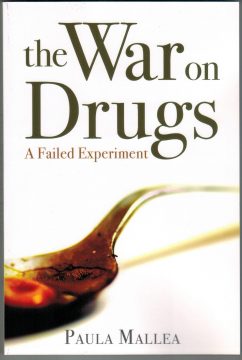
Few analysts ever mentioned Sweden in our national debate over marijuana policy. Discussion was coloured instead by the politics, religion and demography of the U.S. Even the title of Paula Mallea’s pre-legalization book The War On Drugs, is an American invention.
Drug policy is complex. It was the subject of seven parliamentary committee reports and commissions in 30 years. It’s also divisive. No government achieved any consensus, though Mallea notes most Canadians might agree simple possession should not be a felony.
Mallea worked as a defence lawyer for drug defendants in Manitoba and Ontario. She recalls one client, Jane, who lost her job after pleading guilty to smoking marijuana at a house party: “I expect she has not worked at a decent job since, much like thousands of others across the country, because her criminal record will be held against her.”
“You would think that someone who has defended legions of drug offenders in criminal court would have formed a substantial and sophisticated opinion on the war on drugs, but you would be wrong,” Mallea writes. “I knew it was a cruel and wasteful system, but the question of what to do about it never surfaced long enough to produce an informed opinion.”
War On Drugs is constructive but speaks mainly to the like-minded. “Drugs are just drugs,” writes Mallea. “Why did we think it appropriate to criminalize people for ingesting substances that we disapprove of, even when there was no victim and no violence involved?”
Well, yes. But we also punished people who did not pay parking tickets or sold milk off-quota. The author cites with approval a 2002 Senate report that recommended legalization of marijuana, but fails to mention the recommendation came with a warning: “An exemption regime making cannabis available to those over the age of 16 could probably lead to an increase in cannabis use for a certain period.”
Our drug debate was coloured by selective statistics, anti-Americanism and blanket assertions camouflaged as fact. At pre-legalization hearings of the Commons health committee, former Victoria councillor Philippe Lucas asserted marijuana smokers were just smarter than everybody else, a claim that angered then-Conservative MP Terence Young (Oakville,Ont.):
- Lucas: “In Canadian polling of medical cannabis users, Canadians who use marijuana have higher income levels and higher education levels than those who don’t use cannabis.”
- MP Young: “Whoa, whoa, are you trying to claim that marijuana leads to higher income levels?”
- Lucas: “I’m saying that’s the facts according to all polling – ”
- MP Young: “What a ludicrous connection. I mean, come on, let’s be scientific.”
- Lucas: “It’s not a ludicrous connection at all.”
- MP Young: “I don’t believe it for one second, by the way…”
- Lucas: “When polling of Canadians takes place, those who use cannabis have higher income and higher education levels than non-cannabis users.”
- MP Young: “That’s because you can’t poll street people.”
Canada didn’t have the drug laws we had because of evildoers in Parliament or vast right-wing conspiracies. We had them because opinions were hardened on both sides, and politicians saw no profit in devoting the time and deft touch required to build a consensus – or investigate how it worked in Sweden.
By Holly Doan
The War On Drugs: A Failed Experiment by Paula Mallea; Dundurn Press; 256 pages; ISBN 9781-4597-22897; $22.99