
Shared Service Canada, the federal IT department, counted more than 300 employee conflicts of interest last year, says a cabinet briefing note. The disclosure follows testimony by one public servant that it’s “fairly common” for federal employees to moonlight as contractors: “What informed your perception that many government employees run side hustle businesses?”
Monthly Archives: January 2025
Fewer Support Drug Program
Fewer Canadians support decriminalization of cocaine and other narcotics following a failed experiment in British Columbia, says a Department of Health report. Researchers confirmed a majority of the public believe decriminalization perpetuates dangerous drug use: ‘It increased five points.’
Says She’s Good With Money
Liberal MP Chrystia Freeland (University-Rosedale, Ont.) yesterday praised cabinet as being “careful with Canada’s money” under her four-year tenure as finance minister. Freeland five weeks ago tabled budget records confirming her last deficit went 55 percent over target: “These bread and butter issues are more important today than ever.”
Complain MPs ‘Play Politics’
The RCMP in a briefing note complain Opposition critics are “playing politics” over multiple arrests of suspected terrorists. The Mounties in the same document acknowledged “violent extremism is on the rise in Canada.”
Military Fail On Preparedness
The Department of National Defence is failing to maintain a critical stockpile of emergency medical supplies to protect the military in case of a chemical, biological or nuclear attack, says an internal audit. The report follows investigations showing the Public Health Agency similarly failed to stock pandemic supplies prior to the spread of Covid-19: ‘Supplies are needed to treat casualties.’
Pay For Ads CBC Cannot Sell
Cabinet will provide extra millions to CBC-TV to compensate for ads the network cannot sell, says a Department of Canadian Heritage briefing note. CBC managers have requested extra payments that would take the network’s total parliamentary grant near $2 billion a year: ‘It’s a softer TV advertising market.’
Cancel Oscar Party After All
A federal agency, Telefilm Canada, is cancelling plans for a $70,000 Oscar party in Hollywood at taxpayers’ expense. Proceeding with the banquet would have been disrespectful after wildfires razed Los Angeles, said a spokesperson: “We will not be holding this event.”
Sunday Poem: “Lacrimation”
Adrift on the floe,
There is time to think.
Which methods are best.
Methods according to their own kind.
Guardrails are in place we are told,
By those measuring the distance.
Life or death, commodified,
Mistaken for solicitude.
Terminal decline and a foreseeable end.
Conspiring to assist a Nation.
The edge is hard to see,
In the fog of good intentions.
Adrift on the floe,
There is time for reflection.
Others have gone before.
Wer wird die Wachen selbst bewachen?
By W.N. Branson 
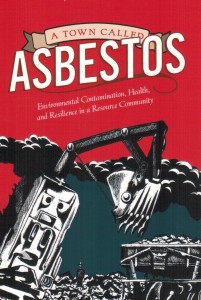
Review: And No One Went To Jail
Buried in a film vault at the federal archives is a Canadian Paramount newsreel circa 1952 shown in movie theatres nationwide. Cue marching music then title board: “World’s Largest Asbestos Mill!” The camera pans across an industrial complex six city blocks long as the announcer shouts, “The new plant will process more than a third of the free world’s supply of the magic mineral!”
It was a ribbon cutting at Johns Manville Co.’s Jeffery Mine in Asbestos, Que. The premier and archbishop showed up. Coroners had known since 1906 asbestos dust was fatal. The fact was not mentioned.
UBC Press has published the true story never shown in theatres. A Town Called Asbestos documents a lethal product produced and sold with the blessing of regulators and lawmakers alike. “The people of Asbestos should not have had to choose between their jobs and their health but that is just what many had to do,” writes author Jessica van Horssen.
Asbestos rock contains fibres akin to raw cotton and can be woven like cloth. The fibres are resistant to rust and flame. Asbestos fireproofed buildings from the House of Commons to waterfront warehouses. It was used in hospital ceiling tiles, aircraft oxygen bottles, electrical wiring and army uniforms.
Milling produces extraordinary amounts of dust. Even the Paramount newsreel shows clouds of dust billowing from a production line. When Johns Manville commissioned its own industrial film in 1975 the crew complained of working conditions.
“The bagging operation on the main floor was shocking,” a filmmaker wrote. “There were accumulations of dust everywhere. It took more than an hour to clean up one bagging unit visible of dust before filming. At another bag unit I noticed an ankle-high accumulation of fibre which was being shoveled onto an open cart for disposal by a worker who was not wearing a respirator.”
The dust hardens the lungs and fatally suffocates its victims. It is a slow, awful death. “The townspeople had no idea that Johns Manville was using the community as a giant research laboratory with the workers and their families acting as test mice,” van Horssen writes.
Regulators did know. The British Medical Journal diagnosed asbestos dust as a workplace peril as early as 1927. Le Devoir published the first press account of the dangers in 1949. The company’s own cancer studies in 1971 confirmed a link between the incidence of lung disease and the proximity of homes to its kilometre-long open pit Jeffrey Mine.
Yet Health Canada did not cite asbestos as toxic till 1975 – the year Johns Manville finally mandated respirators at the mill – and Québec and federal regulators continued to promote its overseas sale long after litigation drove Johns Manville into bankruptcy in 1983. Nobody went to jail. “There is an intimacy between life and labour in resource communities,” says van Horssen.
A Town Called Asbestos is a crisp narrative that documents something close to manslaughter. If economic necessity saw mill employees literally work themselves to death, the recklessness of insurers and regulators remains inexplicable.
Van Horssen writes: “As I stood on the observation platform overlooking the Jeffrey Mine on one of my first research trips to Asbestos, I was distracted from the pit by the sounds of children playing below me. On each side of the platform are piles of stone taken from the Jeffrey Mine, with asbestos still embedded in the rock.”
“Two young boys had placed their bicycles against the chain-link fence that separates the mine from the town and were playing in these piles of asbestos, throwing the rocks up into the sky and taking much delight when they came back down and exploded in clouds of dust. When I drove away from Asbestos that day, foolishly holding my breath and trying not to rub my suddenly itchy eyes, the children remained, laughing and holding pieces of the mineral up to the sun, watching it sparkle and shine.”
By Holly Doan
A Town Called Asbestos: Environmental Contamination, Health & Resilience in a Resource Community, by Jessica van Horssen; University of British Columbia Press; 256 pages; ISBN 9780-7748-28420; $32.95
Plan A $70K Hollywood Bash
Telefilm Canada has budgeted $70,000 for an Oscars party in Los Angeles. The Crown agency yesterday had no comment when asked to justify the Hollywood banquet catered for February 27, fire permitting: ‘Celebrate the Oscars.’
Call TikTok ‘Personal Choice’
Canadians’ use of TikTok is a “personal choice,” says a Department of Industry briefing note written after cabinet claimed it forced the Chinese-run app to phase out operations here. Disclosure of the note came as Opposition Leader Pierre Poilievre said all Conservative legislators were boycotting TikTok in the name of national security: “Stay away from TikTok altogether.”
Billable Hours For 25% More
Federal IT consultants including sole-sourced contractors typically bill up to $1,000 a day, the Budget Office said yesterday. Costs are about 25 percent higher than if departments did the work themselves, wrote analysts: “It was very difficult to understand exactly the value for money.”
$3,000 Fed Grants For Gazans
Gazan refugees in Canada will receive tax-free federal grants of $3,000 per adult and $1,500 per minor child, the Department of Immigration said yesterday. The grants are identical to those earlier approved for Ukrainian war refugees under an aid package that cost taxpayers $753.4 million as of last August: “We are being as flexible as possible.”
Name Names, Inquiry’s Told
Canadians want the names of MPs and senators compromised by Chinese agents, the Commission on Foreign Interference said yesterday. The Commission in a report summarizing petitions it received from the public noted Canadians’ anger over a lack of transparency: ‘Identify and punish them.’
Minister Rethinks Prorogation
Opposition parties bent on a federal election should first allow cabinet to pass more Liberal bills, Public Safety Minister David McGuinty yesterday told reporters. Parliament is currently suspended until March 24, one week before the end of the budget year: “Pass the legislation we need.”



