
Repealing the GST on most new home purchases would cost the federal treasury about $400 million to $2 billion annually, says the Budget Office. The largest parties in the Commons have all proposed removing the five percent federal sales tax charged since 1991 on new construction: “The GST was not meant to apply to the basic necessities of food and housing.”
Monthly Archives: April 2025
Speculators Won A Tax Break
Cabinet did not bother collecting a multi-billion tax on real estate speculators though Parliament passed the measure three years ago, records show. Then-Finance Minister Chrystia Freeland had called it an important initiative to combat speculation: “The Canada Revenue Agency provided transitional relief.”
Won’t Discuss 2036 Contract
Cabinet aides propose to issue an 11-year contract for consultants to manage political appointments. The Privy Council would not comment on confidential terms of the agreement that follows repeated complaints of sweetheart contracting: “The Canadian system is kind of near the bottom tier.”
Party Sued Over Trademark
The Liberal Party faces a $350,000 lawsuit for breach of the Trademarks Act. A Court claim accuses Party organizers of misusing a slogan legally owned by Rebel News Network without payment or permission: ‘This behaviour is unacceptable.’
Nominee Targeted By China
Joseph Tay, a Conservative candidate in Toronto, is being targeted by the Chinese Communist Party on social media, federal election monitors said yesterday. Tay is running in the same riding where the previous Liberal MP was cited for frequent contacts with the Chinese Consulate: “Threats like these are the tradecraft of the Chinese Communist Party.”
To Keep RRSPs In The Family
Parents should be allowed to make tax-free withdrawals from Registered Retirement Savings Plans to help children buy their first home, Bloc Québécois leader Yves-François Blanchet said yesterday. Federal data show family aid is crucial in permitting first time buyers to enter the housing market: ‘It is a social contract with younger generations.’
Feds Give Up On Paper Filers
The Canada Revenue Agency in a memo says it is resigned to processing millions of tax returns by individuals and small businesses that still file by paper. The Agency since 2012 has reviewed proposals to mandate electronic transactions without success: “Paper filing will continue to be supported so that no one is left behind.”
Fed Report Predicts Collapse
The Privy Council in a report quietly released Saturday predicted Canada in 15 years may be so dysfunctional that wage earners flee the country and the poor resort to illegal hunting for food. “It is plausible,” said the report dated January 2025: “People in Canada assume ‘following the rules’ and ‘doing the right thing’ will lead to a better life. However things are changing.”
Call Consulting Fees “Insane”
Opposition Leader Pierre Poilievre yesterday proposed to halve the “insane” billions spent on federal consultants. The campaign pledge followed a report by one department with 34,000 employees that it tripled spending on consultants in a single year because “no employee was available.”
CBC “Corrects” Fact Checker
CBC chief political correspondent Rosemary Barton broadcast misinformation in claiming to correct other media’s misinformation, says the network. Management issued a correction after Barton garbled facts in attempting to fault Rebel News Network as unreliable: “Some things weren’t true.”
Cannot Meet ‘Historic’ Target
Cabinet will not meet its target of reducing poverty by 50 percent, Department of Employment figures show. Then-Prime Minister Justin Trudeau launched the campaign six years ago on a promise he was making history: “We have a plan.”
I’m Clear-Eyed On China: PM
Canadians must “take steps to protect ourselves” from China, says Prime Minister Mark Carney. Speaking to reporters, Carney was asked to explain a remark in a televised election debate last Thursday in which he named China as our biggest threat: “I am very clear-eyed about China.”
Poem: “Blast From The Past”
Reagan’s slogan
for the 1984 elections
sounds familiar
Bringing America Back
Some remember
his dislike of the gay community
an increase in homelessness
tax cuts for the rich
incentives for burning fossil fuels
His bronze statue
in the United States Capitol’s rotunda
is where a Trump golden statue
may be erected
by the defibrillator.
By Shai Ben-Shalom 
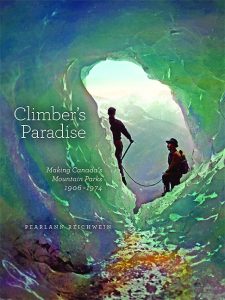
Review: Look Up
Canadians’ embrace of conservation has come a long way since “back to nature” meant car camping with briquettes, and B.C. tourist films extolled carefree driving up the parkway to Fairmont Hot Springs.
Historian PearlAnn Reichwein of the University of Alberta cleverly documents this evolution through the viewfinder of the Alpine Club of Canada. Once a tea society for Anglophiles and dilettantes – no Jews were allowed for the first 40 years – the club over decades transformed itself into an advocate of conservation and protector of national parks. It was a long climb.
Canada does not see itself as an alpine nation though our mountain ranges are spectacular. The Alpine Club even today has fewer members (10,000) than Calgary’s Glencoe Golf & Country Club (12,000). Most Canadians have never seen the Rockies. Many consider them a backdrop for postcards. Few noticed when the 41st Parliament voted to allow an Alberta ski operator to expand into one national park, and ExxonMobil to conduct seismic tests in another.
Mountains carry no profound connection for Canadians as they do in, say, Germany, where mountaineering has long inspired a Wagnerian cult. From the earliest days of silent movies in the 1920s Berlin audiences thrilled to “a film genre which was exclusively German,” the mountain film, the “gospel of proud peaks and perilous ascents,” reviewer Siegfried Kracauer recalled in 1947. “Whoever saw them will remember the glittering white of glaciers against a sky dark in contrast, the magnificent play of clouds forming mountains above the mountains”.
And here? “Indifference,” writes Reichwein. Mountaineering was deemed an expensive and “foolhardy passion” and conservation an afterthought. Not until 1945 did Alpine Club members protest officialdom’s irritating habit of renaming mountains for political figures. “General Eisenhower is not a mountaineer,” the club complained when cabinet renamed Banff National Park’s Castle Mountain for the hero of Normandy. Not until 1969 did the Alpine Club newsletter caution members to beware of “the fragility of the natural environments in the face of increasing population and development pressures”.
The Alpine Club of Canada was established in mountain-free Winnipeg in 1906, closely modeled on an elite British club founded in 1857. This was no environmental group. Charter members and patrons included the president of the Canadian Bank of Commerce, the wife of the president of Burns Meats and a vice-president of the Canadian Pacific Railway which subsidized club activities for years as a way to draw paying customers to its Rocky Mountain hotels.
Membership dues were $300 a year, the equivalent of more than $6,400 today. Members attended campouts wearing neckties and moustache wax: “The Alpine Club of Canada was an English-speaking organization dominated by members who were urban, well-educated, leisured and drawn largely from professionals,” notes Climber’s Paradise. When the club organized its 1937 campout at Jasper Park’s Maligne Lake more than three tons of gear was hauled up by road, rail and horseback, including a tea tent.
Reichwein notes that only with the affluence of postwar years did more Canadians begin to embrace the outdoors, not as an expression of “imperial conquest” but as something approaching a defining national characteristic. Climber’s Paradise draws readers along with intriguing anecdotes and beautiful photography, and an affectionate narrative of how more and more Canadians were inspired to look up.
By Holly Doan
Climber’s Paradise: Making Canada’s Mountain Parks, by PearlAnn Reichwein; University of Alberta Press; 390 pages; ISBN 9780-8886-46743; $45
Calls China #1 Security Threat
China is the biggest threat to Canada’s security, Prime Minister Mark Carney last night told a TV election debate audience. His remark followed the abrupt departure of three former Liberal MPs in the past month over foreign interference: “China, you say?”



