
Review: How It Went In Sweden

In 1968 the government passed a Narcotic Drugs Act to pursue a “vision of a drug-free society.” Thousands of people were jailed. Even simple possession of marijuana was punishable by up to six months’ in custody. Drug testing was punitive and commonplace and treatment was “based on obtaining complete abstinence,” noted a federal report.

The country was not the U.S. but Sweden. The scheme worked. Marijuana use by young Swedes fell to 9 percent, less than half Canada’s comparable rate.

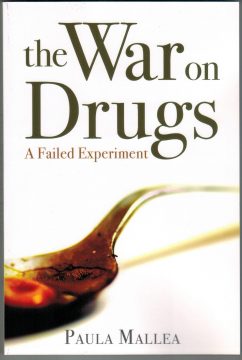
Few analysts ever mentioned Sweden in our national debate over marijuana policy. Discussion was coloured instead by the politics, religion and demography of the U.S. Even the title of Paula Mallea’s pre-legalization book The War On Drugs, is an American invention.

Drug policy is complex. It was the subject of seven parliamentary committee reports and commissions in 30 years. It’s also divisive. No government  achieved any consensus, though Mallea notes most Canadians might agree simple possession should not be a felony.

Mallea worked as a defence lawyer for drug defendants in Manitoba and Ontario. She recalls one client, Jane, who lost her job after pleading guilty to smoking marijuana at a house party: “I expect she has not worked at a decent job since, much like thousands of others across the country, because her criminal record will be held against her.”

“You would think that someone who has defended legions of drug offenders in criminal court would have formed a substantial and sophisticated opinion on the war on drugs, but you would be wrong,” Mallea writes. “I knew it was a cruel and wasteful system, but the question of what to do about it never surfaced long enough to produce an informed opinion.”

War On Drugs is constructive but speaks mainly to the like-minded. “Drugs are just drugs,” writes Mallea. “Why did we think it appropriate to criminalize people for ingesting substances that we disapprove of, even when there was no victim and no violence involved?”

Well, yes. But we also punished people who did not pay parking tickets or sold milk off-quota. The author cites with approval a 2002 Senate report that recommended legalization of marijuana, but fails to mention the recommendation came with a warning: “An exemption regime making cannabis available to those over the age of 16 could probably lead to an increase in cannabis use for a certain period.”

Our drug debate was coloured by selective statistics, anti-Americanism and blanket assertions camouflaged as fact. At pre-legalization hearings of the Commons health committee, former Victoria councillor Philippe Lucas asserted marijuana smokers were just smarter than everybody else, a claim that angered then-Conservative MP Terence Young (Oakville,Ont.):

  • Lucas: “In Canadian polling of medical cannabis users, Canadians who use marijuana have higher income levels and higher education levels than those who don’t use cannabis.”
  • MP Young: “Whoa, whoa, are you trying to claim that marijuana leads to higher income levels?”
  • Lucas: “I’m saying that’s the facts according to all polling – ”
  • MP Young: “What a ludicrous connection. I mean, come on, let’s be scientific.”
  • Lucas: “It’s not a ludicrous connection at all.”
  • MP Young: “I don’t believe it for one second, by the way…”
  • Lucas:  “When polling of Canadians takes place, those who use cannabis have higher income and higher education levels than non-cannabis users.”
  • MP Young: “That’s because you can’t poll street people.”

Canada didn’t have the drug laws we had because of evildoers in Parliament or vast right-wing conspiracies. We had them because opinions were hardened on both sides, and politicians saw no profit in devoting the time and deft touch required to build a consensus – or investigate how it worked in Sweden.

By Holly Doan

The War On Drugs: A Failed Experiment by Paula Mallea; Dundurn Press; 256 pages; ISBN 9781-4597-22897; $22.99


Consumer Debt “Staggering”

Debt levels for the working poor are now “staggering,” says one of the country’s largest credit monitors. Equifax Canada yesterday in a report to the Commons industry committee said financial circumstances for millions are much worse than headlines indicate: “This gap has widened drastically.”

This content is for Blacklock’s Reporter members only. Please login to view this content. (Register here.)

Fateful Decision Was Cursory

Newly-declassified records show cabinet’s 2005 decision to send Canadian troops into combat in Afghanistan followed cursory discussion. Casualties would number 2,229 including 158 killed in action: “The Canadians would be the best equipped task force in Afghanistan.”

This content is for Blacklock’s Reporter members only. Please login to view this content. (Register here.)

MPs Question NATO Arrest

Opposition members yesterday compelled the Commons public safety committee to address the detention of an accused Chinese-Canadian spy at NATO. “Canadians need answers,” said Conservative MP Frank Caputo (Kamloops-Thompson, B.C.): “What happened?”

This content is for Blacklock’s Reporter members only. Please login to view this content. (Register here.)

Embassy Happy For Trudeau

The Canadian Embassy in Washington yesterday had no comment after it interrupted trade negotiations to celebrate Justin Trudeau’s dating habits. “Kinda chic to date Katy Perry,” staff posted on the Embassy’s official Instagram account: “I get the PR value but it just doesn’t seem very prime ministerial.”

This content is for Blacklock’s Reporter members only. Please login to view this content. (Register here.)

German FM Expansion Is OK

Operators of a radio service for German-speaking Alberta farm families yesterday won federal approval to expand programming to “satisfy demand for local content,” said the CRTC. It follows Census data showing French outside Québec has been eclipsed as a second, third and fourth language in many provinces: ‘One in four Canadians had a mother tongue other than English or French.’

This content is for Blacklock’s Reporter members only. Please login to view this content. (Register here.)

Study ‘Social Cohesion’ Plan

Heritage Minister Marc Miller on a July junket to the United Kingdom scheduled confidential briefings on a Labour Party proposal to promote “social cohesion,” according to an Access To Information memo. A Labour report targeted individuals it called “digital grifters” and “politicians of grievance.”

This content is for Blacklock’s Reporter members only. Please login to view this content. (Register here.)

$90B Train Hits New Problem

Cabinet’s $90 billion regional high speed railway faces new barriers, specifically land use restrictions at federally-designated historic places along the proposed route including a UNESCO World Heritage Site. Parks Canada in an Access To Information memo expressed concern over “possible impacts.”

This content is for Blacklock’s Reporter members only. Please login to view this content. (Register here.)

‘Best Prepared,’ Feds Claimed

Canada was the best prepared country in the world for pandemic risk, officials boasted in newly-declassified 2005 cabinet minutes made public yesterday. The Public Health Agency to date has failed to explain what went wrong: “Canada was the best prepared among countries for a pandemic risk.”

This content is for Blacklock’s Reporter members only. Please login to view this content. (Register here.)

Sales Rose Without Subsidy

Sales of heat pumps grew sixfold nationwide even before cabinet launched a costly subsidy program to promote their use, new figures from the Canada Energy Regulator showed yesterday. The devices were most popular in Atlantic Canada where oil furnaces had been a mainstay of home heating: “Once you make the switch to get off oil and gas you can save hundreds.”

This content is for Blacklock’s Reporter members only. Please login to view this content. (Register here.)

Luck Ran Out At Customs

A federal judge has upheld the Canada Border Services Agency’s confiscation of thousands in Vegas winnings from a cross-border traveler deemed improbably lucky. Under the Proceeds Of Crime And Terrorist Financing Act, Canadians returning home must account for all cash holdings over $10,000: “This can hardly be characterized as unreasonable.”

This content is for Blacklock’s Reporter members only. Please login to view this content. (Register here.)

MP, Senator Boost China Cars

A federal delegation on tour in China urged battery electric car makers to increase Canadian demand for their vehicles, according to a report to Parliament. Automakers with assembly plants in Canada have warned a guaranteed five-year quota of 278,989 Chinese imports will cost jobs here: “Unfettered access, even if limited by quotas, will weaken Canada’s ability to protect its people.”

This content is for Blacklock’s Reporter members only. Please login to view this content. (Register here.)

Assembly Rejects Deadlines

The Assembly of First Nations says it rejects any fixed deadline under Prime Minister Mark Carney’s legislated plan to speed approval of “nation building” projects. The group in a report to parliamentarians dismissed Carney’s deadlines as a pressure tactic: ‘It is aggressive.’

This content is for Blacklock’s Reporter members only. Please login to view this content. (Register here.)

Expect Ukrainians To Return

Many Ukrainian war refugees let into Canada are expected to return home “when it is safe to do so,” says a Department of Immigration briefing note. The document set no quota but estimated over 308,000 Ukrainians arrived in Canada under a special aid program: “Temporary in-Canada measures remain in place until March 31, 2027.”

This content is for Blacklock’s Reporter members only. Please login to view this content. (Register here.)

Third Need Repairs: CMHC

A third of affordable housing in Canada is in poor or fair condition, CMHC said yesterday. Problems identified by the federal insurer included plumbing, electrical and roofing in need of repair: “1 in 3 units are in fair or poor condition.”

This content is for Blacklock’s Reporter members only. Please login to view this content. (Register here.)