
A cabinet proposal for regional high speed rail is “sexy” but expensive, the CEO of the Crown corporation responsible for the venture yesterday testified. Martin Imbleau acknowledged taxpayers were “suspicious and skeptical.”
$10 Wreck Fee Is Insufficient
The fisheries department yesterday said it’s assessing whether to raise a proposed $10 fee on boaters to finance national clean-up of abandoned and wrecked vessels. Enforcement by 2028 is “likely,” it said.
Appealed For ‘Forgotten’ Vets
Former prime minister Brian Mulroney personally petitioned the Liberal cabinet to approve full combat benefits for Canadian veterans of the Persian Gulf War, newly-disclosed Access To Information records show. Cabinet dismissed the appeal: “They must not now be forgotten.”
Feds Confirm Aid To Cubans
Cabinet will send taxpayers’ aid to Cuba, the Department of Foreign Affairs said yesterday. The pledge came as Cuba’s Ambassador to Canada said fuel and food shortages had ground the island to a standstill: ‘It’s important to be there for the people.’
War Too Small For Cenotaph
The Persian Gulf War rates as a “smaller, less costly conflict” that doesn’t warrant inscription on the National War Memorial, according to Access To Information records from the Department of Veterans Affairs. Recognition has been sought by Canadian veterans of the war that ended 35 years ago this week: “They did lobby.”
Must ‘Bring Order’ To Labour
Cabinet will “bring more order” to labour relations at Canadian ports, Government House Leader Steven MacKinnon said yesterday. His remarks followed a succession of cabinet orders quashing legal strikes by port workers: “Canada must urgently solve this.”
Cabinet Rejects Mexico Airlift
Cabinet yesterday ruled out any repatriation flights for Canadians in Mexico. The Department of Foreign Affairs urged vacationers to follow curfews amid public disorder: “Are you considering sending in planes?”
Failures Cost Taxpayers $12M
The National Research Council last year wrote down more than $12 million in subsidies to now-insolvent companies, records show. Taxpayer-backed bankrupts ranged from an Alberta shrimp hatchery to a brewery in Prince Edward Island: “The pandemic created major challenges.”
Won’t Endorse Health Labels
The Department of Health will not support a Senate bill mandating health warnings on liquor labels, according to a briefing note. The Canadian Medical Association endorsed the bill after blaming alcohol for 17,000 preventable deaths annually: “People in Canada make informed decisions about their alcohol use.”

Green Showcase Cost $18.6M
Cabinet spent more than $18 million refitting an Italian office to showcase “Canada’s efforts to combat climate change,” Access To Information records show. The spending on a consulate in Milan was approved at the same time cabinet claimed to cut unnecessary spending: “How do you convince Canadians that you are serious about this?”
Bill Will Protect ‘Sacred Sites’
A federal hate crimes bill would outlaw “obstruction” of Indigenous sacred sites including purported unmarked graveyards, says a Department of Justice memo. Attorney General Sean Fraser made no mention of it when he introduced Bill C-9 An Act To Amend The Criminal Code last September 19: “Why isn’t Indian Residential School denialism proposed in this bill?”
CBC Gaffe At Winter Games
The CBC prompted protests from Seoul by repeatedly identifying South Korean athletes as Chinese at the Winter Olympics. It was the biggest gaffe of its kind since the Government of Canada put up German flags to welcome a delegation from Belgium: “We want people of all backgrounds, identities and abilities to feel valued, seen and heard by CBC.”
“Rolling” In Gov’t Contracts
The federal IT department Shared Services Canada has awarded millions in “rolling” sole-sourced contracts to the same suppliers over 90-day periods, records show. Cabinet in 2018 granted federal managers new powers to award contracts without competitive bidding: “How many instances have occurred?”
Feds Need Railway Advisors
The transport department is hiring private sector consultants to monitor spending on a multi-billion dollar high-speed rail venture. Cabinet said it needed “financial analysis” of the project that has been announced and re-announced for years: “This is real now.”
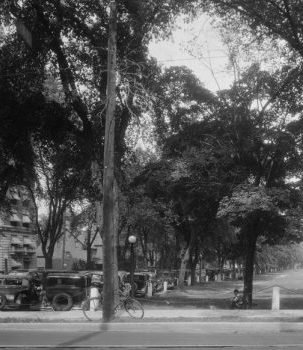
Ottawa Lost: Meighen’s Place
Prime Minister Arthur Meighen lived for years on tree-lined Cooper Street in Ottawa. He owned a rambling Georgian Revival-style home. Meighen raised a family, sent his three children to Ottawa public schools and crafted the most momentous legislation of his era. Today the house is gone, replaced with an ugly apartment block.
Meighen was a brilliant math scholar and lawyer, a six-term parliamentarian, the most influential solicitor general in Canadian history and twice prime minister, in 1921 and 1926. He bought the place at 21 Cooper in 1915. It had a magnificent view of the Rideau Canal yet Meighen lived so plainly he kept chickens in the backyard.
Here he crafted the bill that created Canadian National Railways. He wrote the country’s first conscription bill in 1917 and emergency legislation that ended the 1919 Winnipeg general strike. On hearing Meighen speak in the Commons, Wilfrid Laurier said: “Remarkable.”
He lived simply on Cooper Street. Meighen had an unaffected lifestyle. In 1921 a colleague noted the Prime Minister arrived at work having forgotten to shave. He wore suits till they were threadbare and “has not yet learned to put on his collar and tie properly or wear a hat that does not look like an undertaker’s,” a reporter wrote in 1935.
He was a farmer’s son and all his life had a farmer’s habits. In his youth in St. Marys, Ont., Meighen had sold twine door to door and remained a champion walker. The old man’s walks were “interminable,” his grandson Michael Meighen once told an interviewer.
As prime minister, Meighen walked 13 blocks to work at a military pace, then home for lunch – onion soup, two slices of brown bread, ice cream, coffee – then back to work, six days a week. Meighen had one vice, tobacco. He rolled his own cigarettes.
Most evenings he remained at home, working and smoking, and Cooper Street neighbours would stop by. “He lived in one of the plainest houses,” recalled one visitor, “with no celebrated fads, no celebrated pictures, not much music, but plenty of room for the juveniles.”
In time Meighen moved to Toronto and became a wealthy investment banker. He sold the place on Cooper Street in 1941, for $16,000. In 1957, long retired from politics, Meighen said: “I don’t regret my time in public life. I don’t have to make amends.”
He died in 1960. They demolished the place on Cooper Street in 1965. Today there is nothing to remind us of Meighen’s life in Ottawa.
By Andrew Elliott