
Legal marijuana is linked to accidental poisoning of small children, says the Department of Health. Data show “significant associations” between Parliament’s repeal of a criminal ban on cannabis and emergency room visits by children, it said: ‘It’s primarily children younger than 5.’
For A Safe & Happy Holiday
Blacklock’s pauses for the August bank holiday with warmest regards to subscribers. We wish you a safe, happy holiday. We’re back tomorrow — The Editor.
A Poem: “Skeleton Specialist”
You all walk red-handed
waiting to get caught
by the law,
by my lines.
None of you can hide.
You
who had let your voters down;
you
who had lied to the taxperson;
you
who had ignored a stop sign.
I am standing in front of your closet,
holding the key.
As for you,
whom I thought would be different…
I’ve just realized
you like spicy food.
By Shai Ben-Shalom

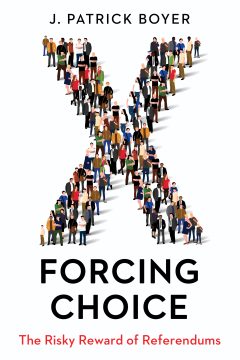
Review: People Who Like People
“All the ills of democracy can be cured by more democracy,” said Al Smith, cigar-chomping governor of New York. But Smith liked people. Every politician loves democracy. It’s just people that some of them can’t stand.
In 1988 Conservative MP Patrick Boyer (Etobicoke-Lakeshore, Ont.) introduced Bill C-311 the Canada Referendum & Plebiscite Act that proposed a legal framework for referenda. It was “awkward,” Boyer writes in Forcing Choice. “A number of MPs told me referendums were a bad idea because members of the public are too ignorant to vote intelligently on complex issues, so it would be a danger for public affairs to start down this ill-conceived path.”
Boyer’s bill lapsed in the Commons though he reintroduced it six times. “Not every issue should be litigated in court or made the subject of a royal commission,” writes Boyer. “Not every person suited to a task needs appointment to a public body or a consultant’s contract.”
Forcing Choice is a passionate defence of referenda. Few Canadians under 40 have ever voted in one. Parliament has sanctioned only two peacetime referenda in the past 150 years, on prohibition (in 1898) and Québec’s distinctiveness (in 1992). Yet referenda still get a bad name on Parliament Hill, writes Boyer.
“Fear of mob rule seems a stretch in Canada nowadays, although opponents of citizens voting on important issues continue to invoke this scare tactic,” says Boyer. “When Parliament was debating a 1973 motion to hold a referendum on capital punishment, New Democrat MP Ed Nelson said the death penalty ‘must be decided from a logical and philosophical point of view, rather than from emotional motivation.’ Then he asserted, with more emotion than logic, ‘This type of referendum is little more than invitation to mob rule.’”
Forcing Choice is meticulously researched. Boyer traces the roots of referenda to the farm protest movements of a century ago. All three Prairie legislatures passed “direct democracy” bills, in Saskatchewan in 1912, Alberta in 1913 and Manitoba in 1916. One by one the laws were struck down by the courts or strangled by opponents.
“If, as critics of ballot questions contend, people aren’t able to understand complex issues in a referendum, how do we possibly manage when faced with a general election?” writes Boyer. He condemns a “precocious sense of social superiority” shared by legislators who like public affairs, but just don’t like people.
Boyer is an honest correspondent. He notes referenda can be messy and unpleasant, like a local July 16, 2017 vote that rejected a zoning application to open a Muslim cemetery in the Québec municipality of Saint-Apollinaire. The results were 19 no, 16 yes, with one ballot spoiled, “an unresolved case of religious discrimination,” he writes. Readers are left to wonder why local Muslims could not persuade ratepayers that they so loved Québec, they wanted to spend all eternity in a graveyard at Saint-Apollinaire.
By Holly Doan
Forcing Choice: The Risky Reward of Referendums, by J. Patrick Boyer; Dundurn Press; 384 pages; ISBN 9781-4597-39123; $24.99
Feds Book 3,810 Hotel Rooms
Nearly 4,000 hotel rooms for illegal immigrants and refugee claimants are being billed to taxpayers monthly, says the Department of Immigration. Cabinet has acknowledged a more “permanent, sustainable” solution is required: “The department’s hotel footprint consists of approximately 3,810 rooms in 29 hotels.”
Won’t Release Jasper Figures
Parks Canada fire preparedness in Jasper, Alta. was a model for the nation, Environment Minister Steven Guilbeault yesterday told reporters. Guilbeault’s office refused to say how many thousands of hectares of dead pine were left standing in Jasper National Park as a known fire risk: “All of these things were done.”
Not Paying GST Is “Immoral”
Failing to pay the GST on all-cash deals is immoral, says a Nova Scotia judge. The courthouse comment follows in-house Canada Revenue Agency research showing many taxpayers consider cheating commonplace: “A dollar you don’t pay is a dollar that someone else has to pay or that has to be borrowed.”
Trying To Block Freeland Tax
Taxpayers facing new capital gains costs hope to block Finance Minister Chrystia Freeland’s proposal before it becomes law, the Canadian Federation of Independent Business said yesterday. The remarks followed a Budget Office estimate the measure will cost $17.4 billion: “We see the potential for many losers because of this.”
Bill Tobacco For Enforcement
Tobacco manufacturers would pay to finance enforcement of the Tobacco And Vaping Products Act under a health department proposal detailed yesterday. Enforcement currently budgeted at $66.2 million a year is charged to taxpayers: “A significant number of people in Canada are still smoking.”
Terms Of Contracts Vanished
Cabinet has abruptly scrubbed dozens of Government of Canada webpages detailing more than $24 billion in payments to Covid contractors. The publicly-accessible database was deleted only weeks after Treasury Board President Anita Anand promised to “make sure we have transparency in government contracting.”
Scandal Talk Upsetting: MP
Media and Opposition MPs are manipulating voters into believing the federal government is scandal-ridden, Liberal MP Vance Badawey (Niagara Centre, Ont.) said yesterday. Badawey made the remarks at a Commons industry committee hearing into a scandal: “It is just once again a narrative they continually try to gain and of course utilize the media to get out there and try to manipulate public opinion.”
Problem’s Four Times Worse
Canada has quadruple the number of shipwrecks and abandoned boats originally estimated, says the Coast Guard. Cabinet proposed a special tax on all boats from cabin cruisers to tugs to help pay the cost of clean-up: “Taxpayers can’t fund every single one of these,”
Question 1945 Loan Program
A federal farm loan program dating from 1945 is now irrelevant, say auditors at the Department of Agriculture. Loan guarantees once touted as crucial have not kept up with rising costs and land values, said a report: “The program is no longer relevant.”
Cannot Play Guitar In Prison
Prisoners have no right to keep guitars behind bars, a federal judge has ruled. The decision came in the case of a convicted strangler ordered to surrender his electric guitar with removable steel strings: “I understand that playing music is therapeutic.”
Lost Track Of 500,000: Memo
Undocumented foreigners in Canada could number as many as a half million, according to estimates by Immigration Minister Marc Miller’s department. The figures do not include lawfully landed immigrants or permit-holding students and migrant workers: “We have made a conscious decision to be an open country.”



