
Bloc Québécois leader Yves-François Blanchet yesterday said he didn’t mean it when he swore an MP’s oath of true allegiance to the Crown. Liberal MPs immediately demanded Blanchet be censured under an 1867 House rule that has never been enforced: “The Speaker should look into the appropriateness of this Member’s continuing to sit in this place.”
Warn Of French Complaints
Federally-regulated private sector employers should expect vexatious complaints under bilingualism law, the Commons languages committee was told yesterday. The Association of Canadian Port Authorities said members received numerous frivolous complaints over petty breaches of the Official Languages Act: “You’re saying people are abusing this, that they’re lining their pockets by trolling the internet?”
Truckers Only “Felt” Violent
The Freedom Convoy “felt” violent though it was not technically violent, interim Ottawa Police Chief Steve Bell yesterday testified at a judicial inquiry. Bell under cross-examination by the protesters’ lawyer acknowledged his repeated reference to the “violence” of the convoy was not meant literally: “So the violence they ‘felt,’ not actual violence, is that what you’re saying?”

Evidence Of ‘Lawless Streets’
February 14 photographs by the mayor’s office showing quiet downtown Ottawa streets have been submitted in evidence at the Freedom Convoy inquiry. The photos were taken hours before cabinet invoked the Emergencies Act on claims that streets were “completely lawless.”
Question CBC Disinformation
Lawyers are petitioning to have Catherine Tait, CEO of the Canadian Broadcasting Corporation, testify on inflammatory Freedom Convoy news coverage cited by cabinet as justification for invoking the Emergencies Act. “The biggest source of misinformation was the corporate press,” the Justice Centre for Constitutional Freedoms said in a statement.
Like Foreign Student Subsidy
The Commons science committee yesterday recommended taxpayers consider covering tuition for foreign students. Foreigners currently pay full cost for college and university education: “Canada must attract and retain individuals who come to study and conduct research.”
New Worries On Big Grocers
A federal anti-trust agency yesterday said it would undertake a review of lack of competition in the grocery trade. The Competition Bureau review comes nine years after the same agency approved mega-mergers that lessened competition: “Many Canadians buy groceries from retail chains operated by one of three companies.”
Contradicts Mendicino Story
A police commander testifying at the Freedom Convoy inquiry said emergency powers were never needed to tow vehicles outside Parliament. The sworn testimony directly contradicted claims by Public Safety Minister Marco Mendicino: “Did the police in Ottawa end up needing the Emergencies Act to tow vehicles?” “No.”
‘Do You Not Have Shame?…’
The Department of Veterans Affairs ought to be ashamed of itself for making ex-military wait years to review disability benefit claims, the Commons public accounts committee was told. Auditors said two-year waits are commonplace with some claims spending a decade under review: “Do you not have some shame?”
Never Told Of Bigot’s Grant
Heritage Minister Pablo Rodriguez says he had no idea his department paid $133,822 to an anti-Semite who fantasized on Twitter about shooting Jews. Rodriguez testified at the Commons heritage committee he was also unaware department staff spent weeks reviewing complaints over the funding: “Are you telling us then all of this took place in your ministry without you being aware of it?”
“Clean Fuel” To Cost $1,277
New “clean fuel” regulations will cost Canadian workers more than $1,200 a year on average, says research commissioned by the advocacy group Canadians for Affordable Energy. The Clean Fuel Standard mandates greater use of ethanol: “It is simply another tax grab that will only make life more unaffordable.”
Say Gun Freeze Won’t Work
A federal ban on legal handgun sales will not reduce gun crime, police have told the Commons public safety committee. Prime Minister Justin Trudeau invoked a cabinet order to outlaw sales effective November 9: “We can expect those wanting to acquire guns will find alternatives including increased incidences of smuggling.”
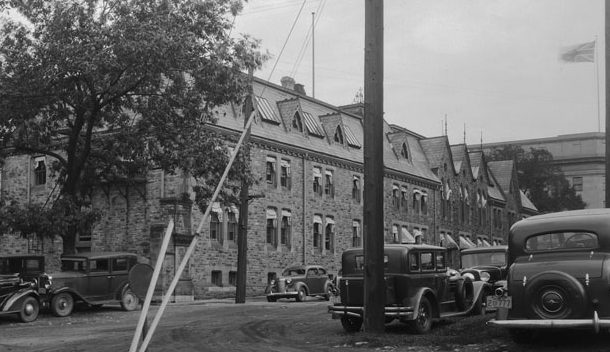
Ottawa Lost: The Old Court
It was a magnificent colonial landmark, Canada’s first Supreme Court building. Here a Laval tax lawyer, Louis St. Laurent, pleaded his first federal case in 1911. He made such a reputation in law he was later propelled to cabinet as justice minister and then the premiership in 1948.
St. Laurent was twice offered appointment to the Supreme Court but declined. “Low salary,” his secretary explained. In private practice St. Laurent earned $50,000 a year in the 1930s.
Even in politics he retained the habits of a corporate attorney. St. Laurent demanded punctuality, kept his cigarettes in a silver case and never campaigned without a black Homburg hat or a lectern, insisting that all speeches be triple-spaced so he could read a sentence at a glance.
He had little interest in “light conversation and exchanges of humour,” a friend said. The Ottawa Journal described St. Laurent as a tax lawyer who merely “played the part of prime minister.”
When he graduated at the top of his law class in Laval in 1905 the Supreme Court seemed the pinnacle of ambition. The court’s home from 1882 stood at the corner of Bank and Wellington Streets in Ottawa, at the foot of Parliament Hill.
Designed in a subdued Gothic Revival style, it mirrored the larger Parliamentary precinct buildings. The architect was Thomas Fuller, renowned in the Confederation era. Fuller designed Parliament itself and the Prime Minister’s Office, the Halifax Armoury and Toronto’s St. Stephen-in-the-Fields Anglican Church.
The courthouse was a witness to history. It heard pleas in the great conflicts of the era – rebellion and conscription, prohibition and the “persons” case that qualified women for federal appointments.
From his appointment to cabinet in 1941, St. Laurent passed the courthouse often. He walked to work from his apartment on Elgin Street and walked back home for lunch, “free from guards, sycophants or self-importance,” noted historian Desmond Morton.
The postwar era was not kind to architecture in the capital. Whole blocks of vintage homes and landmark buildings on Wellington Street were razed to make way for new structures including a modern Supreme Court, completed in 1945. The original court was left neglected and fell into disuse.
How much did St. Laurent care about the old courthouse where he’d made his name as a young barrister? As prime minister in 1956 he deemed the courthouse a fire trap and had it demolished to make way for a parking lot. It remains the only Parliament Hill structure to be razed by cabinet order.
Afterwards in 1976 a statue of St. Laurent was placed on the lawn of the new Supreme Court of Canada on Wellington Street. The site of the old courthouse today is the main RCMP vehicle checkpoint on Parliament Hill.
By Andrew Elliott 
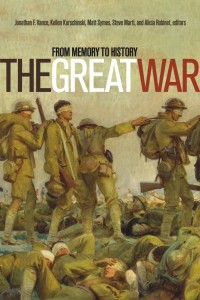
Book Review: Was The War Worth It?
The First World War gave Canada progressive income tax, national trade unions, the Department of Health, votes for women and daylight saving time. The price was 61,802 dead and 172,000 injured. Was it worth it?
With the passing of all eyewitnesses to the cataclysm Canadian culture has “systematically diminished the violent effects of the First World War,” notes The Great War. Politicians sense it is now safe to stand on tombstones to speak on patriotic themes that play well with focus groups. It is left to historians to correct the record.
Great War is a timely assessment drawn from a Western University conference that saw researchers, genealogists and others examine the cost and contribution of events now a century old. “Military triumphs and narratives of sacrifice will have to be weighed carefully against the brutal realities of the war’s human cost,” editors write.
“How, for example, will the 500,000 casualties sustained during the Battle of Verdun influence France’s efforts to honour its war dead and underscore national unity in the face of present-day economic turmoil and state austerity? Will the 1917 army mutinies fit into a narrative that emphasizes collective sacrifice for the survival of the Republic? Official British plans include special ceremonies and commemorative events on key dates, including the Battle of the Somme, which has long served as a horrifying symbol of senseless slaughter for the British public.”
Canada’s record is often twisted into mythologies. Great War documents the distortion.
“In the Canadian context of what is remembered and what is forgotten, the victory at Vimy dominates the national memory of the war while the sinking of the hospital ship Llandovery Castle – with the greatest collective loss of life of medical personnel in the war – received much less attention, perhaps because it fits less easily into the story of victory,” authors write.
On June 27, 1918 the Llandovery Castle with its Canadian crew was torpedoed off the Irish coast and sank in ten minutes; 234 passengers vanished without a trace. Survivors who crowded lifeboats were rammed and shot by a U-boat crew: “It was beyond doubt the most atrocious crime of the entire war for there could be neither rhyme nor reason for the brutal murders,” author Edwyn Gray wrote in his 1972 account of the U-boat war The Killing Time.
Great War similarly recounts the fate of the Newfoundland Regiment at Gallipoli, an epic so obscure it’s forgotten even by Newfoundlanders. In September 1915 the regiment landed in the Dardanelles. Of 1,100 soldiers only 117 were left standing four months later, a casualty rate of 89 percent. The catastrophe was overshadowed by the more disastrous fate awaiting Newfoundlanders at the Battle of the Somme the following July where 90 percent of the regiment was lost in 30 minutes: “From that moment on the Somme battlefield was the primary place for Newfoundland’s national mythology,” editors note; “Gallipoli remained unremembered and indistinct.”
Canadians now subjected to official histories and propaganda deserve a fair accounting of the First War – honest, unflinching and compassionate. Only historians can do the job. The Great War is a start.
By Holly Doan
The Great War: From Memory To History; edited by Kellen Kurschinski, Steve Marti, Alicia Robinet, Matt Symes and Jonathan F. Vance; Wilfrid Laurier University Press; 440 pages; ISBN 9781-7711-20500; $38.99
Voted 6-5 Against Disclosure
A Liberal committee majority last night voted to conceal records detailing federal action against the Freedom Convoy. MPs and Liberal-appointed senators on the Special Joint Committee on the Declaration of Emergency voted 6 to 5 to block the release of uncensored documents: “We’re talking about a lot of documents.”