
A Commons petition is demanding that Heritage Minister Pablo Rodriguez name names in his department’s award of a $133,822 grant to a group subsequently stripped of funding for anti-Semitism. The petition endorsed by the Canadian Anti-Semitism Education Foundation seeks an inquiry with powers to subpoena documents: “Who in the government knew about the consultant’s history of racism and hatred?”
Telecom Scofflaws Uncovered
A CRTC investigation has uncovered “shortcomings” in telecom companies’ compliance with a directive on low cost phone plans. Nearly half of sales agents never told customers of discounts, says a federal report: “Consumers perceived they may have faced misleading or aggressive sales practices.”
Watch Spyware, MPs Urged
Parliament must regulate spyware following disclosures the RCMP used technology to hack phones, the Commons ethics committee has been told. A group of academics warned the practice is “cloaked in secrecy.”
Hired 78 New Passport Clerks
New hiring by the Department of Immigration to process a chronic backlog of passport applications totaled 15 form checkers and 63 mail clerks, according to records. Cabinet withheld the figure while claiming to take extraordinary steps to clear three-month wait times for applications by mail: “We’re doing everything we can.”
Canada’s Biggest Fundraiser
The federal Conservative Party leadership contest was the biggest political fundraiser of the modern era, according to Elections Canada filings. Partial returns indicate all candidates combined raised $8.3 million from 55,000 donors under a federal law that caps individual contributions at $1,675. More than half was raised by Opposition Leader Pierre Poilievre.

Firm An “Excellent Example”
A federal Covid contractor awarded millions for medical gowns twice missed delivery deadlines after blaming the weather, says the Department of Public Works. The company’s local Liberal MP Irek Kusmierczyk (Windsor-Tecumseh, Ont.) called the contractor “an excellent example of Canadian industry.”
Mothers Wary Of Covid Vax
Unpublished data confirm Covid vaccination rates for expectant mothers are far below the national average, says a federal science committee. The disclosure follows pre-pandemic research showing pregnant mothers often resisted routine immunization like winter flu shots: ““The uptake of Covid-19 vaccine has been lower among pregnant people.”
Lawyer’s Bill Charged At 18%
An 18 percent interest charge on unpaid legal fees has been upheld by a British Columbia tribunal. The rate was written into a client’s contract two years ago when the Bank of Canada was charging 0.25 percent on interbank loans: “She agreed to pay it. She signed the contract.”
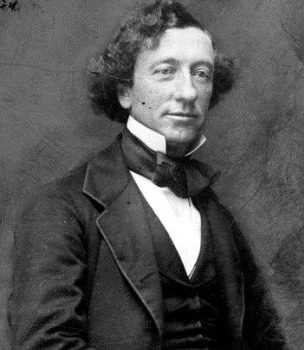
Ottawa Lost: John Slept Here
John A. Macdonald was a vagabondish fellow who never stayed in one place for long and occasionally had trouble paying the mortgage. Our founding prime minister had at least five homes in Ottawa. Few survive.
In 1865 he bought his first bachelor pad, a stone row house at 63 Daly Street near what is now a youth hostel. “I don’t know what you have got in the way of furniture that you can spare me,” he wrote his sister. Macdonald took in three boarders to help pay the bills.
A widower, he married his second wife Agnes in 1867. She she set out to improve the place. In her diary Lady Macdonald complained the family home had become a caucus hangout: “Here – in this place – the atmosphere is so awfully political that sometimes I think the very flies hold parliaments on the table.”
Indeed there would have been a lot of flies. Daly Street had an open sewer that reeked in summer and left a residue of human waste mixed with snow and mud in winter. This first home is gone forever, destroyed in an 1873 fire. A second home, on Chapel Street, was demolished after the First World War and is today a parking lot.
In 1870 the Prime Minister again went house-hunting. He found a place at O’Connor and Nepean Streets, seven blocks south of Parliament Hill. It was a sturdy three-story brick home with gingerbread veranda. A single photograph of the place exists, a grainy image published in a 1904 Ottawa travelogue The Hub and Spokes by Anson Gard.
The house on O’Connor was demolished. Today it is replaced by an economical grey, mid-century apartment tower across the street from a now-vacant convenience store that once peddled cigarettes and lotto tickets.
Macdonald would have appreciated the affordability of the neighbourhood. In April 1875, on being expelled from the House for election fraud, he was reduced to auctioning his furniture and even light fixtures to pay creditors.
From the auction catalogue: “One large bronze hanging lamp and burners with porcelain shade,” “large oak book case in two parts,” “one oval oak extension table.” Bidders were free to cart away the household treasures of the Father of Confederation. Macdonald took off for Toronto to await the resurrection of his fortunes.
With re-election in 1878 Macdonald returned to the capital and a new address, Stadacona Hall, a large gated home on what is now Laurier Avenue built by a lumber baron and fit for a prime minister. Macdonald lived here through his second term as leader. The place is still there, now home to the High Commission of Brunei.
In 1883 Macdonald purchased for $10,400 his last and most famous address, Earnscliffe, a Gothic Revival manor overlooking the Ottawa River. Here Macdonald spent his final years, and died in an upstairs bedroom in 1891.
Not for another 70 years would Parliament provide an official residence, forever ending the era when a prime minister might have lived next door.
By Andrew Elliott


Review: A Home
Poet and essayist Tim Lilburn recalls his grandfather, a sodbuster who landed near Wolseley, Sask. in 1902. He built a life in the wheat boom, lost everything in the Dustbowl and ended his days in a Regina rooming house with a bed and a chair. “Everything I write, I sense, is about this life or is somehow founded by this life.”
The epilogue does not diminish the triumph, writes Lilburn. Immigrants fled “Europe’s two most intractable social ills: landlessness and classism. Many experienced the homestead years as euphoric as a result.”
“It must have been dizzying,” writes Lilburn. “Of course there was an incredible amount of work to be done, but this was set against all night dances in people’s houses, local families providing the music, furniture piled in the yard; beef rings; the excitement of threshing crews coming for the rich crops; Christmas concerts at the school; horse-drawn cutters with heated stones set on the floor for warmth – autonomy and a bracing freedom flourished; a local culture was made up as people went along. I’ve heard tale after shimmering tale.”
The Larger Conversation asks what it means when Canadians sing of our home and native land. “We are floating in the places where we live, as we work the thin living that comes with squatter rights on the crust of global commercial culture,” he writes.
The author takes readers on a far-flung journey through the beautiful brain of Tim Lilburn, from Socrates to the hutongs of Old Beijing, and returns again and again to the land of First Nations and sodbusters. On leaving Saskatchewan for Victoria he actually became physically sick, writes Lilburn: “I missed the prairies I knew”; “My story is perhaps a trivial example, but it says in miniature what land loss does.”
To read Lilburn is to recall Benjamin Franklin’s words, that there is nothing more pitiable than an illiterate man on a rainy day. This is reading for the joy of it. You are sorry for anyone who could not join in.
It takes a poet to see the extraordinary in the mundane. Lilburn recounts as a troubled youth he hitchhiked to a Catholic Abbey at St. Norbert, Man. on a summer night. “I slept in a local park in the sand box, which held some heat from the day, taking in the Perseids meteor shower, convinced it was some sort of sign.”
Later Lilburn writes of a journey through the Crownest Pass: “The radiator shop in Bellevue, Alberta. The brown rising river, the Crowsnest, at the moment it turns east. The semen smell of cottonwood poplar buds. The lip red, scared flowers of cottonwoods. Dippers burrowing under water. Harlequin ducks in pairs, casually riding the hillocks of the fast water. The blond ponytail of the cop talking to the middle-aged, male speeder hauling a boat through the 60 kph zone at Frank. The biker run rad shop in the Pass. Old paint in opened tins, white, with dust mixed in, dust borne as seeds, behind the abandoned house. Tubers or iris bulbs of what looks like faces in-skinned on this and that. The moose-browsed low willow, this piece of limestone that dribbled and cartwheeled a hundred years ago from that mountain onto a coal town, killing seventy people.”
Lilburn for his 60th birthday planned a journey, not to China or the haunts of Greek philosophers, but back to Saskatchewan and a sodbusters’ cemetery where his grandfather is spending eternity. “I stared at the stone, which surely no one has visited in decades, for some time,” he says.
Lovely.
By Holly Doan
The Larger Conversation: Contemplation and Place, by Tim Lilburn; University of Alberta Press; 296 pages; ISBN 9781-77212-2992; $34.95
Predict ‘Bumps On The Way’
The Bank of Canada yesterday warned of “bumps along the way” to beating inflation. Another increase in the 3.25 percent prime Bank rate is due October 26, the sixth hike this year: “We’ll take the next decisions with the information we have in front of us at the time.”
MPs’ Pledge To Queen Stands
Praise and reflection yesterday marked the passing of a Canadian monarch for the first time in 70 years. Commons Speaker Anthony Rota said members of the 44th Parliament would not be required to swear a new oath to the King: “Allegiance is automatically extended to our new sovereign.”
YouTube Hits Senate On C-11
YouTube, Apple Music and other lobbyists are petitioning the Senate to slow final passage of Bill C-11, the first in Canada to regulate the internet. “We urge this committee to pause,” executives wrote in a letter to the Senate transport and communications committee: ‘It is the wrong approach.’
“Learning” Day Not Holiday
A labour arbitrator has rejected one municipality’s complaint that Truth and Reconciliation Day should be a “day of learning” instead of a paid holiday. Scores of arbitration rulings have expanded the September 30 federal holiday to municipalities nationwide: “The fact this is not a federally regulated workplace is not relevant.”
Lost Dialects Despite Funding
Most Indigenous dialects in Canada are endangered despite millions in annual funding to save lost languages, says a Department of Canadian Heritage report. Of some 90 dialects a total 35 are “critically endangered” and 27 more “severely endangered.”