
A federal program to hire college and university graduates is not a “positive experience,” says an internal audit. The Public Service Commission said the program dating from 1973 is out of step with competitive recruitment: “The program has not kept up with current trends and best practices.”
Won’t Detail Dentacare Plan
The Department of Finance has asked the Parliamentary Budget Office to withhold public release of in-house data on a federal dentacare program. The Budget Office sought figures on the cost and scope of the plan promised by 2025: “Do not disclose the data publicly.”
They’ll Still Take The Cheque
Cabinet will not enforce a curb on taxpayers’ use of cheques despite a clause in an omnibus budget bill, says the Department of Finance. Bill C-47 the Budget Implementation Act would mandate electronic payment of taxes over $10,000: “The intention is not to force people to do things.”
A “Great” Dinner Companion
Prime Minister Justin Trudeau in a 2010 radio interview described David Johnston as a frequent dinner companion with whom he had “great conversations.” Johnston on Tuesday dismissed his “so-called friendship” with Trudeau as insignificant: “We had great conversations around dinner tables around all sorts of things.”

Question Helper’s Party Ties
A Toronto lawyer who assisted David Johnston in his review of alleged misconduct by Chinese agents yesterday would not comment on her ties to the Liberal Party. The advocacy group Democracy Watch filed an ethics complaint naming lawyer Sheila Block: “I retained Sheila Block of Torys LLP to assist me.”
Defends Tea And President Xi
A Canadian magazine yesterday defended its publication of a commentary by China’s Ambassador on tea and the wisdom of President Xi. The Ottawa Life article followed Canada’s expulsion of a Chinese spy and Commons committee evidence of threats against an MP: “Just like enjoying tea, let us embrace the spirit of harmony.”
Find Most Seniors Better Off
Retirees are typically better off today than they were 40 years ago, Statistics Canada figures showed yesterday. The latest data follow research suggesting the current generation of retirees is the wealthiest in history: “Family incomes of retirees have generally increased.”
Okay Rate Relief For Farmers
Cabinet yesterday approved millions in interest rate relief for farmers. It follows testimony at the Commons agriculture committee that producers were not to blame for high food costs: “Farmers do not set the price of our products or the price for the inputs we buy to grow them.”
MP Kept Campaign Contacts
MP Han Dong (Don Valley North, Ont.) as a Liberal candidate for re-election in 2021 “continued to maintain close relationships” with China’s Consulate in Toronto, former governor general David Johnston said yesterday. No reason was given: “I was not informed nor would I accept any help from a foreign country.”
No Election Here, Says Singh
There is no reason to dissolve the 44th Parliament and seek a mandate from voters on alleged subterfuge by Chinese agents, New Democrat leader Jagmeet Singh yesterday told reporters. Singh said he was disappointed former governor general David Johnston would not endorse the Party’s March 2nd call for a public inquiry: “Why not trigger an election and have parties run on that mandate?”
I’m Not Biased, Says Johnston
Former governor general David Johnston yesterday said he was troubled by critics who questioned his integrity. Johnston absolved Prime Minister Justin Trudeau, a former skiing companion, of any fault in handling allegations of illegal activity by Chinese agents: “There is no conflict of interest.”
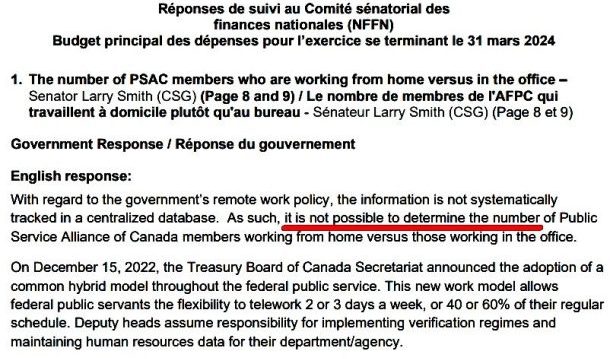
Impossible To Count Workers
The Treasury Board confirms it does not know how many federal employees work from home. The Board in a submission to the Senate national finance committee said it was “not possible” to find out: “You can start to ask?”
Fear “Abuse” At Non-Profits
Federal regulators say non-profit groups are “at risk of terrorist financing abuse.” The Department of Finance in a report proposed forcing non-profits to disclose suspicious cash transactions: “They are not monitored for terrorist financing activities or educated about their terrorist financing risks.”
Claims Anti-China “Frenzy”
Liberal-appointed Senator Yuen Pau Woo (B.C.) in remarks published more than a week after the expulsion of a Chinese spy complained of “extreme anti-China sentiment” in Canada. Woo urged Canadians to sign a Commons petition against a registry of foreign agents: “Media reporting of anonymous and unsubstantiated ‘intelligence’ reports has created a frenzy of innuendo against Chinese Canadian politicians.”
Huge Delegation In Montréal
China has more “diplomats” assigned to Montréal than any other country including France, according to new figures from the Department of Foreign Affairs. The House affairs committee has been told the number of Chinese envoys in Canada is suspiciously high: “Never shy away from denying a visa if it is for a political operative.”