
Cabinet will consult industry and the provinces on drafting a first-ever Aquaculture Act, says Fisheries Minister Dominic LeBlanc. Officials gave no deadlines. One Conservative senator earlier warned consultations could be lengthy and delve into Constitutional issues over fisheries: “It is a long process”.
Forecast A Paper Depression
The industry department forecasts a newspaper depression within five years. Staff in a secret memo predicted the industry will shrink by nearly a quarter: ‘Readership is down, circulation has fallen’.
No Tax Boon In Legalized Pot
Legalizing marijuana will not reap huge tax revenues, says the Parliamentary Budget Office. An analysis concluded net government income from cannabis is unpredictable: “There are potential revenues, but there are also potential costs”.

‘We Don’t Sponsor The NHL’
A federal bank will not disclose the cost of its NHL sponsorships despite repeated requests. The Business Development Bank of Canada denied spending any money on pro hockey until its CEO bragged about the ads at the Commons finance committee: “BDC does not sponsor the NHL”.
Long Wait On Rail Recorders
Regulators have been too slow in reviewing recommended reforms including mandatory recorders in rail locomotives, says the Transportation Safety Board. The agency yesterday noted dozens of safety proposals, a total 52, have lapsed for a decade or more: ‘It’s not enough to point out a problem and then wait’.
Telecom Too Costly, Say MPs
Canadians pay too much for too little telecom service, say Liberal members of the Commons finance committee. “I was just complaining about my wireless bill,” said one MP.
Migrant Hirings Decline 23%
Cabinet cut by 23 percent the number of migrant workers allowed into the country last year, new data show. The decline followed a 2014 crackdown amid complaints of employers’ use of the Temporary Foreign Worker program: “There has been a steady decrease”.
Canada Weak On Flood Plans
Provinces are doing a mediocre job on flood preparedness, says a University of Waterloo report. The new data follow a warning from the Department of Natural Resources that historic weather records are insufficient in anticipating climate change disasters: “We have nobody in charge”.

Feds Poll For Popular Images
The federal government spent nearly $200,000 on overseas focus groups to pick marketing photos most likely to attract foreign students. Pictures of Toronto’s skyline with the CN Tower were rated “boring”, “soulless” and “unexciting”.
Gov’t Looks At Airbnb Regs
The industry department is contemplating regulation of the “sharing economy” especially in the tourism sector, say Access To Information memos. Companies like Uber taxi and Airbnb accommodation rentals pose unfair competition to firms that are taxed and licensed, officials wrote: “Governments have a stake in the sharing economy as regulators”.
A $10K Trip For Ex-Lobbyist
The foreign affairs department paid an ex-lobbyist nearly $10,000 to fly to a Vienna builders’ conference, say Access To Information records. Officials did not explain why diplomats at the Canadian embassy in Austria could not take the assignment: “I charge a fixed price”.
Audit Cites Maritime Agency
A federal maritime agency is being cited by auditors for ongoing deficits and lack of management controls. The Atlantic Pilotage Authority has been audited twice in nine years: “We are all facing a lot of the same issues”.
Warn Taxing 1% Won’t Work
Taxing the nation’s wealthiest 1% will not raise the billions forecast by cabinet, the Senate finance committee has been told. Analysts including the Canadian Taxpayers Federation said creation of a new 33 percent top federal income tax bracket will have far-reaching negative effects: “It may look simple on paper”.
“On Your Way To Recovery”
At the sport medicine clinic,
posters on the walls show
foot and knee injuries,
dislocated shoulders,
close-ups of ruptured tendons, ligaments.
Here, the anatomy of a sprained ankle.
Over there, the mechanism of concussion
caused by a violent blow to the head.
On the table, a set of acupuncture needles
next to models of a spine, a skull, and a hip bone.
I hear someone groan behind a closed curtain,
“Relax,” says the physiotherapist
as he presses down on my ribcage.
“You’re too tense.”
(Editor’s note: poet Shai Ben-Shalom, an Israeli-born biologist, examines current events in the Blacklock’s tradition each and every Sunday)

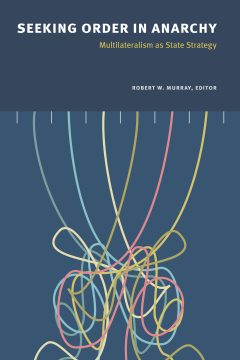
Review: The Herd
They say Cape Buffalo ward off predators by instinctive mobbing behaviour. Many buffalo will join to protect the herd. Among nations, this is called “multilateralism”. It sounds co-operative and altruistic, but in practice can be narrow and cynical.
Seeking Order In Anarchy examines the phenomenon with first-rate essays by political scientists. The book is timely, in an age of rising nationalism and a receding tide of free trade. “If, as realists claim, states are more interested in themselves than anything else, why has there been a proliferation of multilateral arrangements?” asks editor Robert W. Murray, senior business advisor with Dentons Canada LLP.
“Why would self-interested actors willingly choose to sacrifice their independence with others?” writes Murray: “The answer becomes clear. States use multilateralism to help in securing themselves and hope to get something out of it”.
The only reason the world headquarters of the International Civil Aviation Organization is located on Robert-Bourassa Boulevard in Montréal is that Canada in 1945 owned one of the world’s largest air forces. We “played an important functional role in the creation of the postwar system of international civil aviation,” notes Assistant Professor Paul Gecelovsky of Western University.
“Like war, multilateralism is a strategy states can consciously choose to increase their relative power position and increase their society,” writes Editor Murray. Canada is an enthusiastic joiner.
We belong to NATO and La Francophonie, the Commonwealth and G7, UNESCO and the Order of Malta – some 20 herds, by official estimate. “Canada promotes commonly-shared values such as equality and democracy,” the foreign ministry enthuses. The department might have added the asterisk, “**When we feel like it.”
Since 2006 Canada has contributed fewer than 60 peacekeepers to United Nations missions in Africa, writes Assistant Professor Edward Akuffo of the University of the Fraser Valley. That is a smaller contingent than the police department in Brandon, Manitoba.
When the terror group Boko Haram kidnapped some 300 Nigerian schoolgirls, “The Canadian government’s response to the Boko Haram crisis was rhetorically robust, espousing Canadian values of human rights, rule of law and democracy,” writes Akuffo. “However, it is not clear as to what Canada’s contributions will be to assist Nigeria.”
Canada’s most enthusiastic herd instinct has been in trade. We have signed literally dozens of pacts in the twilight of the free trade era. “But to what end?” asks Professor Christopher Kukucha of the University of Lethbridge. “Are these agreements innovative ways of managing international trade and entering new markets, or are they instead an extension of an older, deeper approach to Canadian foreign trade policy?”
“Canada continues to play the traditional role of follower,” Kukucha concludes. We’re just happy to be one of the herd.
By Holly Doan
Seeking Order In Anarchy: Multilateralism As A State Strategy, edited by Robert W. Murray; University of Alberta Press; 296 pages; ISBN 9781-7721-21391; $34.95