
A Fukushima-style nuclear meltdown in Canada would likely see limited health effects but could result in far-reaching psychological scarring, says a federal report. The Canadian Nuclear Safety Commission conducted the research following the 2011 Japanese disaster: “The likelihood of this type of accident in Canada is low”.
A Poem: ‘Face Of The Matter’
In a televised leaders’ debate,
the niqab becomes a hot-button issue.
Good arguments on all sides.
I listen carefully,
wondering if I would have continued watching
had the moderator appeared
with her face covered.
And whether I
– or anyone else –
would even have the right
to see her face?
(Editor’s note: poet Shai Ben-Shalom, an Israeli-born biologist, examines current events in the Blacklock’s tradition each and every Sunday)

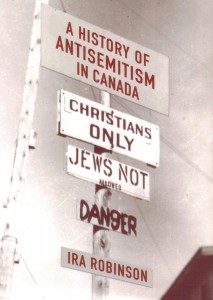
Review: Reaching For The Low Shelf
Why do civilized governments reach for the bottom shelf on tolerance? Canadians this week put an end to the Niqab Election in which a prime minister literally made a federal case over how somebody’s mother dressed at a citizenship ceremony. That came after cabinet June 18 passed the most embarrassing legislation introduced in a postwar Canadian Parliament, Bill S-7 The Zero Tolerance For Barbaric Cultural Practices Act.
Bill S-7 banned honour killings, forced marriage of 12-year olds and polygamy – practices already outlawed in Canada since at least 1890. The bill amounted to gratuitous needling of Muslims. “We are at a historical watershed,” said then-Immigration Minister Chris Alexander; “If we were to open the door to inaction or paralysis, we would look much like the Afghan government”; “Our policy will remain to ensure that citizenship ceremonies take place among people who have removed their face coverings. That is one of the practices in this country that protects women, protects girls, and protects Canadian values and traditions.”
There is no evidence Stephen Harper or Chris Alexander are personally intolerant of Muslims. They merely found expediency in uttering words intolerant people use. So Professor Ira Robinson cites this chilling 1971 speech by René Lévesque, no anti-Semite per se: “I know that eighty to ninety percent of the Jews of Québec are nervous about the effects of separatism. I know that history shows that a rise of nationalism means Jews get it in the neck. But what can I do about it? I can’t change your history. But I also know that anti-Semitism is not a significant French-Canadian characteristic. The more serious problem for the Jews is that Jews in Québec are closely related to the English community. If they choose to put in with them, what can I do?”
Robinson’s History Of Antisemitism In Canada is timely and intriguing. Robinson is chair of Canadian Jewish Studies at Concordia University; his exhaustive research is historical, and specific to his theme, and makes no mention of niqabs. Yet parallels to contemporary events are striking.
Jews from colonial days were seen as enterprising but suspicious. When Ezekial Hart became the first Jew elected to the Lower Canada legislature in 1807, commentators explained: “The Jews are everywhere a people apart from the body of the nation in which they live”; “A Jew never joins any other nation. He makes it a religious duty, a consistent rule of conduct, to keep separate from other people.” Hart was barred from taking his seat in the assembly.
A History Of Antisemitism details intolerance that is still shocking to readers. Upper Canada banned Jews from holding land titles till 1803, though there were then fewer than 100 Jews in what is now Ontario. The provincial Appeal Court as late as 1949 upheld land covenants forbidding the sale of land to Jews; the chief justice called it an “innocent and modest effort” to establish a “class who will get along well together.” No Jew served in a federal cabinet till 1969, long after France or Germany or the Confederate States of America.
Professor Robinson’s work recounts a success story. “Antisemitism is objectively in decline in Canada,” Robinson notes; Stephen Harper’s cabinet was “the most supportive of Israel in the Western world.” After 200 years, he can wish for his grandson: “May you grow up to see a world in which the phenomenon described in this book is only of historical interest.”
In the aftermath of the Niqab Election, we might wish the same for all Canadians.
By Holly Doan
A History of Antisemitism in Canada, by Ira Robinson; Wilfrid Laurier University Press; 300 pages; ISBN 9781-7711-21668; $29.24
Monitor Disputes CP Claims
Canadian Pacific Railway is accused of using selective statistics in depicting freight rates as a bargain for shippers. A railway lobbyist said total farm production costs are nearly triple the expense of freighting by rail: ‘Using rail is in ever-decreasing proportion to costs’.
Gov’t Research Links Military Training To Family Violence
A justice department report cites “military training” as a risk factor in family violence. The reference is based in part on interviews with 62 U.S. servicemen by a university in Cullowhee, North Carolina. Authorities noted the findings, obtained through Access To Information, “do not necessarily reflect those of the department”.
Air Passenger Wins But Loses
Federal regulators have dismissed an air passenger’s claim for compensation despite acknowledging his luggage vanished aboard a Jet Airways India flight. An advocate said the case underlined Byzantine regulations confronting travellers who seek help from the Canadian Transportation Agency: “It really shows how careful passengers should be”.
Landline Era Ends Says CRTC
Cellphones have eclipsed landlines as the telephone of choice for the first time in Canada, say telecom regulators. The CRTC in an industry review also cited rising consumer fees for service, and declining TV viewing by young Canadians: “It’s a trend”.
Feds Poll Heavily On Niqabs
Citizenship Canada polled immigrant communities on the “niqab issue” in the weeks before the federal election, documents show. Researchers were hired to “prompt” ethnic groups on whether they agreed with a 2011 department order that face coverings be removed at citizenship ceremonies: “This was not a top of mind issue”.
Study Follows Tourism Cuts
Two years after axing its U.S. direct marketing, the Canadian Tourism Commission is attempting to gauge the impact of advertising. The research follows a decline in revenues: “You have to double check all the assumptions”.
Court Says CFIA Can Be Sued For Negligence In Quarantine
An Alberta court has ruled the Canadian Food Inspection Agency can be sued for damages after quarantining a farm, even if the farmer received partial compensation. The liability case involves potato growers who accused inspectors of negligence: “The liability of the Agency is a live issue”.
Immigrants Rated Healthier
Immigrants pay fewer hospital visits than other Canadians, says new federal research. The data follow a 2012 cabinet order restricting medicare coverage for refugees. A federal judge in 2014 struck down the order as “cruel and unusual” and a violation of “standards of decency”.
CBC A Job Killer: Gov’t Study
CBC’s online news service is a media job-killer that undercuts private competitors with subsidized giveaway content, says a Department of Canadian Heritage report. The report is the first of its kind to cite the CBC.ca internet news site as a “challenge” to the viability of local newspapers: ‘The newspaper model is broken ‘beyond repair’, even ‘decimated’.
Labour Seeks Quick Repeals
Unions are pressing for a quick summons of the 42nd Parliament to repeal newly-passed Conservative labour legislation already contested in the courts. One bill C-377 would see disclosure of confidential union data beginning in 2016: “We’ll see”.
Alcohol Sensors Ruled Okay
A British Columbia court’s dismissal of questions over the reliability of alcohol sensors leaves innocent drivers with little protection against license suspensions, says a Vancouver lawyer. The ruling came as the RCMP consider roadside tests for marijuana-impaired drivers: “The government does get to make the call”.
CRTC Cited For ‘Weak’ Order
Telecom regulators have dismissed requests from consumers’ advocates for a clear ruling on data mining by telecom companies. The CRTC in a “non-ruling” yesterday said the practice was a privacy issue: “It took six months for the CRTC to decide it wasn’t going to do anything”.