A British Columbia lobby yesterday would not release a complete recording of Prime Minister Justin Trudeau’s remarks to a “private town hall” with home equity tax advocates. Reporters and the public were barred from attending the hour-long meeting June 25, according to the University of B.C. host Generation Squeeze: “Wrong idea at the wrong time in the wrong country. Maybe try Denmark.”
Must ‘Correct’ Your Thinking
Government spokespeople must “correct” Canadians’ thinking, says a report by Treasury Board President Anita Anand’s department. The Board yesterday did not comment on its claim 4,600 federal spokespeople were defenders of “the heart of our democracy.”
Won’t Hire Muslim Activists
Canadian employers won’t hire outspoken Muslim advocates of “Palestinian human rights,” says cabinet’s Special Representative on Combating Islamophobia. Alleged hiring bans followed Hamas’ October 7 killing and kidnapping of Jews in Israel including eight Canadians, said the report to Parliament: ‘An anti-Arab backlash has led to loss of income.’
Drug Injury Counts Skyrocket
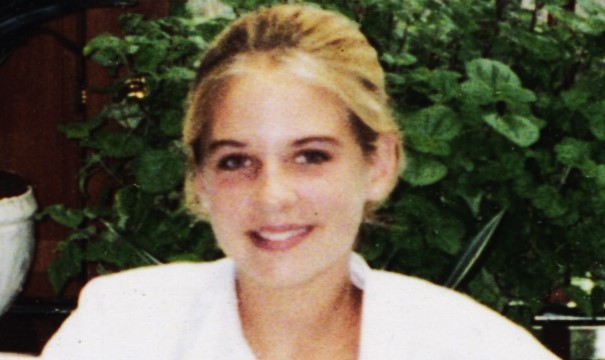
Numbers of serious adverse drug reactions have skyrocketed since hospitals were required to report all incidents, figures show. Parliament in 2014 mandated reporting under Vanessa’s Law named for an Ontario schoolgirl who died after taking ordinary prescription medication: “No Big Pharma executive has ever gone to jail.”
Conceal Contractor From MPs
Foreign Affairs Minister Mélanie Joly’s department will not tell MPs which consultant it hired to run security at Canadian embassies abroad. It followed protests by the Commons government operations committee after managers hired a state-controlled Chinese contractor: “The name of the supplier ultimately selected cannot be provided.”
Met Privately With Tax Lobby
Home prices are unsustainable and have normalized a “massive increase in value” for retirees, says Prime Minister Justin Trudeau. He made the remarks at a private seminar with Canada’s leading advocates of a home equity tax: ‘It’s not like your grandparents saying, ‘Ah, bread used to cost me a nickel.’
Gov’t Knew Millions Wasted
The Department of Public Works in an internal document acknowledges it knew within months its $700 million pandemic ventilator program was a waste of money. The memo contradicts testimony by then-Public Works Minister Anita Anand that cash was paid to favoured contractors “prior to the information coming forward.”
Put $604M In EVs — In China
The Canada Pension Plan Investment Board put more than $600 million in China’s electric vehicle sector accused by cabinet of unfair trade practices. Finance Minister Chrystia Freeland blamed Chinese industry for job-killing schemes, telling Canadian workers: “We are going to protect you.”
Feds Name & Shame Colleges
The Department of Immigration is granting itself new powers to name and shame colleges and universities that abuse the foreign student program. Administrators caught in “unethical behaviour” face year-long suspensions and public blacklisting: “That is totally unacceptable.”
‘Slush Fund’ Report Due Soon
Conflict Of Interest Act investigations at a federal agency dubbed the “green slush fund” will be made public by month’s end, says the Office of the Ethics Commissioner. It follows complaints against Liberal-appointed directors of Sustainable Development Technology Canada: “The Office is still working towards the August 1 deadline.”
Bid You Happy Canada Day
Blacklock’s pauses for the 157th anniversary of Confederation to wish all friends and subscribers a happy Canada Day. We’re back tomorrow — The Editor
A Sunday Poem — “July 1st”
Went downtown this Canada Day
to join the celebration.
A girl wrapped in red-and-white sold three flags
for two dollars, five for three.
She wanted my money.
A street performer had his open guitar case
in front of him.
He wanted my money.
A juggler approached the crowd,
holding his hat.
He, too, wanted my money.
By the pub, a sign invited me to all-I-can-eat-wings
for six dollars.
They only wanted my money.
At the lemonade stand,
four dollars could get me a small cup, mostly ice.
They really wanted my money.
Tired of the assault on my wallet,
I waived a taxi to go back home.
The driver nodded, reaching for the metre.
By Shai Ben-Shalom

Review: Old Time Religion
On October 6, 1920 the city of Ottawa prepared for a riot. The mayor dispatched police to ring St. Patrick’s Hall. Inside, 700 Canadian Catholics, Sinn Féiners and sympathizers rallied for Irish nationalism. Eamon de Valera, a founder of the Irish republic, sent a note to delegates: “No enlightened Canadian will be able to stand by and see an unoffending people massacred.” Outside 3,000 Protestants from nearby Carleton County threatened to descend on the hall and crack heads.
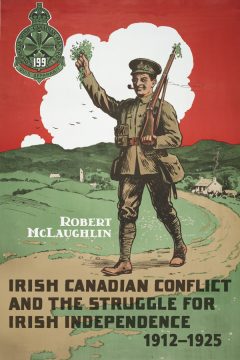
Historian Robert McLaughlin captures the moment in Irish Canadian Conflict, a vivid account of a story now strangely erased from the Canadian experience, the clash of Canadian Protestants and Catholics on the Irish question.
Ancient hatreds from the old country were layered over all the raw nerves that jangled in the new homeland: English versus French, monarchist versus republican, wealthy versus poor. Irish independence was among the great political upheavals of the 1920s and there were more than a million Irish in Canada. When an Irish nationalist, Terrence MacSwiney, starved himself to death in a British jail in 1920, sympathy marches were held in Halifax, Montreal and Québec City.
“The siege mentality pervasive among Irish Protestants was transferred and even intensified on the colonial frontiers of British North America, where perceived threats from French-Canadian Catholicism and American republicanism were all encompassing,” writes McLaughlin.
It made for a hot time. The 1920 Ottawa riot was averted, yet in Toronto – the “Belfast of Canada,” they called it – street violence between Irish Catholics and Protestants erupted 22 times. Irish Protestants were “members of the upper class,” McLaughlin explains. Catholics were seen as dirty, lazy, feckless drunks, “the shiftless type,” as Toronto Mayor Horatio Hocken put it in a 1921 speech to the Orange Order, an enthusiastic proponent of Protestant superiority.
The Order boasted 200,000 members in Canada. Its influence was so great no candidate could become premier of Ontario without its endorsement. Guests at a 1912 Toronto rally included three alderman, two militia officers and one MP.
Yet Catholics gave as good as they took. “If I were an Irishman, as I am a Canadian, and it was my country that had been treated as Ireland has, I would take my rifle in my hands and fight to the last drop of my blood,” one supporter told Canadian Sinn Féiners. The speaker was MP Armande Lavergne, son of Wilfrid Laurier, and a future deputy speaker of the Commons.
The mainly Catholic Self-Determination League had some 30,000 Canadian members in branches from Charlottetown to Vancouver. One organizer, Charles Foy, the mayor of Perth, Ont., proposed mandatory teaching of Irish history in Catholic schools. Another, Liberal MP Chubby Power, told a rally: “The British uniform which stood for justice and freedom, has been made the instrument of atrocity, arson and murder in Ireland.”
Power today is best known as Canada’s minister of the air force in the Second World War. His grandson, Lawrence Cannon, later served as Canadian ambassador to France.
By Holly Doan
Irish Canadian Conflict and the Struggle for Irish Independence 1912-1925 by Robert McLaughlin, University of Toronto Press; 296 pages; ISBN 9781-4426-10972; $29.95
Voters “Done With Trudeau”
Canadians are “done with Trudeau,” New Democrat leader Jagmeet Singh said yesterday. But Singh said he will stick to terms of a Supply And Confidence Agreement that would keep the Prime Minister in office until June 30, 2025: “We are not trying to plan for an election.”
Tell Senate: Keep Spank Law
Lawyers and schoolteachers are petitioning Parliament to reject private bills to ban spanking in correcting children’s behaviour. Two separate bills in the Commons and Senate would repeal a corporal punishment provision of the Criminal Code dating from 1892: “It is impossible to imagine how a parent could successfully foster their child’s development without ever applying reasonable and minimal force.”