
Cabinet effective August 1 will eliminate all credit checks on Canada Student Loan borrowers. “It only creates a barrier,” said loan managers at the Department of Employment: “Difficulties affording postsecondary education can be expected to have long term impacts for all Canadians.”
Rules Say No ID, No Records
Canadians asking to see public records must first show their birth certificate, driver’s license or other proof of citizenship or residency under new legal requirements enacted yesterday by Treasury Board President Mona Fortier. The ID mandate was never put to public consultation: “No consultations were deemed to be necessary.”
Will Block Back-To-Work Bill
New Democrats will not grant the necessary unanimous consent required to speed any federal legislation to end a strike by British Columbia port workers, Party leader Jagmeet Singh said yesterday. Parliament nine times in the past 50 years has forced an end to Pacific port disputes with emergency legislation: “They should not at all be forced back to work.”
Dismissed Tipsters 116 Times
The Office of Elections Commissioner Caroline Simard dismissed 116 complaints of alleged foreign interference in the last two general elections without a single attempted prosecution, records show. Simard’s staff in a briefing note complained investigations were hard: “Investigations into foreign interference will inevitably continue to raise difficult issues.”
Budgets $65M For Space Car
The Canadian Space Agency has budgeted $65 million for a space car, according to an internal audit. The cost accounts for more than 40 percent of total moon exploration spending: “Approximately $31 million is awarded in contracts, grants and contributions to the space industry.”

Billed $82K To Ask 13 Yr Olds
Gender Equality Minister Marci Ien’s department spent nearly $82,000 interviewing Canadians as young as 13 for their opinions of menstruation. Researchers concluded the topic doesn’t come up much: “Canadians were asked how often they find themselves talking to someone about menstruation.”
Feds To Issue French Decrees
Cabinet will decide by executive order which private sector employers must conduct business in French, says a briefing note for Languages Minister Ginette Petitpas Taylor. A bill containing a first-ever federal French mandate in the private sector was signed into law June 21: “The new Act will come into force by decree.”
Media Bailout Failed: Memo
Cabinet’s costly $595 million media bailout failed to save jobs and included only “temporary” measures, says a briefing note for Heritage Minister Pablo Rodriguez. Heavily-subsidized newspapers cut jobs while the only significant growth in media occurred with unsubsidized digital startups, wrote staff.
“Since the beginning of the pandemic 78 news outlets closed including 65 community newspapers,” said the note Federal Support For Journalistic Content. “However in the same period 57 local news outlets have launched: two TV stations, five radio stations, nine community newspapers and 41 online news organizations.”
“Due to government support and a recent boost in advertising revenue some news organizations have experienced some stability and growth,” said the note. “Since the peak of the pandemic closures 16 community newspapers have reopened although overall job losses have continued upwards.”
Subsidies like a 15 percent subscription tax credit were only “temporary,” said the note. The tax credit and a 25 percent payroll rebate worth $13,750 per newsroom employee were originally budgeted to last five years. They are to expire March 31, 2024.
The briefing note is dated March 3. Cabinet released it Friday without comment, only days after the chief lobbyist for newspaper publishers demanded more subsidies. “We have a market failure here,” Paul Deegan, CEO of News Media Canada, testified May 30 at the Senate transport and communications committee.
“We need a solution,” said Deegan. “And that’s why we’ve come to government even though frankly we would like to stay as far away from government.”
News Media Canada publishers cut so many jobs the cost of payroll rebates was less than budgeted, according to an Inquiry Of Ministry tabled in the Commons January 24. Rebates alone were budgeted at $170 million. Actual costs to date are $96.1 million. “The loss of even just one job is a tragedy,” Heritage Minister Rodriguez earlier told reporters.
A senior official in Rodriguez’s department acknowledged April 26 the unprecedented scope of direct subsidies did not save failing media companies. “We have seen a significant decline in journalism,” said Thomas Ripley, associate assistant deputy heritage minister.
“The labour tax credit that’s in place, notwithstanding those interventions we continued to see a decline in news,” Ripley told the Senate communications committee. Records show most publishers double-dipped on federal grants through the pandemic, drawing 25 percent journalism payroll rebates and additional Canada Emergency Wage Subsidies under a Covid relief program now expired.
By Staff 
MPs Misled On C.R.A. Fraud
Revenue Commissioner Bob Hamilton misled MPs in under-reporting the number of Canada Revenue Agency employees implicated in fraudulent claims for pandemic benefits. Hamilton claimed there were “not very many, obviously,” though the Agency now confirms hundreds are under investigation: “I’m afraid ‘not very many’ is not a sufficient answer.'”
Call It Worse Than The War
The Public Health Agency claims 20 times more Canadians would have died in the pandemic than in World War Two if not for lockdowns and vaccine mandates. The claim is detailed in briefing notes and a “what could have happened” study self-published by the Agency: “Do we have data?”
Say They Heard Mao Anthem
Demonstrators attending an anti-discrimination rally on Parliament Hill played the Chinese People’s Liberation Army anthem, says a pro-democracy China media monitor. The anthem pledged allegiance to “Mao Zedong’s flag.”
Homeowners Slash Spending
Homeowners with variable rate mortgages are cutting household budgets and moonlighting in second jobs, says a Bank of Canada Survey Of Consumer Expectations. “Many low income households are already buying only necessities, leaving little room for further cuts to their spending,” wrote researchers.
It’s 156 Yrs Of Confederation!
Blacklock’s pauses to wish all friends and subscribers a happy observance of 156 years of Confederation. We’re back tomorrow — The Editor
Sunday Poem: Raise The Flag
Join the celebration
this Canada Day.
Do the little things
that make a difference.
A flag in hand;
a pin to the collar;
a red-and-white cap
visible from a distance.
Symbols of unity and independence;
all made in China.
By Shai Ben-Shalom
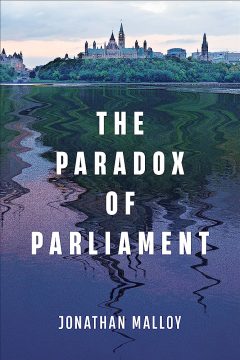
Book Review: Ours, All Ours
Parliament is all we’ve got. Not media or military, not cabinet or courts, not public service executives or the diplomatic corps. Only Parliament stands between us and the wolves, yet it goes unrecognized and unloved. “Dissatisfaction with Parliament is not new,” writes Jonathan Malloy. “We need to step back and consider the matter more carefully,” he adds. Yes, exactly.
Professor Malloy skilfully documents the myths of Parliament. There are many. One is that MPs are helpless, broken automatons with failed marriages who are reduced to jellyfish by mean tweets. Wrong. Many “flourish in the position,” he writes.
“Long-standing parliamentarians can exhibit an almost effortlessness in the job, fielding travel, constituent queries, parliamentary questions and a myriad of other demands with a cool equanimity,” writes Malloy. “There can be a certain world-weary resignation to such characters but also sophistication and wisdom.”
Another myth is that MPs’ influence is ever dwindling and reduced to nothingness. Wrong. Professor Malloy documents the Conservative caucus ouster of Erin O’Toole as Leader of the Opposition, “a striking change and possibly important shift in Canadian party dynamics” under provisions of the Reform Act.
There is a myth that MPs are Mother’s Little Helpers and Parliament must be a place of quiet consensus, not merely a squawk box. So wrong. “Scrutiny is the traditional heart of Parliament,” writes Malloy.
“The medieval origins of Parliament had little to do with coming up with ideas itself,” explains The Paradox Of Parliament. “Rather it focused on scrutinizing the ideas and actions of the state, voicing grievances, and holding the government to account. The great moments of English constitutional history involve establishing Parliament’s power of approval over government actions, and scrutiny of those actions.”
Professor Malloy is a thoughtful correspondent. Paradox Of Parliament is excellent. He chronicles our only elected national institution in all its grief and glory, plainly, without apology or censure. He leaves the impression he loves the place.
Take scrutiny: “Scrutiny is thus about examining government actions, not initiating the actions themselves,” writes Malloy. “And it is most importantly – though by no means exclusively – about money.”
“Scrutiny is also deeply political and it serves little purpose to deny or ignore this,” he writes. “MPs are not disinterested evaluators. They are human and ambitious – for their ideals, for their parties and for themselves.”
“For the opposition the purpose of scrutiny is always to nail the government to the wall, to embarrass and humiliate it, in the hope of electoral gain and replacing the government or at least surpassing the other opposition parties. For the government it is to defend its actions and to deflect and dilute criticism, and ideally squelch it entirely. For individual MPs on both sides, it is to build profiles and careers.”
This is as crisp a depiction of Parliament as you will never read. No “buts,” no “ifs.”
Paradox Of Parliament is penetrating and good-humoured. Malloy calls our chamber of 338 delegates a “boiling pot of regional grievances” where MPs are less orderly than in Britain, but less rowdy than Australia “with ejection of members a regular occurrence.” It is all ours, 100 percent Canadian. It’s all we’ve got.
By Holly Doan
The Paradox of Parliament, by Jonathan Malloy; University of Toronto Press; 304 pages; ISBN 9781-4875-50882; $45.95