
Cabinet has no role in forcing an end to growing Freedom Convoy blockades, Transport Minister Omar Alghabra said yesterday. Seventy trade groups petitioned cabinet to force an end to border blockades at Windsor and Coutts, Alta.: “I hope the blockaders or occupiers or protesters stop their protesting.”
Tell MPs To Ban Wage Fixing
The Competition Bureau yesterday said Parliament must outlaw wage fixing. The Competition Act is “out of step,” anti-trust investigators wrote in a report: “The Act does not impose meaningful consequences for non-compliance.”
PM Says Protest ‘Has To Stop’
Prime Minister Justin Trudeau last night said the Freedom Convoy movement “has to stop.” Trudeau spoke in the Commons for the first time since dismissing truckers opposed to vaccine mandates as tin foil hats: “They don’t have the right to insult those who choose to wear a mask, to get vaccinated.”
Cellphone Users In The Dark
Federal privacy investigators were refused access to a program that tracked millions of cellphone users in the name of lockdown compliance. “We offered our expertise,” Privacy Commissioner Daniel Therrien said yesterday. “It was declined. It is what it is.”
Count Tonnes Of Covid Trash
The Department of Environment complains tens of thousands of tonnes of pandemic masks have been thrown away as litter or landfill. Covid underscored the use of disposable plastics in everyday life, it said: “An unprecedented amount of single use personal protective equipment is being used in Canada to prevent transmission of Covid.”
Seek Fine Print On PM Pledge
Prime Minister Justin Trudeau must explain terms of his pledge to cap oil and gas emissions, the Commons natural resources committee was told yesterday. Trudeau made the announcement without explanation at a United Nations conference: “What is the value of additional legislation that creates even more uncertainty?”
Freeze Carbon Tax, MPs Told
Cabinet should revoke scheduled carbon tax hikes and consider energy rebates for home heating, the Commons finance committee was told yesterday. The carbon tax will increase to the equivalent of 12¢ per litre of gasoline effective April 1: “It is well beyond what would otherwise be an inflationary factor.”
Delay Mailing 123,000 Ballots
Elections Canada delayed shipping mail-in ballot kits to 123,000 voters until less than a week before election day, records show. Chief Electoral Officer Stéphane Perrault had boasted his agency was fully prepared to conduct a pandemic election: “Being ready to administer an election is at the core of Election Canada’s mandate.”
Gov’t Braces For Sixth Wave
Sixth and seventh waves of pandemic infection will occur and “some will actually be quite severe,” says the Public Health Agency. Full vaccination with two Covid shots is insufficient, doctors said: “All policies need to be re-examined over time. This is one of them.”
Torstar Pleads For More Aid
The nation’s largest daily, the federally-subsidized Toronto Star, seeks millions more in taxpayers’ aid. The publisher petitioned MPs for new concessions including a $5,000 tax credit to train employees in how to use the internet: “The industry needs time.”
Uyghurs See Cabinet In Court
Uyghur Muslims have filed a Federal Court challenge of cabinet’s refusal to censure China for genocide. The Court claim was filed as cabinet celebrated Canadian athletes at the Beijing Winter Games: “Cheer on our athletes. Go Canada go!”
Decrepit Building Costs $10M
Taxpayers have now spent $10 million on a decrepit heritage building that has sat empty for 23 years. Prime Minister Justin Trudeau in 2017 announced with fanfare the Ottawa landmark would become an Indigenous Peoples’ Space: “We have a lot of hard work ahead.”
Sunday Poem: “Crystal Ball”
In the year 2056,
Chapters will announce
a major expansion
to its gift section,
boosting the display of
decorative pillows, scented candles, and
specialty teas.
Books may still be found
on the remaining shelf
near the emergency exit.
Gillette will introduce its new
– and revolutionary –
17-blade razor,
in stores
just in time for Father’s Day.
You wouldn’t believe
the smooth, close shave it delivers.
Nothing like its predecessor, the
16-blade model.
And in the House of Commons,
the Minister of Public Services and Procurement
will announce
that the remaining 6,000 pay issues
will be resolved
by Christmas.
(Editor’s note: poet Shai Ben-Shalom, an Israeli-born biologist, writes for Blacklock’s each and every Sunday)

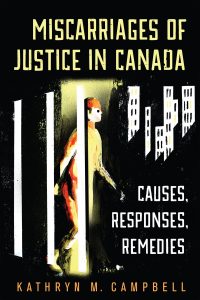
Review: Injustice
Buried in the files of Ontario District Court is R v. Anguei Pal-Deng, an unsettling case. The accused, a Sudanese Black man, 25, already on probation for common assault, was charged with savagely pushing an 82-year old grandmother down a flight of stairs at Toronto’s Dufferin Mall on March 6, 2014. Two eyewitnesses saw everything: the vicious attack, the bleeding victim, the thin blue line of criminal justice that separates civilized society from urban mayhem. “He grabbed my arm and threw me down the stairs,” the woman said. Pal-Deng spent 7 months in jail awaiting trial.
His case was assigned to Judge Melvyn Green, former co-president of the Association in Defence of the Wrongfully Convicted. Judge Green took an unusual interest in the case; he pulled mall security tapes and examined them frame by frame. “I feel compelled to note that absent the closed-circuit television evidence, the result may have been tragically different,” he wrote.
Video showed Pal-Deng minding his business, drinking a Coke, when the elderly woman approached the stairs, struggling with her cane, purse and shopping bag. Pal-Deng gently reached out to offer assistance when she “physically recoiled”, then tumbled downstairs. He rushed forward and knelt to comfort the woman.
Neither eyewitness saw anything; one was on an escalator several feet away, facing in the opposite direction. “It is of profound concern that justice could so easily have miscarried but for the good fortune that the very physical exchange at issue was preserved on videotape,” wrote Judge Green. He acquitted the defendant and apologized. “I regret I do not have the authority to do more,” said Green.
Miscarriages Of Justice In Canada examines phenomena that occur over and over in criminal courts: unreliable witnesses, sloppy police work, indifferent prosecutors. Not every defendant has the good fortune of appearing before a Judge Green. “It is a highly imperfect system,” writes author Prof. Kathryn Campbell of the University of Ottawa’s Department of Criminology.
Campbell’s work is meticulous and jarring. Miscarriages Of Justice counts scores, even hundreds of cases of wrongful conviction annually in Canada typically due to witness misidentification, “problematic police investigation”, failure of Crown prosecutors to disclose evidence, fabricated testimony, unreliable jailhouse informants, Court errors, false confessions, prejudice and poor lawyering.
The actual number of wrongful convictions is not known. Campbell identifies at least 32 cases in which Canadians were compensated after being jailed for crimes they did not commit. One victim, Clayton Johnson of Shelburne, N.S., was paid $2.5 million for spending five years in prison on allegations he’d murdered his wife. Investigators determined Mrs. Johnson fell down the basement stairs while Mr. Johnson was at work.
“Existing laws and evidentiary procedures are presumed to be in place to protect everyone, yet, regardless, errors frequently occur throughout the criminal justice process from investigation, arrest and trial all the way through sentencing,” notes Prof. Campbell.
Miscarriages Of Justice concludes officialdom alone is not to blame. Media representation of lawlessness “exerts enormous pressure on the police to solve these crimes, and to do so expeditiously”, writes Prof. Campbell. “While public pressure to solve a crime immediately does not always result in the wrong person being accused or convicted, police may, in their desire to solve these cases, cut corners in investigative practices.”
Perhaps. It is also true that police, prosecutors, defence lawyers and judges are never fired for participating in wrongful convictions through incompetence, indifference or malice. No party to the Pal-Deng prosecution suffered the loss of a penny’s worth of pensionable earnings let alone seven months in jail.
Miscarriages Of Justice is a darkly compelling book not because it is sensational, but because it is so matter of fact.
By Holly Doan
Miscarriages of Justice in Canada: Causes, Responses, Remedies, by Kathryn M. Campbell; University of Toronto Press; 544 pages; ISBN 9780-80209-4063; $40.76
Data Contradict Crime Claim
The Freedom Convoy blockade at Parliament yesterday completed its sixth day amid MPs’ claims lawless truckers were attacking passersby on the streets of Ottawa. Preliminary data show police-reported street crime actually fell since the blockade began: “There have been no riots, injuries or deaths.”