
The Department of National Defence recommended troops receive standard training in crowd control after the 1970 October Crisis. The department in newly-released Access To Information files said soldiers must show “unflinching discipline” in confronting street protests: “You must challenge in a firm, distinct voice: ‘Halt – hands up’.”
Warns On Lead In Tap Water
Health Canada is tightening maximum recommended limits on lead in tap water. The department noted homes and schools with original plumbing installed prior to 1975 are at greatest risk: “It’s still there.”
Promise “Seamless” Travel
Transport Canada is promising “seamless service” for travelers with disabilities at a $7 million annual cost to airlines, airports, interprovincial bus and ferry operators. A British Columbia lawyer challenging a breach of existing regulations said new rules are no remedy for poor enforcement of policies already in place: “You can have all the regulations you want.”
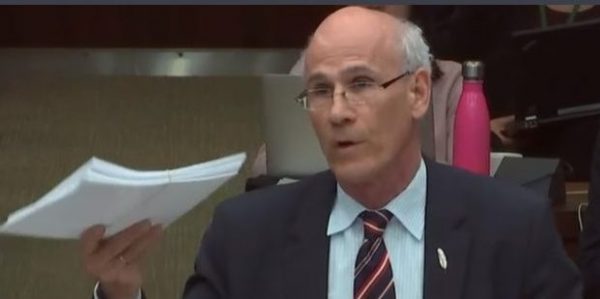
Feds Release Facebook Scares
The Privy Council Office yesterday released social media posts cited as intimidating by Clerk Michael Wernick. The Clerk earlier brandished a half-inch pile of what he called cyberbully messages. They contained Facebook posts from eight people. None made physical threats: “What the hell?”
“It’s About Transparency”
Prime Minister Justin Trudeau yesterday said his leadership is “about transparency” but would not commit to disclose all records concerning SNC-Lavalin Group Inc. MPs’ attempts to obtain emails, texts and letters have failed to date: “You didn’t really address the point of my question.”
Allow Google Maps In Court
A Québec judge has approved the use of Google Maps in a traffic case, the first of its kind. Allowing Google to be entered as evidence saved the time and expense of having a police officer testify, the Court ruled: “Society evolves.”
Didn’t See That Coming
Federal Court has rejected an appeal by an astrologer charged a 50 percent penalty for failing to pay his taxes. Claims of financial hardship to void tax bills are rarely upheld by courts or the cabinet: “Although he might not be personally wealthy, he has assets.”

Clerk Pleads Cyberbullying
Canada’s senior public servant yesterday claimed to be a victim of cyberbullying. Michael Wernick, $326,000-a year clerk of the Privy Council, waved a half-inch pile of what he depicted as hurtful social media comments in an appearance at the Commons justice committee.
“I would like to present these to the committee,” said Wernick: “I believe you will want to discuss this as the intimidation of a witness before your committee and a breach of the committee’s privileges. You can take that up in camera if you wish. I will be distributing these to the media.”
Wernick and his office declined to release the Tweets and Facebook posts despite multiple requests from Blacklock’s. However, numerous social media commentators using the hashtag #MichaelWernick yesterday wrote fresh posts describing the Clerk as a “liar”, “joke”, “pinhead”, “wimp”, “traitor to the nation”, “condescending bastard” and other insults. “He’s the reason why bureaucrats have a bad name,” read one Tweet.
“I am never accepting that we would normalize the cyberbullying of political officials,” said Wernick. “I have been exposed to it. It upsets me and it angers me.” Replied New Democrat MP Murray Rankin (Victoria): “What that has to do with this matter is a little unclear.”
Wernick appeared for more questioning on allegations he hectored then-Attorney General Jody Wilson-Raybould to quash a 2018 criminal prosecution of SNC-Lavalin Group Inc. Wernick denied misconduct but could not recall details of key meetings with Wilson-Raybould or others.
“I do not have an independent recollection,” said Wernick, who cited a poor memory 10 times under questioning: “I do not remember”; “That is not my recollection,” he repeated.
“I state categorically that I have never given advice or done anything for partisan purposes which would suggest to advantage one political party versus another,” said Wernick. Replied Green Party MP Elizabeth May (Saanich-Gulf Islands, B.C.): “I would never suggest for a moment that you were a strong lifetime Liberal or a strong lifetime Conservative. I think your evidence is consistent with being willing to interfere in partisan fashion for whoever is in power.”
Wilson-Raybould in earlier testimony recounted a December 19, 2018 phone call with Wernick in which the Clerk pressed for an out-of-court settlement for SNC-Lavalin, and warned the Prime Minister “is going to find a way to get it done one way or another”: “I warned the Clerk in this call that we were treading on dangerous ground here.” New Democrat MP Charlie Angus (Timmins-James Bay, Ont.) yesterday questioned Wernick on his recollection of the phone call:
- MP Angus: “How come you haven’t even tried to rebut her testimony?”
- Wernick: “…I did not record the conversation. I did not wear a wire. I did not take contemporaneous notes. That is not my recollection of the way the conversation flowed.”
- MP Angus: “You’re asked about threatening the Attorney General, you’re asked about treading on dangerous ground, and you tell our committee, ‘I wasn’t wearing a wire’? ‘Sorry, I don’t remember’?…If you cannot answer that question, you have no business in that job.”
- Wernick: “…I did not threaten the Attorney General in any way.”
- MP Angus: “But you don’t remember. You weren’t wearing a wire.”
Wernick continued there was no evidence he obstructed justice, a criminal act. “I note many members of this committee have said they believe every word of the former Attorney General’s testimony,” said Wernick. “Part of what she testified is she does not believe that any behaviour crossed the threshold of criminal behaviour.”
“That’s the bar? It’s not criminal?” replied MP Angus.
Wernick in February 21 testimony at the same committee similarly said he could not recall details of meetings on SNC-Lavalin, stating “I don’t know” or “I don’t recall” five times under questioning.
By Staff 
Won’t Disclose Lavalin Files
The Commons justice committee by a 5 to 4 vote yesterday rejected a Conservative motion to release all emails, texts and letters concerning SNC-Lavalin Group Inc. held by the Prime Minister’s Office. The Liberal majority vote came as former PMO aide Gerald Butts denied trying to block a criminal prosecution of the company to save Liberal seats in Québec: “Why should Canadians believe your version?”
Pharmacare Report Is Vague
A federal panel yesterday endorsed national pharmacare in principle but did not explain what kind of program should be introduced or when, or how Parliament would pay for it. The report echoed earlier findings of a Commons committee and federal drug price agency: “No, we are not doing a very good job.”
Feds Garble CPP Statements
Officials last night blamed a computer glitch for garbling millions of Canada Pension Plan statements. The mistake was made after a premium rate hike took effect January 1: “We apologize for the error.”
Seaplane Lifejackets Are Law
Cabinet yesterday ordered all seaplane passengers to wear in-flight lifejackets as recommended by federal crash investigators in a 2011 report. Most seaplane operators surveyed by Transport Canada opposed the measure as costly and unnecessary: “In the 1960s people didn’t want to wear seatbelts in cars, either.”
Board Orders Ethics Training
The Treasury Board says only 51 percent of employees strongly agree their co-workers “act ethically”. Data contained in an internal audit prompted an order that all executives endorse an Every Day Commitment oath stating “Every day, every employee is excited about making an important contribution to Canada.”
Working For $10.80 An Hour
One third of Canadians take pick-up jobs like snow shoveling and babysitting at less than the minimum wage, says Bank of Canada research. The Bank attributed the incidence of so-called “informal work” to a weak economy despite cabinet boasts the jobless rate is at its lowest level since 1974: ‘They do so as a result of weak economic conditions.’
Warn On Sweetheart Grants
Ethics Commissioner Mario Dion in an Advisory Opinion cautions MPs to avoid sweetheart deals in awarding 2019 Canada Summer Jobs grants in their ridings. The notice follows lawsuits against MPs accused of favouritism in rejecting applications from certain groups: “You should not make any recommendation.”



