
Residents of Victoria, Vancouver and Toronto are the heaviest debtors in the country, Statistics Canada yesterday calculated. Analysts noted Canadian household debt levels overall are worse today than in the United States at the time of the 2008 financial panic: “This is the highest level recorded.”
Court Upholds Safety Board
The Federal Court of Appeal has dismissed a challenge of the Transportation Safety Board’s investigative powers. The operator of a Great Lakes tour boat complained the probe of a minor accident was so intrusive it breached privacy rights: “We’ve cooperated in every way.”
Feds Knew Of Pipeline Risk
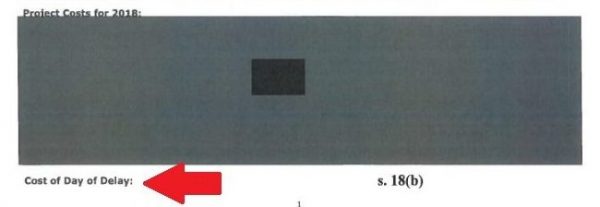
A federal agency in Access To Information records warned of significant cost overruns on the taxpayer-owned Trans Mountain Pipeline, including costs per “day of delay”. A total 601 pages of cost-benefit reports were withheld from MPs and senators: “There continues to be a risk of cost escalation.”
Another Quits Over Lavalin
Treasury Board President Dr. Jane Philpott yesterday resigned after describing cabinet’s role in a growing political scandal as indefensible. Philpott is the third official to quit amid allegations of political interference in a criminal case: “Sadly, I have lost confidence in how the government has dealt with this matter.”
Group Too “Anglo-Focused”
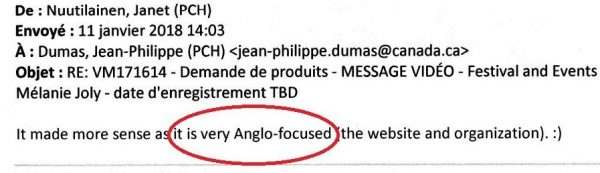
The Department of Canadian Heritage refused a request for a courtesy video of Minister’s greetings to a group it deemed too “Anglo-focused”, according to Access To Information records. The department yesterday did not comment. Other requests for greetings to Francophone, Chinese, Hindu and Kurdish groups were approved: “Hold on this one.”
Most OK Tougher Gun Laws
Internal government polling shows a majority of Canadians support stricter gun laws. Data released through Access To Information do not include direct questioning of whether people would endorse an outright ban on handguns: “We’re prepared to take whatever measures will be effective.”
Globe Faces Defamation Suit
An Ontario court yesterday ordered the Globe & Mail to face trial in a $125 million defamation lawsuit. Million-dollar defamation awards are rare but not unprecedented in Canada: ‘This is a case that could go either way.’
Fake News Case Dismissed
The nation’s largest newspaper chain says it’s tightening editorial standards after publishing a fake news story about the Prime Minister’s Office. A press ombudsman, the National News Media Council, dismissed a reader’s complaint in the case.
“Our mandate is to examine reader complaints against the backdrop of widely-accepted industry and community standards,” Brent Jolly, spokesperson for the Media Council, wrote a complainant: “Indeed, the error was unfortunate. However, the news organization has fulfilled all the requirements of membership to clarify the error and correct the public record. The apology is reasonably read as a show of good faith to readers.”
Postmedia Networks Inc.’s Sun dailies in four cities on February 14 published a story quoting a senior aide to the Prime Minister as remarking Justin Trudeau was dishonest and that Liberals “should be punished”. The story was published in Edmonton, Calgary, Toronto and Ottawa.
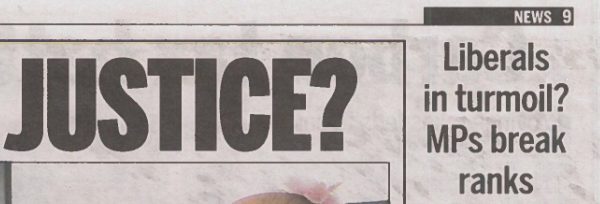
The Ottawa Sun version appeared with a headline Liberals In Turmoil? and stated: “Using the hashtag StandingWithJody, Prime Minister Justin Trudeau’s senior political adviser Gerald Butts tweeted Wednesday: ‘Whether the SNC case is clear illegal interference or a grey edge with regular government business, Trudeau has shown a lack of integrity, transparency and respect.’”
Then-Principal Secretary Butts did not make the statement. The remarks were posted by an anonymous author on a fake Twitter account @GeraldButtts, spelled with three T’s. The fake account also stated: “Liberals should be taught a lesson at the polls.” The account has since been disabled.
‘Mistakes Happen’
The newspaper chain acknowledged the error, apologized and published a February 15 correction in its print dailies. A Sun subscriber in Alberta filed a complaint to the ombudsman describing the article as so improbable it appeared editors rushed it to print without elementary fact-checking.
“The editorial bias is a likely cause for the rush to publish without complying with journalistic standards,” read the complaint: “I am a subscriber to the Edmonton Sun and I read it that morning. I immediately thought, ‘This can’t possibly be true.’”
“This was obviously a fake,” said the complaint: “Sun editors were only too eager to report this without doing any fact-checking whatsoever.”
Mark Iype, editor-in-chief of the Edmonton Sun, said the newspaper chain has since taken new steps to combat fake news but did not elaborate. “The error in the story was corrected online and in print as soon as it was discovered,” Iype wrote the complainant. “Postmedia has since apologized for the mistake and measures have been taken to ensure that it doesn’t happen again.”
“It was simply a mistake, something that happens at news organizations,” wrote Iype.
Postmedia Networks and other Canadian dailies seek federal subsidies under a proposed $595 million, five-year aid program to be detailed in the March 19 budget. Publishers in appeals to the Department of Canadian Heritage obtained through Access To Information described subsidies as critical.
“We need to…reaffirm the critical role newspapers like us all across the country play in Canadian democracy,” wrote one publisher. “This is the most serious crisis we have faced in our history,” said another.
By Staff 
Inflation Index Includes Pot
Statistics Canada is including the cost of recreational marijuana in its benchmark Consumer Price Index. Canada is the first country to add narcotics to the basket of goods used to calculate its official inflation rate: ‘Cannabis is of relevance to Canadian households.’
Gov’t To Block Senate Probe
Cabinet seeks to block Senate hearings including testimony by the Prime Minister on political interference in the prosecution of SNC-Lavalin Group Inc. “Let’s not try to get into the act and play junior league second-guessers,” said Senator Peter Harder (Ont.), Government Representative in the Senate.
Suspended For A Smoke
A federal labour board has upheld a four-day suspension for a Yukon Customs officer caught smoking in the office. The woman explained it was too cold to duck outside for a cigarette. The daytime high was -26°: “It is a simple, straightforward rule.”
Wary Of Reach Into Media
A cabinet official yesterday dismissed disclosures the Prime Minister’s Office boasted of being able to “line up” newspaper editors and columnists to write Liberal-friendly commentaries. Cabinet in its March 19 budget has proposed to detail a half-billion subsidy program for media deemed reliable.
“Did they suggest there were appropriate ways in which the actions that could be contemplated could be communicated to the public? Absolutely,” said Senator Peter Harder (Ont.), Government Representative in the Senate.
Jody Wilson-Raybould in February 27 testimony at the Commons justice committee recounted the boast by the Prime Minister’s Office seeking to quash a criminal prosecution of SNC-Lavalin Group Inc. The former attorney general cited a remark by Katie Telford, chief of staff to the Prime Minister, at a December 18, 2018 meeting: “If you are nervous, we would of course line up all kinds of people to write op-eds that what she is doing is proper.”
The names of agreeable journalists on the Liberal list were not disclosed. Senator Linda Frum (Conservative-Ont.) yesterday in Senate Question Period questioned the reach of the Prime Minister’s Office into newsrooms.
“Is that a common practice of the Prime Minister’s Office, to instruct pundits and editors to write and publish favourable op-eds for the government?” asked Frum. “She will know from her acquaintance with the journalism profession that those attempts are rarely successful,” replied Senator Harder.
“This government is ready to hand out half a billion dollars to so-called qualified media outlets, and now we have the Prime Minister’s right-hand woman openly bragging about her ability to use those same favoured media outlets for political cover,” said Senator Frum: “How can Canadians be confident that this promised aid to the media is not a way for the Trudeau Liberals to buy themselves political cover?”
“The honourable senator will know by the criteria with which funding for media is being contemplated, that any direction from ministers would be impossible to achieve,” said Harder.
No criteria for subsidy seekers have been detailed. Cabinet in a November 21 Fall Economic Statement proposed a $595 million, five-year bailout of news media with a government-appointed “independent panel of journalists” to determine criteria, take applications, and “define professional journalism and determine eligibility” for aid.
“It is insulting to think that journalists can be bought off,” Finance Minister Bill Morneau told the Commons last November 22. The Prime Minister said November 28: “The Conservatives think Canadian journalists can be bought. We do not. We know their work is essential to democracy.”
By Staff
Three Provinces Warn On Bill
Three provinces yesterday told the Senate energy committee Parliament must quickly amend an oil and gas bill or face costly consequences. Cabinet has sought passage of the bill with ten work weeks left before Parliament adjourns for an October 21 election campaign: “That simply is bad for business.”
Senators Fear Quake Risk
The Senate banking committee yesterday rated earthquakes a systemic risk to the nation’s financial sector. The Department of Finance is conducting an ongoing review of the impact of a catastrophic quake on insurers and banks: ‘I gather the plan is to hope the government will bail it out.’
Farm MPs Target Activists
The Commons agriculture committee yesterday opened hearings on criticism of farmers by media and animal welfare groups. One Liberal complained of social pressure: ‘These advocates are outside what one would consider as normal.’