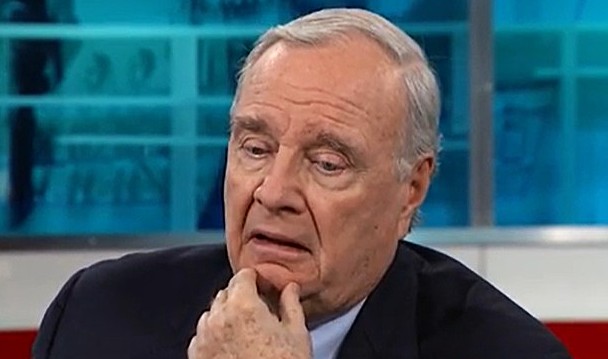
Wants TV Out Of Commons

Parliament should stop allowing cameras in Question Period, says a spokesperson for the Government House Leader. Canada’s Commons was the first to televise proceedings 49 years ago: “Maybe we could take away the television cameras during Question Period.”

This content is for Blacklock’s Reporter members only. Please login to view this content. (Register here.)

Feds Order Election Supplies

Elections Canada is placing orders for 700,000 poll tally sheets and other balloting supplies in anticipation of the next national campaign. Cabinet has denied interest in going to the polls for a second time in two years, though one MP noted “people here are getting worked up.”

This content is for Blacklock’s Reporter members only. Please login to view this content. (Register here.)

Digital ID For $6,644,142,570

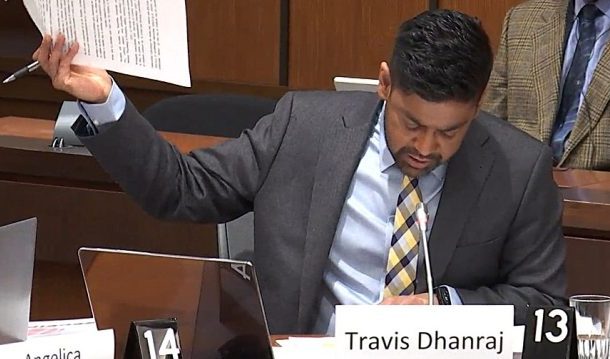
A digital identification system will cost $6.64 billion but not a dollar more, federal managers promise the Commons public accounts committee. The ten-year program to digitize claims for Employment Insurance and other benefits is “the largest IT transformation ever undertaken by the government,” wrote the Department of Employment.

This content is for Blacklock’s Reporter members only. Please login to view this content. (Register here.)

Still Had To Hire Consultants

Spending on Canadian consulates in the U.S.A. under then-Foreign Minister Mélanie Joly jumped 13 percent in two years to more than $130 million, says a new audit. Federal agencies still hired American consultants to promote Canada’s interests: “No U.S. mission had previously undergone an audit.”

This content is for Blacklock’s Reporter members only. Please login to view this content. (Register here.)

Will Take Years To Repay $2B

Taxpayers should not expect any repayment of billions in Canada Post loans for “several years,” says management. The post office required the second loan in a year to avoid insolvency, according to a cabinet order: “It gets us to break even by 2030.”

This content is for Blacklock’s Reporter members only. Please login to view this content. (Register here.)

Ottawa Lost: Bennett’s Club

In 1911, when Richard Bedford Bennett first arrived in Ottawa as the bachelor MP for Calgary West, his choice of accommodation was the Rideau Club. No finer meal could be had. Bennett loved food. “He believed if he put on weight he would present a more impressive appearance,” a friend recalled.

In the end Bennett ate his way to diabetes and heart disease and the Rideau Club burned to the ground. But once both were in their glory.

Bennett was a self-made millionaire and corporate lawyer. He was brash, opinionated, obsessive, mercurial, philanthropic and a workaholic. Bennett put in 16 hour-days amassing his fortune.

He said tersely of his time in Calgary: “I went West. I worked. The country and I grew with it.” In Calgary Bennett was somebody. In Ottawa this tall, portly man was a backbencher. His first impressions of both the capital and Parliament were thin.

“I am sick of it here,” he wrote a friend. “There is little or nothing to do, and what there is to do is that of a party hack or departmental clerk or messenger.”

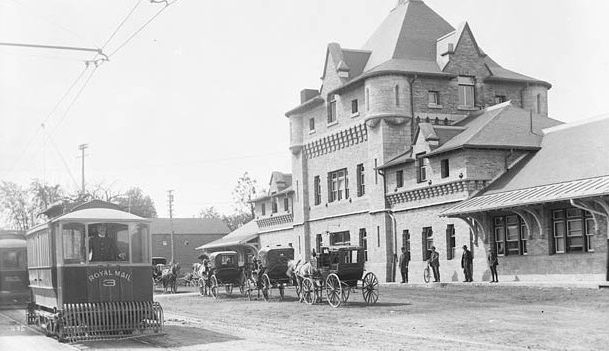
In 1911, the Rideau Club opened a stately new four-story headquarters at Wellington and Metcalfe Streets in Ottawa, a stone’s throw from Parliament. The club was a terra cotta beauty and Conservative institution. John A. Macdonald was first club president. Prime Minister Robert Borden used the clubhouse for cabinet meetings.

One newspaperman observed, “Ottawans who cared not at all for the Rideau Club as a club cared a lot about the building. It presented an elegant, finely proportioned but unobtrusive façade that stared steadily across Wellington Street, decade after decade, towards the Parliament.”

With its upholstered lounges and elegant dining, it was an obvious attraction for the Calgary MP. A light lunch for Bennett was a dozen oysters with pie and maple syrup. He snacked on chocolates by the box. “His daily breakfast was immense: a plate of porridge, bacon and eggs, plenty of toast, honey or marmalade.” recalled Max Aitken, a lifelong chum.

At the Rideau Club, Bennett never lingered in the cigar lounge. He loathed smoking and could not stand a dirty ashtray. And the bar? “I promised my mother I would never drink and I never have,” he said, though Bennett took his meals with a glass of crème de menthe and laced his soup with tumblers of sherry.

Bennett served six terms in the House. He relocated in time from the Rideau Club to the Chateau Laurier Hotel where Bennett kept a suite. He won the Conservative leadership and served as prime minister, from 1930 to ’35. In retirement Bennett bought an English manor where his gardener recalled he liked to eat buttered asparagus by the pound.

Bennett died of a heart attack at 76. He remains the only prime minister buried outside Canada. And the Rideau Club? It went up in flames Oct. 23, 1979. A century of furnishings, artwork and irreplaceable mementos were lost. The elegant landmark was reduced to a smoldering shell. Today the site is a paved lot.

By Andrew Elliott

Review: Reindeer Ranches & Cigars

In 1919 an Arctic promoter devised a scheme to convert Baffin Island to a vast reindeer ranch, bigger and more spectacular than anything in Texas or Argentina. More than 100,000 square kilometres of tundra were leased as ranchlands. The scheme collapsed by 1923 – the reindeer died – but the promoter, Manitoba-born explorer Vilhjalmur Stefansson, proved the venture was at least nutritionally sound by sticking to an all-meat diet for an entire year. Stefansson lived to 87.

The Baffin ranches and other believe-it-or-not episodes are detailed in A Historical and Legal Study of Sovereignty in the Canadian North, an encyclopedic work rich in compelling anecdotes. It documents decades of schemes – some tragic, some comic – to plant the flag north of the 60th parallel and make the Arctic pay.

“Stefansson believed that the Arctic region had intrinsic values and potentialities of its own which had not been fully appreciated but would become more evident as time went on,” Sovereignty notes; “He started from the premise that Arctic lands, and the Arctic region in general, were soon going to become much more important.” Diamond mines and international air routes came later.

Sovereignty represents the life work of Gordon Smith, an Alberta historian who devoted decades to Arctic research till his death at 82. Smith’s research is edited by P. Whitney Lackenbauer, an award-winning Arctic writer. The result is a sweeping account of the Arctic story detailing attempts to manage a mammoth region that remains a defining feature of the Canadian experience, even if most Canadians have never visited.

Readers learn of the Bernier Expedition, a failed 1903 scheme by a Québec sea captain to become the first man to reach the North Pole. The idea was to put a steamship “in just the right place north of Alaska” and simply drift close enough to the Pole to get there on foot. It didn’t work.

Parliament spent $200,000 on the venture. “Was this steamer ballasted with sugar?” asked one MP on learning the expedition traveled with more than seven tons of sugar, 8,500 cigars and 15 gallons of liqueur and champagne.

And there was the tragic Greely Expedition, an 1882 venture led by a U.S. cavalry lieutenant to explore Ellesmere Island. Of a party of 25 men, all but 7 starved to death. One was shot for stealing food. The scheme was plagued by “incredible bad luck and bungling,” Sovereignty recounts.

Canada’s Arctic story, above all, is one of indifference and half-measures. Parliament took control of Arctic lands from the Hudson’s Bay Company from 1870, yet no federal police depot was built in the region for another 20 years. When American shippers began harvesting whales in the Arctic it wasn’t ecology that prompted complaints: “Is the government aware that a considerable trade is done by United States whalers at the mouth of the Mackenzie River without any duty being paid?” one MP asked in 1897.

No senior government official of any prominence stepped foot in the Arctic till 1956, when Governor General Vincent Massey toured the Northwest Territories to be photographed on a dog sled. “I wished to go for three reasons,” Massey recalled in his memoirs. “First, to visit the natives.” Second, “to exploit the area economically,” and “thirdly, to show the flag.” So little has changed.

By Holly Doan

A Historical And Legal Study of Sovereignty in the Canadian North: Terrestrial Sovereignty 1870-1939, by Gordon W. Smith; edited by P. Whitney Lackenbauer; University of Calgary Press; 512 pages; ISBN 9781-55238-7207; $39.95

Minister Is ‘No China Expert’

Public Safety Minister Gary Anandasangaree yesterday declined comment when asked if China was a country of laws. “I’m not here as a foreign policy expert,” he told MPs when questioned over the scope of an RCMP cooperation agreement with Chinese police: “There is a need for Canada to expand its trading partners.”

This content is for Blacklock’s Reporter members only. Please login to view this content. (Register here.)

McKnight Irritates Committee

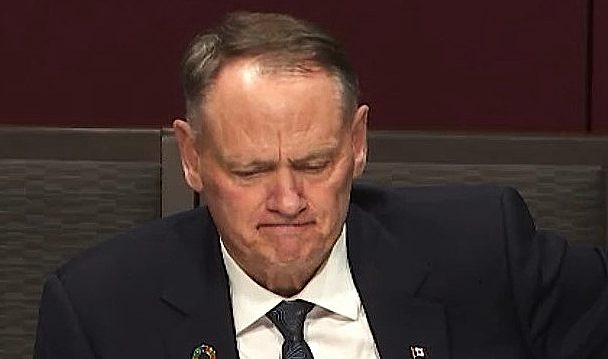
MPs yesterday were driven to anger after Veterans Affairs Minister Jill McKnight refused to describe the impact of spending cuts on programs. “I am absolutely furious right now,” said one member of the Commons veterans affairs committee as McKnight appeared confused and distracted: “My 14-year old would have understood my question by now.”

This content is for Blacklock’s Reporter members only. Please login to view this content. (Register here.)

Carney Pledge Costs Billions

Meeting Prime Minister Mark Carney’s NATO commitments would require a $124 billion increase in annual defence spending, the Budget Office said yesterday. “It is our core responsibility,” Carney said last June 25 in promising to spend 5 percent of GDP on national defence by 2035: “I wished we didn’t have to but we do have to.”

This content is for Blacklock’s Reporter members only. Please login to view this content. (Register here.)

Creates New Housing Corp.

Housing Minister Gregor Robertson yesterday introduced a bill he called the “next step in addressing Canada’s housing crisis” with creation of a new Crown corporation. Robertson declined to specify how many housing starts would result: “This is just a start.”

This content is for Blacklock’s Reporter members only. Please login to view this content. (Register here.)

See Count Of Citizens Abroad

Statistics Canada yesterday suggested updating decade-old estimates on the number of Canadian citizens abroad who are eligible to vote and claim federal benefits. It follows Parliament’s passage of a bill that created 115,000 new citizens: “Definitely we could benefit from updates.”

This content is for Blacklock’s Reporter members only. Please login to view this content. (Register here.)

Predicts Green Plan Will Fail

Green electricity regulations are “unworkable,” “not achievable,” “unacceptable” and threaten reliable supply, says a report to senators by Canadian utilities. The Department of Environment has acknowledged ratepayers face increasing costs under its Clean Electricity Regulations: “The regulations will create unacceptable reliability and affordability challenges across Canada.”

This content is for Blacklock’s Reporter members only. Please login to view this content. (Register here.)

Elghawaby Out, Office Closed

Cabinet yesterday confirmed it disbanded the office of the Special Representative on Combating Islamophobia headed by former Toronto Star columnist Amira Elghawaby. It followed disclosures Elghawaby lobbied to install Muslim prayer rooms in federal buildings and advocated for employees “speaking out on Palestinian issues.”

This content is for Blacklock’s Reporter members only. Please login to view this content. (Register here.)