Land titles must be signed the old fashioned way by pen and ink, a Saskatchewan judge has ruled. The Court of Queen’s Bench dismissed a challenge by a lawyer who sought to file papers with electronic signatures: “Arguments about the use of electronic signatures raise intriguing possibilities.”
Placed Quiet Call To Mayor
Ottawa’s mayor spoke privately with Prime Minister Justin Trudeau before attempting to block cash donations to the Freedom Convoy, records show. Cabinet aides were “in regular contact” with city officials in the same period Mayor Jim Watson falsely accused protesters of arson: ‘It clearly demonstrates the malicious intent of these protesters.’
Threats Of Assault At Senate
Liberal appointee Senator Yuen Pau Woo (B.C.) says he has been physically threatened over his sympathetic views on China. Woo said there was “more than a whiff of McCarthyism in the air” on Chinese issues: ‘I have protections that shield me from the worst abuses including threats of physical harm.’
Feds Pay Lobbyists For Trees
The Department of Natural Resources will pay lobbyists and corporations including suburban developers to plant two billion trees under a “human wellbeing” program announced three years ago. Forestry companies that already plant more than a half billion trees annually are exempt from the subsidy: “If you harvest a tree you’re legally obligated to plant one.”
Union Vax Protest Dismissed
One of the country’s largest meatpackers may fire unvaccinated employees even though Covid-19 restrictions are easing, a labour arbitrator has ruled. The decision came in the case of a Maple Leaf Foods Inc. plant where employees protested mandatory shots: “It is very difficult to predict when it is safe and when it is not safe.”
Waiting To Swear Allegiance
The Department of Immigration yesterday said foreigners who pass all requirements should take their oath of citizenship within 120 days. The department counted a backlog of 60,000 people who paid all fees and passed tests but were forced to wait to swear allegiance to Canada, a legal requirement: “We will make this happen.”
Read Your Charter, Feds Told
Cabinet should read the Charter Of Rights And Freedoms, a constitutional scholar told an Ottawa conference marking the 40th anniversary of the Charter’s proclamation. Commenting on cabinet’s use of emergency police powers against the Freedom Convoy, Professor John Packer said the “very notion of freedom is something that clearly not enough Canadians understand, neither in our government nor in the public square.”
Crisis Fund Under Subscribed
A federal relief program for Ottawa businesses claiming hardship from the Freedom Convoy is under subscribed, figures show. Claims for “crisis” grants are 37 percent lower than expected though applications have been open for a month: “From my vantage point they were very significant.”
Electric Cars Unpopular: Feds
Canadians consider electric cars too costly, says in-house research by the Department of Natural Resources. Few drivers, only five percent, own or lease an electric despite billions in federal spending on promotions and rebates: “I have no interest.”
Standstill Good For Climate
Pandemic lockdowns and travel bans cut Canada’s greenhouse gas emissions, says a Department of Environment report. Staff acknowledged climate targets benefited from factors like the collapse of air travel: “We can see that Canada is moving in the right direction.”
Award $7K For Score Settling
A Montréal-area lawyer removed from a voluntary municipal post over political score-settling has won $7,000 in damages. Community volunteers are vital to democracy, ruled the Québec Human Rights Tribunal: “The strength of a community depends on the active participation of its members.”
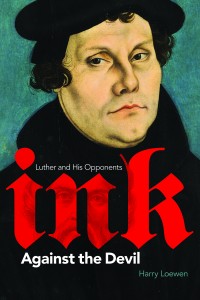
Review: A Hot Pen
Not all journalism is profound or even good, a fact unchanged in 400 years. Yet written dissent is so overpowering they protected it in the Constitution. Dr. Harry Loewen was not a journalist – he was founding Chair of Mennonite Studies at the University of Winnipeg – but would have made a first-rate city editor. Ink Against The Devil is required reading for every newsroom, every journalism school, everyone who treasurers the written word.
Luther 505 years ago posted his Ninety-Five Theses to the wall of Castle Church in Wittenburg. He had a “red-hot pen,” Loewen writes. Theses opposed the burning of heretics. It denounced corruption in the Catholic Church and named names: “Why does the Pope, whose wealth today is greater than the wealth of the richest money princes, not build the basilica of Saint Peter with his own money instead of with the money of poor believers?”
Luther’s Theses was written in Latin and “not intended for the general public but for theological colleagues for debate and discussion.” And how! It triggered the Protestant Reformation, fueled the German Peasants’ War of 1525 and saw Luther’s writings republished in more than three million pamphlets and booklets.
“Pamphleteers saw gold,” Loewen writes. “They recognized early that Luther’s Theses touched a raw nerve”; “Eager publishers translated and turned out copies of the Theses at an extraordinary rate, bringing Luther early fame and influence.”
Professor Loewen was a gifted writer. Ink Against The Devil is a beautifully-crafted biography that captures 16th century Germany, a dark world of tallow candles and infant mortality where travelers risked death from highwaymen and wild boars and a very large city like Münster had only 15,000 inhabitants.
Loewen’s profile is crisp and a pleasure to read. The Professor enjoys his subject. He is also honest, and in the best tradition of the free press does not shrink from a disquieting fact.
Luther was a notorious anti-Semite whose rantings are so violent they were revived centuries later by the Nazi organ Der Stürmer. “Nothing could be said or done to excuse or mitigate the reformer’s hateful writings,” Loewen says; “One cannot sweep under the proverbial carpet what is both negative and painful.”
In his 1543 tract On The Jews And Their Lies Luther wrote synagogues should be burned and Jews driven from the cities under penalty of death. “I would deal severely with their lying mouth,” he wrote; “They let us work in the sweat of our brow to earn money and property while they sit behind the stove, idle away their time, fart, and roast pears. They stuff themselves, guzzle, and live in luxury and ease from our hard-earned goods. With their accursed usury they hold us and our property captive.”
Dr. Loewen recounts his 1997 visit to Luther’s church in the Saxony city of Lutherstadt-Wittenburg, where the Winnipeg professor was thrilled to stand at Luther’s pulpit till he glanced upwards at the carvings: “Just below the roofline there appeared a badly weathered sculpture known as the Judensau with several Jews vulgarly represented,” depicted with a sow and piglets: “I was not only shocked to see this hideous relief on Luther’s church, but also wondered why Luther had not removed it during his tenure as pastor,” he writes.
Professor Loewen died in 2015 in Kelowna, at 84. He was born in Stalinist Russia, survived the war and fled to Canada in 1948. Ink Against The Devil is his legacy. It is profound.
By Holly Doan
Ink Against The Devil: Luther and His Opponents, by Harry Loewen; Wilfrid Laurier University Press; 335 pages; ISBN 9781-7711-21361; $27.74

Observance Of Good Friday
Blacklock’s today pauses for Good Friday observances. We are back tomorrow with regular weekend features — The Editor.
Question Sweetheart Tax Deal
The Canada Revenue Agency must answer whistleblower claims that managers arranged a seven-figure tax waiver for a corporate lobbyist, the vice chair of the Commons finance committee said yesterday. “There are some alarming allegations here,” said Conservative MP Dan Albas (Central Okanagan-Similkameen, B.C.): “When you have allegations that staff members were to ‘rubber stamp’ the deal, questions need to be asked.”
Groups Fear Partisan Inquiry
Fifteen civil liberties groups yesterday petitioned cabinet for an open and independent inquiry into the Prime Minister’s use of emergency police powers against the Freedom Convoy. “It should not be marred by partisan fights,” petitioners wrote: “We are concerned about the use of state and police powers to suppress constitutional rights.”