
Liberal and New Democrat MPs yesterday by a 176-155 vote cut short debate on a bill to allow mail-in election ballots to be counted even after federal polls close in an expected 2021 campaign. Elections Canada has predicted a hundredfold increase in mailed ballots this year: “What is the big desire to rush this bill through now?”
MPs Want Facts On Lab Raid
MPs last night cited Iain Stewart, president of the Public Health Agency, for concealing facts over the January 20 firing of two Chinese scientists at a federal lab. Stewart invoked the Privacy Act in refusing to release uncensored records to the Commons Special Committee on Canada-China Relations: “What is going on that is being kept from us?”
Trans Mountain ‘Profit’ $40M
Taxpayers made about $40 million on the Trans Mountain Pipeline since cabinet bought it for $4.5 billion, the Parliamentary Budget Office said yesterday. Financing costs, write-downs and construction delays were to blame for the low return, said analysts: “The Canadian approach will be to ensure that we make a profit.”
Rights Claim On Furlough
The Canadian Human Rights Commission will formally intervene in a complaint over curbs to paid Covid furloughs for federal employees, the largest public service union said yesterday. Cabinet last November 9 restricted payments to employees who were neither sick nor working from home after costs reached $1.1 billion: “It is largely being used only when necessary.”
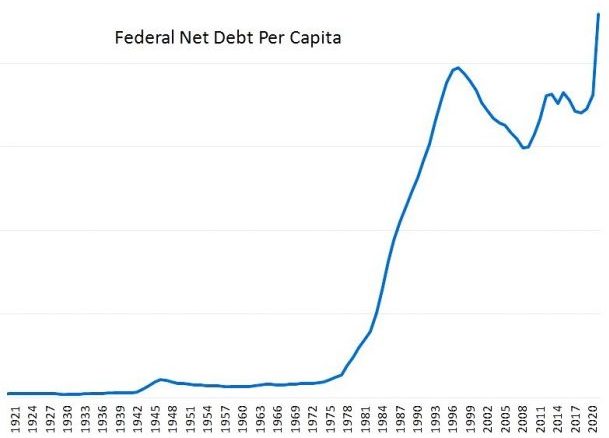
Per Capita Net Debt Up 33%
The federal per capita debt jumped by a third last year to the highest rate in the nation’s history, says Statistics Canada. Each Canadians’ share of the net federal debt is expected to pass $23,000 this year: “There will be a day of reckoning.”
MPs Scattering On Censor Bill
Heritage Minister Steven Guilbeault’s bill to regulate YouTube is stalled under Opposition filibuster as one Liberal MP acknowledged “not all Liberals are the same” on the legislation. The current bill would subject YouTube videos uploaded for private viewing to the same Codes Of Conduct as TV and radio shows: “Content individuals post on social media should not be regulated.”
Vote To Abolish Organ Trade
A bill banning organ transplant tourism has passed the Senate. The bill’s sponsor called it the “culmination of over twelve years of parliamentary work” to outlaw organ trafficking: “It is a violation of the principles of equity, justice and respect for human dignity.”
Wary Of Late Ballot Counting
Federal returning officers say they will accept mailed ballots a day after polls close in an expected 2021 election, the Commons was told. Opposition MPs oppose terms of a cabinet bill that would permit the practice in a pandemic vote: “We do not want to do anything to open the door to even perceived influence in our elections.”
Need An Artist, Say Senators
The Senate has passed a bill to appoint a part-time, $20,000-a year parliamentary artist laureate. “Some people don’t have much use for art,” complained one senator: “Many see it as mere decoration or curiosity. Worse, some see it as an escape from reality.”
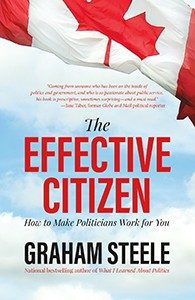
Book Review: What Is In It For Me — ?
A friend of mine, a federal contractor, recalls visiting his MP for help on a local issue. The MP grew increasingly irritable and finally threw up his hands, exclaiming: “What’s in this for me?” The meeting ended badly.
This collision of two worlds – the aggrieved petitioner and harassed legislator – is the core of The Effective Citizen. Author Graham Steele, a former Nova Scotia finance minister, acknowledges both petitioner and legislator have legitimate points, albeit on different frequencies, and explains how to tune dialogue to problem-solving.
“The best meetings were the ones where my visitors understood the environment I was working in, and helped me understand the environment they were working in, and together we had a constructive discussion about what was possible or not possible, and why,” writes Steele. “Those meetings were too rare.”
Steele has an unaffected writing style that’s enjoyable for readers, and an unvarnished view of the politician’s world. Many Canadians at some point interact with officialdom over a school closure or traffic light, arena grant, a disallowed pension or hire-a-student subsidy. “A hammer won’t help you if you need a screwdriver,” writes Steele. The Effective Citizen lays out all the tools.
“I’m not giving you secrets for working with politicians,” says Steele. “I’m giving you tools that will put you on a level playing field with politicians.” Among Steele’s practical guidance:
- • Forget email campaigns; they don’t get read;
- • Forget petitions: “They don’t work”;
- • Try to set up a meeting, even with staff;
- • Don’t be nervous;
- • Don’t say, “I know you’re busy”: “It immediately hands power to the politician”;
- • Don’t say, “I voted for you”; “It doesn’t matter who you voted for”;
- • Don’t give up;
- • Don’t burn bridges.
“Take half a loaf, and go back for the rest one slice at a time,” says Effective Citizen; “If the politician has previously taken a stance against you, all is not lost. Times change. Minds change. When a politician says no to you, understand it as meaning, ‘Not yet.’”
The Effective Citizen provides candid insight into the world of caucuses and backbenchers, useful even to readers who could not imagine petitioning their MP for anything, but remain intrigued by the many shortcomings of political discourse.
Why doesn’t Canada have national daycare? Why don’t we have pharmacare? Why don’t we have a national poverty reduction strategy? Steele thought of that. “Passion is not a substitute for public support,” he writes.
“For example, anti-poverty activists believe that poverty is a vote-moving issue,” says Steele. “I am very sympathetic to them, but they’re wrong: the fight against poverty does not sway many votes in a Canadian election. One of my former colleagues criticized me for having said so in a caucus meeting. Our former party went on to make poverty a central part of their platform in the Nova Scotia provincial election in 2017. They had their worst result in almost twenty-five years.”
By Holly Doan
The Effective Citizen: How to Make Politicians Work for You, by Graham Steele; Nimbus Publishing; 280 pages; ISBN 9781-7710-85311; $29.95


TV Legend Vows C-10 Fight
Broadcast Hall of Famer Senator Pamela Wallin (Sask.) yesterday said cabinet must seek wide public input on its bill to regulate YouTube. Proposed federal controls on the internet were so far-reaching they “morphed into the possibility of censoring online content,” said Wallin: “Even musing about any such censorship is anti-democratic.”
Skeptical Of Climate Program
Canadians are skeptical of cabinet’s climate change program and fear higher costs for fuel, food and utilities, says in-house research by the Department of Natural Resources. Asked, “What would you say is the single biggest issue Canada faces when it comes to our natural resources?” the most popular response was: “Making sure we have enough.”
Facebook Ad Brings $300 Fine
A senior Liberal MP yesterday was cited for breach of the Canada Elections Act in the 2019 campaign. “Honest to God it was a silly mistake,” said MP Kevin Lamoureux (Winnipeg North), parliamentary secretary to the Government House Leader: “It was just an honest mistake.”
Cited For Neg-Option Billing
Rogers Bank yesterday was cited for breach of Negative Option Billing Regulations after sending tens of thousands of credit cards to Canadians who never asked for them. The online Bank is a division of the former Rogers Cablesystems Ltd. that sparked a 1994 outcry on Parliament Hill with a similar practice targeting TV subscribers: “Many of us remember the consumer revolt.”
Rail Disaster Reform Overdue
The Department of Transport yesterday said it is still working on regulatory reforms from the 2013 Lac-Mégantic train wreck that killed scores of people. Members of the Commons transport committee expressed astonishment at delays: “If a house caught on fire would you put it out a month from now after consultation?”