
Commercial airlines may cancel domestic flights with a simple sixty-day website notice under a regulatory waiver by the Canadian Transportation Agency. The Agency said the measure should come as no surprise for smaller airports hit with pandemic shutdowns: ‘Affected communities will not be taken by surprise.’
Spent $464M Without A Plan
Parliament gave nearly half a billion in foreign aid to Ukraine without any overall plan to ensure money was spent wisely, says a Department of Foreign Affairs audit. The report concluded Canada “did not respond cohesively” to needs in the poorest parts of the country, but hired a gender equality advisor at its embassy in Kyiv: ‘Ukraine remains one of the poorest countries in Europe.’

Would Ban Men-Only Boards
Men-only boards of directors at Crown corporations would be abolished under a private bill introduced in the Commons. One federal agency to date has no women directors: “This is unacceptable.”
“Swimming In Dollars”
Excess capital
of Toronto-Dominion Bank
nearly 6 billion.
Bank of Montreal
3 billion.
Best year since 2013
for the country’s six largest banks.
“Great to have capital flexibility,”
says Royal Bank.
“We like the optionality of a higher capital level,”
says Scotiabank.
Meanwhile, Canada’s national debt
grows $600 per second,
inching towards a trillion.
(Editor’s note: poet Shai Ben-Shalom, an Israeli-born biologist, examines current events in the Blacklock’s tradition each and every Sunday)

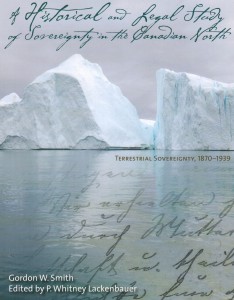
Review: Reindeer Ranches & Cigars
In 1919 an Arctic promoter devised a scheme to convert Baffin Island to a vast reindeer ranch, bigger and more spectacular than anything in Texas or Argentina. More than 100,000 square kilometres of tundra were leased as ranchlands. The scheme collapsed by 1923 – the reindeer died – but the promoter, Manitoba-born explorer Vilhjalmur Stefansson, proved the venture was at least nutritionally sound by living on an all-meat diet for an entire year. Stefansson lived to 87.
The Baffin ranches and other believe-it-or-not episodes are detailed in A Historical and Legal Study of Sovereignty in the Canadian North, an encyclopedic work rich in compelling anecdotes. It documents decades of schemes – some tragic, some comic – to plant the flag north of the 60th parallel and make the Arctic pay.
“Stefansson believed that the Arctic region had intrinsic values and potentialities of its own which had not been fully appreciated but would become more evident as time went on,” Sovereignty notes; “He started from the premise that Arctic lands, and the Arctic region in general, were soon going to become much more important”. Diamond mines and international air routes came later.
Sovereignty represents the life work of Gordon Smith, an Alberta historian who devoted decades to Arctic research till his death fifteen years ago at 82. Smith’s research is edited by P. Whitney Lackenbauer, an award-winning Arctic writer whose past work has been reviewed in this column. The result is a sweeping account of the Arctic story detailing attempts to manage a mammoth region that remains a defining feature of the Canadian experience, even if most Canadians have never visited.
Readers learn of the Bernier Expedition, a failed 1903 scheme by a Québec sea captain to become the first man to reach the North Pole. The idea was to put a steamship “in just the right place north of Alaska” and simply drift close enough to the Pole to get there on foot. It didn’t work. Parliament spent $200,000 on the venture. “Was this steamer ballasted with sugar?” asked one MP; the expedition traveled with more than seven tons of sugar; 8500 cigars; and 15 gallons of liqueur and champagne.
And there was the tragic Greely Expedition, an 1882 venture led by a U.S. cavalry lieutenant to explore Ellesmere Island. Of a party of 25 men, all but 7 starved to death. One was shot for stealing food. The scheme was plagued by “incredible bad luck and bungling”, Sovereignty recounts.
Canada’s Arctic story, above all, is one of indifference and half-measures. Parliament took control of Arctic lands from the Hudson’s Bay Company from 1870, yet no federal police depot was built in the region for another twenty years. When American shippers began harvesting whales in the Arctic it wasn’t ecology that prompted complaints: “Is the government aware that a considerable trade is done by United States whalers at the mouth of the Mackenzie River without any duty being paid?” one MP asked in 1897.
No senior government official of any prominence stepped foot in the Arctic till 1956, when Governor General Vincent Massey toured the Northwest Territories to be photographed on a dog sled. “I wished to go for three reasons,” Massey recalled in his memoirs. “First, to visit the natives”; Second, “to exploit the area economically”; “Thirdly, to show the flag.”
So little has changed.
By Holly Doan
A Historical And Legal Study of Sovereignty in the Canadian North: Terrestrial Sovereignty 1870-1939, by Gordon W. Smith; edited by P. Whitney Lackenbauer; University of Calgary Press; 512 pages; ISBN 9781-55238-7207; $39.95
MPs Fight Over Trudeau Fees
Liberal MPs last night again filibustered a vote of the Commons ethics committee over disclosure of corporate sponsorship fees paid to the Prime Minister’s mother and family. “My God there’s got to be something juicy in those documents,” said New Democrat MP Charlie Angus (Timmins-James Bay, Ont.).
Block We Charity Disclosures
Liberal MPs last night spent 11 hours and 14 minutes blocking a vote to force disclosure of uncensored We Charity documents. The filibuster at the Commons finance committee is to resume today. “They always say you have to repeat things six or seven times for it actually to sort of stick in someone’s mind,” said Liberal MP Julie Dzerowicz (Davenport, Ont.).
‘Raises Eyebrows’ Over Pay
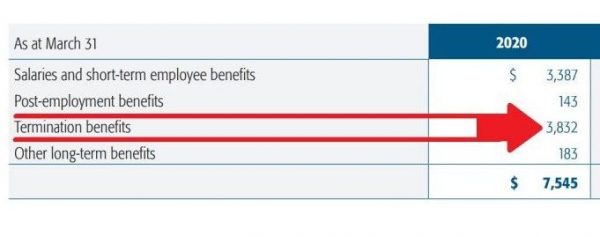
Executive pay at a Crown bank should ‘raise eyebrows’ for taxpayers, MPs said yesterday. The Canada Infrastructure Bank last year paid more in “termination benefits” than it did in salaries for senior managers: “The Bank is pretty clearly a failed experiment.”
Hard To Follow The Money
A federal environmental program paid out millions in grants without proof the subsidies had any impact. Auditors at the Department of Fisheries found more than a third of grant recipients failed to report on what they did with the money: “Reporting is inconsistent.”
Court Hears Copyright Case
The Supreme Court yesterday confirmed it will hear an appeal on whether unregulated free photocopying is legal under Canadian copyright law. Two lower courts ruled mass photocopying of books and articles for university course packs is improper: “Publishers indicate they have been damaged.”
MPs Seek Perpetual Press Aid
The Bloc Québécois yesterday served notice of a motion to have Parliament create a permanent subsidy fund for newspapers like in France. Canadians publishers who successfully lobbied in 2019 for a half-billion bailout argued taxpayers’ aid should not become permanent: “We will have to save ourselves.”
$528K For Senate Harassment
The Senate will pay $528,000 to settle harassment claims by former employees of ex-senator Don Meredith (Ont.). A retired judge who recommended payment of damages called it a “unique and sad episode” in Senate history: “Almost all complainants described their work experience as ‘the worst thing that ever happened to me.'”
Court Upholds 47% Interest
A British Columbia court has upheld a 47 percent loan interest rate as legal. A bill to lower the federal usury rate to 45 percent lapsed in the Senate two years ago: “Recognize it for what it is, a premium that the poorest pay when they borrow to meet their basic needs.”
GST Audits More Bang For $1
Federal GST audits are more cost effective than cumbersome investigations of income tax cases, says a Canada Revenue Agency study. It follows complaints from business owners and accountants that auditors avoid “larger fish” in tracking tax avoidance: “You’re picking the low-hanging fruit.”
Few Heard Of Oil Regulator
The federal oil and gas regulator spent nearly $60,000 to find few Canadians have heard of it. The Canada Energy Regulator has operated in Calgary since 1959 but changed its name last year: “Canadians either do not know the Board or misunderstand it.”



