Decriminalizing heroin and cocaine is “something worth deliberating”, says Health Minister Patricia Hajdu. A private Liberal bill pending in the Commons would repeal a federal law that criminalizes simple possession of street drugs: “I hear the calls across the country.”
Warned On We Charity Plan
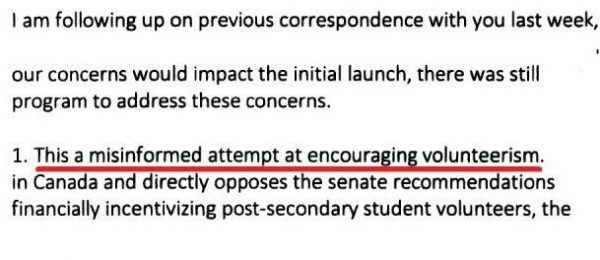
Volunteer groups warned the We Charity program was misguided and badly drafted, according to internal Department of Employment memos. One organization refused a $100,000 fee from We Charity in protest over the program’s design: “They indicated there was a fee.”
Crown Corp Fails Fed Audit
Federal auditors have cited a Crown corporation, the National Arts Centre, for sloppy budgeting. Directors failed to set aside funds for necessary maintenance and repairs even after charging taxpayers a quarter-billion for renovations. Cost overruns at the concert hall once prompted two parliamentary investigations: ‘It doesn’t match London or Paris.’

Nt’l Artifact Off To Scrapyard
A sixty-foot artifact of the nation’s pioneering era in space is to be demolished as scrap metal, says the Canadian Space Agency. Private researchers said they were unable to save the Kennedy Antenna, a parabolic dish used to track the 1962 satellite that made Canada the third country in space: “It is a shame.”
Costly Class Action Proceeds
Managers of a federal employees’ group insurance plan have lost a preemptive bid to dismiss a costly class action lawsuit. Sun Life Assurance Company is accused of miscalculating cost of living increases for thousands of beneficiaries: “The plaintiff has pleaded some evidence.”
Review: Century Of Hell-Raising
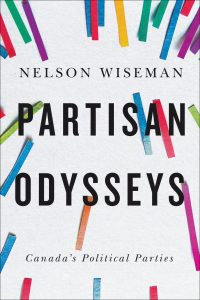
2021 marks a hundred years since neither Liberals nor Conservatives won a majority of seats in the Commons. This had never happened before. It is now commonplace and uniquely Canadian, explains Professor Nelson Wiseman of the University of Toronto.
“Canadian voters have become volatile, more volatile than American voters,” Wiseman writes in Partisan Odysseys. “Although there is no generally accepted measure of party identification, Canadians are less likely than Americans to have party affiliations ingrained into their personal identities.”
Third parties for years were dismissed as protest movements. Like bees, they stung and then they died: Canada First, Confederation of Regions, Cooperative Commonwealth Federation, National Party, Progressive Party, Reconstruction Party, Reform Party, United Farmers, Western Canada Concept and Social Credit.
“Social Credit theory postulated that everything that is physically possible ought to be financially possible, that the existing financial system artificially limited society’s real credit and misdirected many economic activities,” recalls Partisan Odysseys. One former Socred even became Prime Minister, Kim Campbell. So did an ex-Reformer, Stephen Harper.
Canadians today are so accustomed to choice that voters act like shoppers, writes Wiseman. “It may be that voters, increasingly accustomed to behaving as consumers, opt for choosing the policy positions of parties rather than signing up to their comprehensive world views,” he writes. “However with the exception of elections such as those that revolved around freer trade with the United States in 1891, 1911 and 1988, it is difficult to tie party choice to specific issues.”
The results are striking. No prime minister in thirty-five years has won fifty percent of the popular vote. One federal election, in 1993, saw fourteen parties on the ballot. Five of them won Commons seats. “Today’s political parties would be unrecognizable to the party leaders, activists and voters of nineteenth-century Canada,” write Wiseman.
Partisan Odysseys is a timely celebration of Canadian-style democracy in an era of minority parliaments and the guillotine of surprise elections. Most Canadians do not belong to any political party. Most have voted for different parties. They are wily and unpredictable. Professor Wiseman notes no other parliamentary democracy has produced so many electorally-effective minority parties.
The result? Pollster Angus Reid in his prophetic 1996 analysis Shakedown cautioned: “A country full of independent-minded voters not only makes it more difficult to project the outcome of an election, it also makes elections much harder to choreograph”; “The voting intentions of large numbers of Canadians are on a hair trigger, ready to explode at any moment, changing the course of elections and taking our lives into unchartered territory,” wrote Reid.
Partisan Odysseys is a first-rate observance of a hundred years of hell-raising. It makes you proud to be Canadian.
By Holly Doan
Partisan Odysseys: Canada’s Political Parties, by Nelson Wiseman; University of Toronto Press; 240 pages; ISBN 9781-4875-25932; $19.47

Fed Deficit Nears $400 Billion
The federal deficit is near $400 billion, seven times the previous record, with proposals by cabinet yesterday to extend new benefits to jobless workers. “Our government has taken on more debt so Canadians didn’t have to,” Finance Minister Chrystia Freeland told reporters.
We Charity Feared “Scandal”
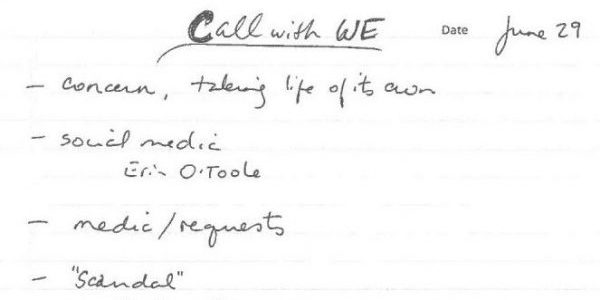
We Charity executives in a June 29 phone call with federal officials complained a “scandal” over their dealings with Prime Minister Justin Trudeau’s family was “taking (a) life of its own”. An agreement to grant the federal contractor $43.5 million was cancelled after We Charity disclosed payments to Trudeau’s mother and brother: “There will be noise but that’s politics.”
Gov’t Fines CIBC $1,225,000
A federal agency yesterday fined the Canadian Imperial Bank of Commerce $1.23 million for miscalculating interest at credit cardholders’ expense. The penalty is the largest since Parliament in 2018 ordered naming and shaming of banks found to breach consumer protection codes: “It is important for consumers to know.”
We Charity Saw Hard Times
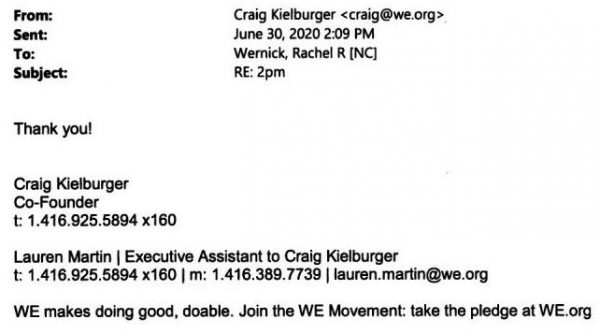
We Charity in an email to the Department of Employment acknowledged it faced sharp cutbacks without federal funding. The group’s executive director sent the email a day after cabinet approved a $43.5 million grant: “Job losses were inevitable.”
Oppose Whales On Display
Cabinet yesterday in a statement said whales and dolphins should “not be displayed” at theme parks and aquaria in Canada. The review of regulations followed an appeal from Attorney General David Lametti for more animal protection laws: “There is much more to do.”
We Charity Costs ‘Awful Lot’
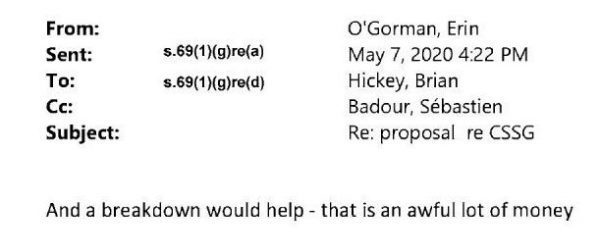
Federal employees in internal memos expressed astonishment at the cost of an untendered agreement to have We Charity manage a student aid program. The plan was to pay post-secondary students $10 an hour, but included $500 per hour fees for We Charity lawyers and six-figure payments to project managers: “Bit of a shit show.”
“Hello Bill” Notes Contradict Finance Minister’s Testimony
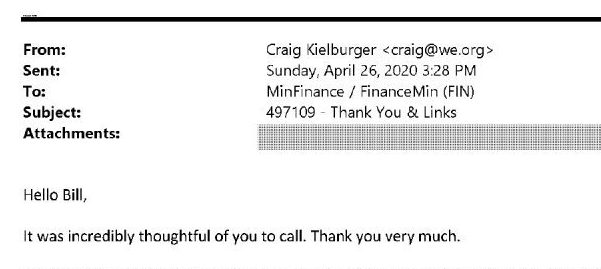
Newly-disclosed records contradict testimony by ex-Finance Minister Bill Morneau that he had scant personal contact with a federal contractor, We Charity. The finance department released a series of “Hello Bill” emails from Craig Kielburger, co-founder of the charity: “They are all besties.”
Aides ‘Weighed In’ On Grant
We Charity highlighted Trudeau family members’ paid appearances with the group in appealing for a $43.5 million grant, according to documents. Internal memos indicate Prime Minister Justin Trudeau’s office was “weighing in” on the grant proposal weeks before the Prime Minister said he first heard of it: “We have the documents right here.”
Talent Fees Secret For Now
Suspension of Parliament has delayed disclosure of speaking fees paid to the Prime Minister’s wife and family. Justin Trudeau as a first-term MP personally collected almost $300,000 in talent fees from unidentified sponsors: “That way we could at least limit the damage we’re about to cause.”