
Cabinet will introduce a new federal benefit for jobless workers who are self-employed and uninsured, says Employment Minister Carla Qualtrough. The $71.3 billion Canada Emergency Response Benefit program expires October 3: “CERB has served its purpose.”
For A Safe & Happy Holiday
Blacklock’s pauses for the August bank holiday with warmest regards to subscribers. We wish you a safe, happy holiday. We’ll be back tomorrow — The Editor.
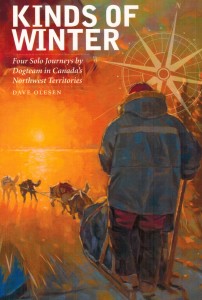
Review: The Land We’ve Left Behind
Working animals were once a staple of town and country life: pit ponies, sheep herders, warehouse mousers. All lesser mammals were bred for chores or meat. “The main thing to remember,” says a friend who’s spend a lifetime with horses, “is that they don’t care about your feelings.”
With automation and a declining birth rate, animals have become members of the family. As author Dave Olesen puts it, “In a culture that is becoming almost completely unfamiliar with animals as working partners, many people take up their dogs as little furry surrogate children.”
The few working animals left are the prima donnas of police service; when a Toronto police horse was run over by a car in 2006, they actually held a funeral. Ontario’s lieutenant governor attended. “Tears streamed down the faces of men and women,” the Montreal Gazette reported. No irony was noted.
“To watch huskies scrap with each other, or to watch dogs go after a teammate who has for some reason become a scapegoat, is sobering to anyone who tries to mold dogs to a human model or to elevate them to a preconceived notion of furry nobility,” Olesen writes. “They are physical, and we must relate to them on that level.”
Kinds Of Winter documents Olesen’s treks by dog sled in the Northwest Territories. Even First Nations don’t use dogs anymore, but Olesen sought the Arctic experience as only an outsider can appreciate. He is from Illinois.
The result is a lively account of working animals in an unforgiving landscape. Olesen runs his dogs for miles and rests them in snow in -40°. “No one leaps to lick my face when I come down the line,” he writes. “I am the Alpha animal”; “I am also provider: of food, of a trail to follow in deep soft snow, of decisions and directions, of spruce boughs for bedding and salve for sore feet.”
Olesen does not name his dogs with adjectives: there is no Snowy or Fluffy or Skippy. The harsh climate causes some dogs to lose fur on their shanks, a painful condition known as “chicken legs”. The huskies eat fat and kibble. They run and fight and die; no funerals.
He praises one frankly vicious dog, Tugboat, a wheel dog that runs closest to the sled: “The wheelers often bear the brunt of heavy work in tight quarters, because the weight of the sled is forever jerking them from behind while the momentum of the team pulls them forward.”
“Tugboat was an exemplary wheel dog, brutish and strong,” he writes. The huskie was “a thoroughly unlikeable fellow, ever first to steal another dog’s supper or to instigate an utterly pointless brawl, all but blank in his relations with the human race”.
Kinds Of Winter is rare documentation of the few working animals that remain, in an Arctic region so forgotten Olesen notes they don’t even put out forest fires anymore: “No attempt is made to put them out for the country is far beyond any of the marked ‘values at risk’: cabins, fuel caches, fishing lodges, known grave sites.”
Olesen’s book is a crisp account of a world now gone in urban Canada, when animals worked as hard as their owners.
By Holly Doan
Kinds of Winter: Four Solo Journeys by Dogteam in Canada’s Northwest Territories, by Dave Olesen; Wilfrid Laurier University Press; 268 pages; ISBN 9781-77112-1316; $14.99

MPs Order Cabinet Records
The Commons finance committee last night by a 6-5 vote ordered that cabinet surrender confidential records on We Charity. The extraordinary summons followed the Prime Minister’s testimony he was never told his officials were in contact with We Charity regarding a federal grant, though the group had awarded members of Justin Trudeau’s family more than a half-million dollars’ worth of free trips and appearance fees: “Nobody believes you.”
Morneau Said Nothing: PM
Finance Minister Bill Morneau failed to divulge his close personal ties to We Charity before voting to grant the group up to $43.5 million in funding, the Prime Minister and his chief of staff said yesterday. Justin Trudeau said he was unaware Morneau accepted $41,366 in gifts or that We Charity hired Morneau’s daughter: “No, I did not know.”
Taxed To Cut Winter Heating
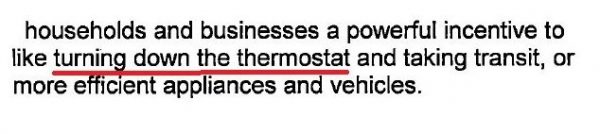
The federal carbon tax was intended to be a “powerful incentive” for Canadians to use less heat in the winter, says a 2018 Access To Information memo by the Department of Natural Resources. Officials subsequently blamed winter heating in part for a rise in greenhouse gas emissions: ‘Canadians should not be punished every time they turn up the thermostat.’
Equity Hiring’s Hard: Army
The military says it may have more Indigenous members than claimed due to First Nations, Inuit and Métis who are reluctant “about self-identifying”. A defence department review said members did not want special treatment: “Members have expressed mixed feelings.”
Surveyed On “Unfair” Cops
The Department of Justice interviewed young Canadians on whether police are prejudiced against Blacks and Indigenous people. “Police are identified as perpetrators of unfair treatment,” said a newly-released summary of three years’ worth of focus group study: “Young people would also like to know how to file a police complaint.”
Trudeau Hearing At 3pm ET
The Commons finance committee last night summoned Prime Minister Justin Trudeau for three hours of questioning on his family’s ties to We Charity. Liberal MPs lost a 6-5 vote to limit Trudeau’s appearance to sixty minutes. The Prime Minister is to testify at 3 pm Eastern today: “We’re trying to get to the bottom of this.”
Make That 6 Trips For Hajdu
Health Minister Patricia Hajdu flew six times aboard a federal jet to her Thunder Bay home, Transport Canada disclosed yesterday. The department said Hajdu used the aircraft so often pilots were able to meet their minimum hours for annual certification: ‘Our pilot inspectors must maintain their flying proficiency.’
Feds Scoffed At Covid Masks
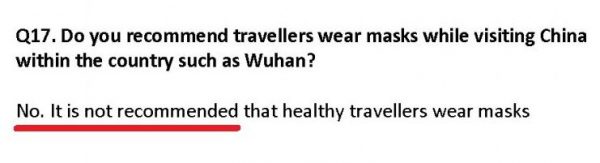
The Public Health Agency in a January 29 briefing note advised Canadians traveling in pandemic quarantine zones in China not to wear a mask despite local mandatory mask orders. Dr. Theresa Tam, chief public health officer, for weeks told the public masks were pointless and risky: “You have to be careful you’re not putting your finger in your eye.”
MPs Reject Family Disclosure
The Commons ethics committee yesterday by a 6 to 4 vote rejected a motion that cabinet members disclose all personal and family ties to We Charity. Disclosure was too broad, said critics: “That’s your shame.”
Bought Studies Never Written
A $10.5 million federal program paid climate change researchers for studies that were never written, and other reports that were little read. “The program faces many challenges,” wrote auditors with the Department of Fisheries.
Trudeau Fees & Expenses Up To $564K Including Free Trips
Commons finance committee arithmetic suggests We Charity awarded members of the Trudeau family more than $560,000 in speaking fees and expenses including free trips to London for the Prime Minister’s mother. Charity executives yesterday would not disclose actual payments including commissions paid to the Trudeaus’ talent agency: “I understand that in hindsight this is a significant issue.”
Program Less Than Claimed
A We Charity-run program promising jobless students up to $5000 for volunteerism would have seen “very few” students get $5000, the Commons finance committee was told yesterday. Marc Kielburger, co-founder of the charity, said actual payouts would have been as little as a third the size of what cabinet promised: “Volunteering can be a fantastic way to build skills.”



