
The Canada Infrastructure Bank last year paid bonuses to all six executives and every single manager at the equivalent of more than $85,000 apiece, records show. Bonuses were paid even as a Commons committee recommended Parliament close the Bank as a costly failure: “Pretty dismal.”
Blames Railway For B.C. Fire
Canadian Pacific Railway is to blame for a wildfire that burned Lytton, B.C., says New York Consul General Tom Clark. The former CTV announcer’s remark to an American interviewer contradicts the findings of a 2021 federal investigation: “Sparks came off the rails. The town was destroyed, burnt out. It was turned into oblivion.”
Public Sector Holiday Grows
Ontario will join five other provinces in recognizing the National Day for Truth and Reconciliation as a public sector holiday, a labor arbitrator has ruled. The observance September 30 will see the largest shutdown yet under a bill passed by Parliament in 2021: “It ought to have been granted as a paid holiday in 2022.”
In Driver’s Seat With Subsidy
Canada is “in the driver seat” with unprecedented electric car battery subsidies, Industry Minister François-Philippe Champagne’s department wrote in a briefing note. Figures acknowledged the subsidies for one VW plant are equal to the production of Canada’s entire auto sector last year: “This is a game changer.”
Disclose Wife Buys War Stock
Public Safety Minister Marco Mendicino’s wife held shares in a Ukraine war defence contractor as he pledged to be “out front in helping Ukraine with military aid,” records show. The holdings are among an extensive stock portfolio in the Mendicino family: “Canada will continue to be there for Ukraine.”
$18M For Frankfurt High Life
Canada’s “guest of honour” sponsorship of a German book fair with Governor General Mary Simon cost more than $18 million, according to a newly-disclosed federal audit. The event lasted four days in 2021: “Canada assumed significant financial and operational obligations.”
No Budget Padding, Promise
The Department of Veterans Affairs in a briefing note denies inflating the number of ex-military in Canada as an excuse to pad its budget. Census data showed the department over-estimated the number of Canadian veterans by 34 percent: “We will have more clarity.”
Fined $10K For $3.80 Charge
A Japanese eatery has been fined $10,000 for imposing a $3.80 service charge on Black customers. “Canadian courts have long recognized the presence and pernicious effects of anti-Black racism,” ruled the Ontario Human Rights Tribunal: ‘Although this was a single incident the seriousness is such that a significant award ought to be made.’
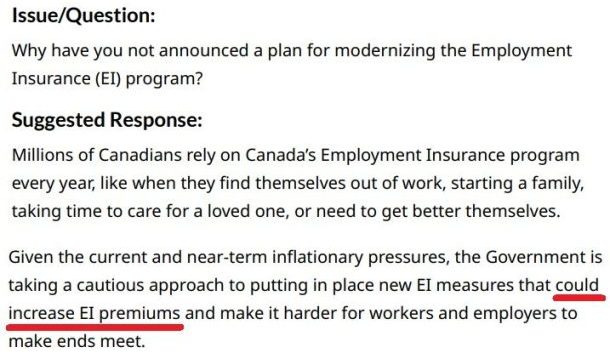
Feds Wary Of E.I. Hike: Note
The Department of Employment is wary of raising Employment Insurance premiums as part of any long-promised “modernization” of the program, according to a briefing note. Premiums are currently a maximum $1,400 a year for employers and $1,000 for workers: “The government is taking a cautious approach.”
A Sunday Poem — “Roots”
Ancestry
offers a new service.
Analysing my DNA, they will
uncover my ethnic mix,
discover distant relatives,
find new details about my family history.
Satisfied customers see themselves in a
whole new way.
This guy is confirmed to be of
Irish, Scandinavian, Western European, and British
origin.
He is smiling; proud to know his
breed.
I’ll skip this opportunity.
I already know my genetic makeup:
ninety-eight percent
chimpanzee.
By Shai Ben-Shalom

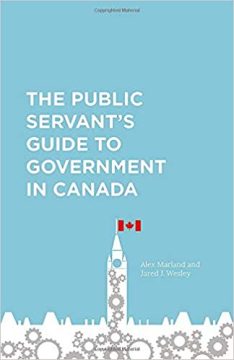
Review: Rituals Of Public Service
Was a book ever timelier? The Public Servant’s Guide To Government In Canada was published following the disastrous YouTube appearance of Canada’s top public servant Michael Wernick, $326,000-a year Clerk of the Privy Council. Just google Wernick and vomitorium if you missed it.
Testifying at the Commons justice committee, Wernick became every critic’s caricature of the Ottawa bureaucrat: peevish, smug, partisan. Wernick in prepared opening remarks used the personal pronoun I nine times: I, I, I, I, I, I, I, I, I.
“I worry about people losing faith in the institutions of governance,” said Wernick. “Tip: Most Canadians don’t follow government activities,” notes The Public Servant’s Guide. “Public servants should bear in mind that many, if not most, citizens do not pay much attention to politics or public policy.”
The Guide is written for public servants by public servants. Co-authors Alex Marland and Jared J. Wesley are political scientists. Yet it has an intriguing, voyeuristic quality for readers who do not and never will work for the government.
I finally learned why senior public employees have Twitter accounts though they never say anything. “Paying attention to what members of cabinet are saying on Twitter helps you stay in touch with their political impulses, which may well have an impact on your own work,” authors explain. “This situational awareness is critical to developing political acumen.”
Canada has about 4 million public employees. There are all kinds, like journalists or insurance brokers: tall, short, thin, fat, sharp, dull. “Be careful not to assume that all municipalities are governed the same way,” says the Guide. “For example, Montréal’s population is over 1.7 million, and Montréalers elect a mayor and 64 councillors to oversee an annual operation budget of approximately $5 billion.”
“Just four people live in Tilt Cove, Newfoundland: one is mayor, two are councillors, and one is town clerk. The population of Tilt Cove nearly triples in the summer when people occupy cottages there. In Montréal, the clerk is a highly paid senior public civil servant who oversees the city’s bureaucracy. In Tilt Cove, the clerk is paid for one hour a week, including for curbside garbage collection.”
The Guide is skillfully written, wry and sometimes funny. “The nuances of Canadian government are not obvious even to those who have spent a lifetime working in public administration,” authors explain: “Within the public service it is said that theory is when you know everything but nothing works; practice is when everything works, but no one knows why; and when theory are practice are combined, nothing works and no one knows why.”
Authors note that “not everything you are good at is something the world needs” and “there will be days when you feel less competent and even less impactful in your work.” Yet public servants should be “fearless” and “loyal.” says the Guide, and “keep your emails short.”
The Public Servant’s Guide is instructive and entertaining. Clerk Wernick could have used a copy.
By Holly Doan
The Public Servant’s Guide to Government in Canada, by Alex Marland and Jared J. Wesley; University of Toronto Press; 128 pages; ISBN 9781-4875-94763; $19.95
Don’t Want Any More Strikes
Labour Minister Seamus O’Regan yesterday said cabinet does “not want to be back here again” following a tentative end to a West Coast port strike. O’Regan did not explain his remark: “The scale of this disruption has been significant.”
Armed Forces Find Bad Press
Fewer Canadians have a “high level of trust” in the Canadian Armed Forces, says in-house research by the Department of National Defence. The public overall had a positive opinion of the army, navy and air force but noted it received plenty of “bad press.”
Dep’t Clawing Back Billions
More than $2 billion in Canada Emergency Response Benefit payments have been clawed back from undeserving applicants, says the Department of Employment. The billions were deducted from tax refunds or Employment Insurance cheques: “A total 1,108,676 clients have fully repaid their debts.”
‘This Is 90% On Government’
Access Copyright, one of the country’s largest collectives representing 13,000 authors, yesterday said it will lay off staff and cut budgets due to the loss of millions in royalties under an Act of Parliament. Cabinet has yet to adopt a 2019 recommendation of the Commons heritage committee that it curb free photocopying under the Copyright Act: “Actual people are losing actual jobs.”



