
Liquor, beer and wine would see mandatory health warnings under a private bill yesterday taken up by the Senate social affairs committee. Senator Patrick Brazeau (Que.), a recovering alcoholic and sponsor of the bill, told legislators to prepare for intense lobbying by industry: “Personally, it led me down a very, very, very dark path.”
Admit EV Plan Did Not Work
Cabinet is far short of its target to build electric auto charging stations despite more than a billion in subsidies, says a federal audit. The report warned even if successful there was “no evidence” that financing a national network at taxpayers’ expense would lower emissions: ‘Government involvement is necessary to address market failure.’
Fears ‘Downfall As A Nation’
Canadians must be “very, very careful” that ruthless governments do not steal their rights, Attorney General Sean Fraser yesterday told reporters. Fraser complained provinces’ lawful use of the Charter Of Rights’ notwithstanding clause could spell “our future downfall as a nation.”
Foreigners’ Permits Targeted
Cabinet yesterday introduced a bill granting itself new powers to suspend or cancel temporary permits for foreigners let into Canada. It follows figures from Immigration Minister Lena Diab’s department that 3,049,277 foreigners are here on valid or expired permits: “We have rules in this country and we expect people to follow those rules.”
Would ‘Clear Out’ Borrowers
Federal regulators should let the real estate market “clear out people who can’t afford what they bought,” a Liberal Senate appointee said yesterday. Senator Daryl Fridhandler (Alta.), a corporate lawyer, questioned government intervention: “Allow basic economics to take their course.”
Seeks P.E.I. Corruption Probe
Wayne Easter, retired nine-term Liberal MP (Malpeque, P.E.I.), yesterday requested a judicial inquiry into alleged corruption in his home province. Easter said Prince Edward Islanders were alarmed by suspicious dealings pointing to Chinese subterfuge: “You need a federal public inquiry that can subpoena witnesses, trace bank accounts.”
PM’s Friend Awarded $679K
Prime Minister Mark Carney’s candidate to oversee defence contracting is now cabinet’s highest paid appointee, figures show. The $679,100-a year salary award for Toronto banker Douglas Guzman, a former associate of Carney’s, is twice the finance minister’s pay: “I am proud to have the opportunity to serve Canada.”
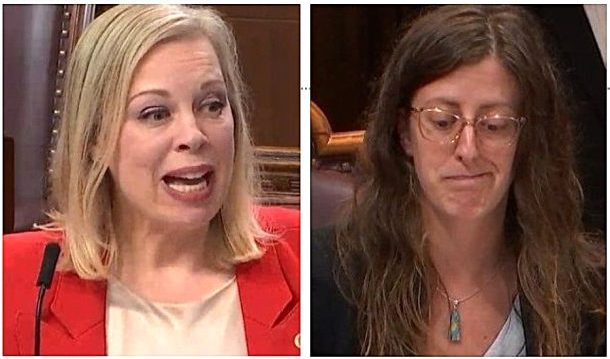
MP Won’t Discuss Her Duties
Liberal MP Stephanie McLean (Esquimalt-Saanich, B.C.), secretary of state for seniors, yesterday would not say how many cabinet meetings she’s attended since her appointment last May 13. Secretary McLean under questioning from Senator Denise Batters (Sask.) also declined comment on her salary, office budget, core duties or whether she was assigned a car and chauffeur: “I am pleased to have received an invite.”
Panel OKs Gaming Ad Curbs
A Senate committee yesterday cleared a bill mandating federal restrictions on sports betting ads. Professional leagues including the Canadian Football League and NHL oppose the measure: “Tens of thousands of Canadians’ lives will have been devastated through problem gambling.”
Labour Congress v. Retailer
A cabinet-appointed watchdog assigned to investigate Canadian corporate ethics overseas is merely an advisor whose work has no legal weight, a federal judge has ruled. The decision came on union complaints targeting use of Bangladeshi labour by Mark’s Work Wearhouse: “The issue of a living wage and how to determine it remains under active consideration.”
Drops “Journalism” Dispute
The Leaders’ Debates Commission in a report to Parliament says it will not define “journalism.” The agency twice cited by the Federal Court for attempting to enforce arbitrary definitions concluded it had no business trying to “legally define what constitutes journalism.”
Audit Discloses Irregularities
A long-promised investigation of contracting at Indigenous Services Minister Mandy Gull-Masty’s department has confirmed widespread irregularities. Verification was “missing” for two-thirds of audited suppliers who claimed Indigenous ownership in seeking preferential contracts: “Sixty-eight percent of cases had missing or incomplete verification.”
Disputes ‘Cooked Books’ Jibe
It is irresponsible for MPs to suggest cabinet is “cooking the books,” Finance Minister François-Philippe Champagne said yesterday. Opposition critics ridiculed Champagne’s announcement that the traditional spring budget and Fall Economic Statement will be replaced with a fall budget and Spring Economic Statement: “Are you guys going to be cooking the books?”
Says Privacy Never Came Up
Privacy Commissioner Philippe Dufresne yesterday said he was never consulted on a telecom bill that would allow cabinet to secretly cancel Canadians’ internet accounts. Opponents have expressed alarm over the proposal: “We need to make sure by protecting national security we are not doing so at the expense of privacy.”
Board Upholds CERB Firing
A federal labour board has upheld the firing of a Department of Employment staffer who pocketed the Canada Emergency Response Benefit while on the payroll. Evidence showed the employee claimed jobless benefits while working as a call centre operator assisting other Canadians seeking $2,000-a month CERB payments: “He was repeatedly dishonest.”