
Union leaders have expressed support for legislation limiting their right to strike, claims Labour Minister Patty Hajdu. She did not identify any by name: “I don’t think all labour is upset. I’ve spoken with labour unions that are not upset.”
Predict Golden Age Of Rail
Canada is on the brink of “a new golden age” in railroading, VIA Rail says in a report to Parliament. The Crown railway acknowledged its operating deficits will average nearly $400 million a year to the end of the decade: “VIA Rail is ready to lead a new golden age in passenger rail service.”
World’s Toughest Tax Regime
Cabinet in 1996 considered forcing taxpayers to post a bond before transferring capital gains out of the country in what it called the “toughest regime worldwide” on tax avoidance, newly-declassified records show. The suggestion was prompted by one case involving a family trust: “If you or I owed $100 to Revenue Canada it would hound us to our graves.”
Sunday Poem: “Ephemera”
There are those that understand,
The value of work, the word, a life.
Know how to spin a tale,
Especially their own.
An economist runs the numbers.
And the consequences.
An actor pretends
To be someone else.
But most are lawyers.
Mostly because,
Lawyers understand the language
And its use.
Now, a central banker…
Is a different beast all together.
He’s a magician. And with sleight of hand,
Able to create out of the thinnest of air…
By W.N. Branson

Review: The 329
When 167 members of the Canadian Staff Band of the Salvation Army perished at sea in the 1914 sinking of the Empress Of Ireland, mass public observances were held. A prominent memorial was built in Toronto. The Royal family donated $132,000 to a victims’ fund. Canadian newspapers for 40 years afterward marked the anniversary date with annual features.
When 329 people, mostly Canadians, perished at sea in the 1985 Air India bombing, there was no fund, no mass public mourning. For years, the only memorial was in County Cork, Ireland, near the spot where Flight 182 took whole families to their death. Few Canadians recall the year this mass murder occurred.
The victims were modest people of ordinary means and little public profile. Would it have been different if 329 bankers died, or 329 tennis players? Remembering Air India answers.
“State-sponsored efforts to memorialize the 1985 bombing of Air India Flight 182 within Canada are quite recent, only undertaken with any seriousness beginning in 2007,” editors write. “An annual memorial service has been held – conspicuously, not in Canada but in Ahakista, Ireland – since the first anniversary of the bombing.”
Remembering Air India is a poignant postmortem on memory and culture. The Empress Of Ireland is honoured with a Canada Post stamp and a commemorative Mint coin. In the Air India murders, no stamp, no coin; the Department of Foreign Affairs did not think to send a single consular officer to County Cork to assist families who’d rushed to Ireland to identify their dead. Prime Minister Stephen Harper 25 years later apologized for the “scant respect or consideration” paid victims’ families.
“Victims did not fit popular imaginings of who is a Canadian citizen,” writes contributor Maya Seshia of the University of Alberta. “The coming together of race and nation, the equation of whiteness to Canada and Canadians, continued to impact ideas about who was a Canadian and what events were considered nationally significant. Race overwhelmed victims’ Canadian citizenship.”
There are memorials now, a generation later, located in parks in Toronto, Vancouver and Montréal. The memorial in Ottawa, erected in 2008, is not on any tourist map, and difficult to find. “There were no Canadian people to wipe my tears,” authors quote Donna Ramah Paul, who lost her brother, sister-in-law and two nieces – an entire young family – on Flight 182.
Remembering Air India acknowledges subsequent corrections to the record, including a Harper-ordered inquiry and 2005 declaration of June 23 as a National Day of Remembrance for Victims of Terrorism. But this took a generation. Winnipeg poet Uma Parameswaran writes:
- “June 23, 1985, dark day of ignominy
- when Mulroney sent condolences to Raviv Gandhi
- for ‘your great loss’
- after Flight 182 hurtled through the sky
- into the Irish sea
- stopping three hundred Canadian hearts
- and breaking three thousand more.”
By Holly Doan
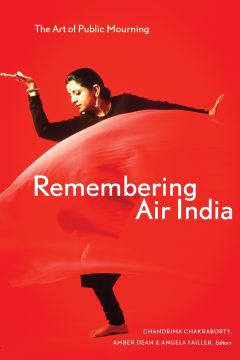
Remembering Air India: The Art of Public Mourning, edited by Chandrima Chakraborty, Amber Dean & Angela Failler; University of Alberta Press; 360 pages; ISBN 9781-7721-22596; $29.95
Can’t Sue Incompetent Execs
Finance department executives would be shielded from legal liability for costly errors, incompetence or negligence under a clause inserted in Minister François-Philippe Champagne’s latest budget bill, the Senate banking committee was told yesterday. Senators expressed alarm: “At what point does this legislation place the civil servants above the law?”
Sold Cabinet On Used Subs
Newly-declassified records show cabinet in 1996 agreed to buy four used diesel submarines after Defence Minister David Collenette said the United Kingdom cut its price 4 percent in what he called “a very good” deal for Canada. Subsequent maintenance and refits cost taxpayers more than $3 billion and kept most vessels out of regular service.
Rail Will Never Happen: MP
Cabinet’s $90 billion regional high speed rail venture will never be built, a Conservative MP yesterday told the Commons. MP Roman Baber (North York, Ont.) said based on staggering cost overruns in municipal rail projects, it would “cost a trillion” to run an electrified commuter rail service from Toronto to Québec City: “Ninety billion? Are you kidding me?”
Fined Credit Unions $816,750
Federal regulators yesterday fined four credit unions in two provinces a total $816,750 for breach of the Proceeds Of Crime And Terrorist Financing Act. Breaches ranged from paperwork errors to conducting business with a suspected criminal: “We will take firm action when it is required.”
Call Cost Worry ‘Valid,’ ‘Real’
Canadians under 35 typically have yet to recover from high pandemic-era inflation, the Bank of Canada said yesterday. Worries over a permanent increase in the cost of living were “valid and reflect an important reality,” said a Bank report: “Many Canadians still feel affordability pressures even after inflation has slowed.”
Palestine Aid Twice Ukraine’s
Cabinet last year sent nearly twice as much foreign aid to Palestine as it sent to Ukraine, totaling nearly a quarter billion. New figures were tabled in Parliament as Prime Minister Mark Carney pledged another $100 million in aid: “I am speaking for Canada now.”
Call Public “Servant” Painful
Toronto members of one of the nation’s largest unions are petitioning to abolish the phrase “public servant.” The reference is a painful reminder of servitude and African slavery, said the Toronto Racialized Members Committee of the Public Service Alliance of Canada: “The term ‘servant’ carries significant historical trauma.”

Alto Contract “Open Ended”
The Crown corporation attempting to build a $90 billion regional high speed railway yesterday would not comment on why it hired the chairman of the board’s law firm as legal counsel. Chair Robert Prichard is also chair of Torys LLP, a Toronto firm awarded an “open ended contract” by Alto Corporation: ‘Work includes engagement with over 40 Indigenous communities.’
Advocates Wary Of Air Bill
Air passenger advocates last night urged senators to kill a cabinet proposal to send legitimate complaints over poor service to private, binding arbitration. The clause inserted in an omnibus budget bill was prompted by a backlog of some 97,000 complaints at the Canadian Transportation Agency: “The bill does not resolve the backlog, it relocates it.”
Curbing Strikes For ‘Stability’
Finance Minister François-Philippe Champagne yesterday said a bill restricting the right to strike is needed for the sake of “stability” in the economy. Federal data show the number of private sector strikes fell by 33 percent last year: “We want to avoid this kind of conflict.”